


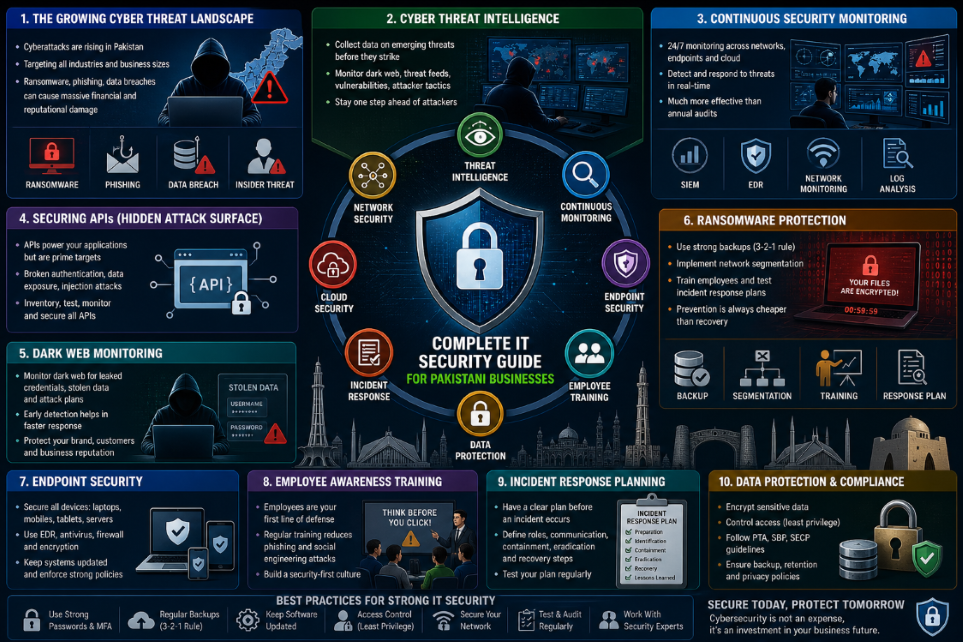
Pakistani law firms hold some of the most sensitive information in existence. Client identities. Case strategies. Financial settlements. Corporate merger details. Witness information. Criminal defense strategies. This privileged data makes legal practices extraordinarily attractive targets for criminal attackers. Law firms partnering with experienced ethical hacking professionals in Pakistan discover critical vulnerabilities in their digital infrastructure before attackers exploit them. This guide explains exactly why Pakistani law firms need ethical hacking and what comprehensive legal sector security testing involves.
Why Pakistani Law Firms Are High Value Cybercrime Targets
Law firms hold client secrets worth enormous amounts.
Corporate clients share unreleased merger information. Litigation clients reveal case weaknesses. Criminal clients disclose sensitive personal details. All under strict legal privilege.
Attackers understand this value completely.
Stolen legal documents enable corporate espionage. Compromised case strategies give opposing parties unfair advantages. Leaked client information enables targeted blackmail. Stolen settlement details allow financial manipulation.
Pakistani law firms also maintain privileged access to corporate client networks. They communicate with banks, government agencies, and multinational corporations constantly. Compromising a law firm's email system creates access to all of those relationships simultaneously.
Criminal groups specifically target legal practices because security investment historically lags far behind financial institutions despite holding equally sensitive data.
Understanding the Law Firm Cyber Threat Landscape
Pakistani legal practices face specific threat categories distinct from other industries.
Business Email Compromise Targeting Legal Payments
Property transactions. Settlement payments. Client fund transfers.
Law firms manage significant financial flows. Attackers compromise or impersonate law firm email accounts specifically to intercept these transactions.
A Pakistani conveyancing firm discovered their email had been compromised for three weeks. The attacker monitored property transaction communications silently. At the precise moment a buyer was ready to transfer funds the attacker sent modified payment instructions from the compromised account.
PKR 8 million transferred to criminal accounts before anyone realized.
Corporate Espionage Through Legal Access
Sophisticated attackers target law firms representing high-value corporate clients.
Compromising a law firm's document management system provides access to merger negotiations, regulatory submissions, and strategic planning documents their clients would never share directly.
Ransomware Targeting Client File Archives
Legal practice management systems contain decades of irreplaceable client files.
Ransomware operators specifically research law firms before attacking. They know legal practices cannot operate without client file access. They set ransom demands accordingly.
Pakistani law firms without tested backup systems face impossible choices when ransomware strikes.
How Ethical Hackers Assess Pakistani Law Firm Security
H3: Email System Security Testing
Email is simultaneously the most critical tool and most dangerous attack surface in Pakistani legal practices.
Ethical hackers assess email infrastructure comprehensively.
They test email authentication records. SPF, DKIM, and DMARC configurations prevent attackers from sending emails impersonating law firm partners. Missing or misconfigured records allow trivial email spoofing.
They test email gateway filtering. Advanced phishing emails specifically crafted for legal environments test whether filters catch targeted attacks rather than just generic spam.
They attempt email account compromise through credential testing. Discovered employee email addresses get tested against breach databases. Password reuse is common in Pakistani professional services firms.
They test email encryption. Client communications containing privileged information should use end-to-end encryption. Many Pakistani law firms transmit sensitive client documents entirely unencrypted.
H3: Document Management System Testing
Legal practice management software holds every client file, communication, and case document.
Ethical hackers probe document management systems specifically.
They test access controls. Can junior associates access senior partner client files? Can support staff view confidential settlement documents? Can billing staff read privileged legal advice?
Broken access controls in Pakistani legal practice management software create serious professional responsibility exposure beyond technical security risk.
They test for SQL injection vulnerabilities in document search and retrieval functions. Successful injection allows attackers to extract entire document databases without authentication.
They verify audit logging. Proper records of document access are essential for detecting unauthorized access and demonstrating due diligence during professional responsibility investigations.
H3: Client Portal Security Assessment
Pakistani law firms increasingly provide secure client portals for document sharing.
These portals require comprehensive security testing.
Ethical hackers test authentication mechanisms. Strong authentication prevents unauthorized access to confidential client documents.
They test authorization controls. Client A should never access Client B's documents regardless of authentication status. Broken authorization in client portals creates severe confidentiality breaches.
They assess session management. Proper session handling prevents unauthorized access when portal users forget to log out on shared devices.
They test file upload functionality. Client portals accepting document uploads require careful security testing. Malicious file uploads can compromise entire portal infrastructure.
Physical and Operational Security Assessment
Pakistani law firm security extends beyond digital systems.
Ethical hackers conduct physical security assessments specific to legal environments.
They test whether unauthorized visitors can access areas where confidential client conversations occur. Conference rooms. Partner offices. Document storage areas.
They assess clean desk policy compliance. Confidential client documents left visible on desks create serious security risks.
They test printer and photocopier security. Office equipment stores document images internally. Improperly disposed equipment exposes confidential documents.
They evaluate clean-up procedures for printed documents. Confidential legal documents require secure disposal. Standard waste bins containing client information create serious breaches.
Staff Phishing Simulation for Legal Professionals
Legal professionals are specifically targeted by sophisticated phishing campaigns.
Attackers craft phishing emails mimicking court notifications. They impersonate opposing counsel. They replicate regulatory authority communications. They fake client emails from known contacts.
Ethical hackers design phishing simulations specifically for Pakistani legal environments.
They send fake court filing deadline notifications requiring urgent credential verification. They simulate urgent client communications requesting immediate document access. They impersonate bar association communications requiring compliance action.
Results reveal which legal professionals are vulnerable to targeted phishing.
Partners who believe they're too experienced to fall for phishing frequently demonstrate the highest vulnerability rates. Confidence creates complacency. Complacency creates breaches.
Privileged Communication Encryption Testing
Attorney-client privilege is a legal and ethical cornerstone.
Privileged communications transmitted without encryption are technically accessible to network-level attackers. This accessibility potentially compromises legal privilege arguments.
Ethical hackers verify encryption across all privileged communication channels.
They test email encryption implementation. They verify secure messaging platform security. They assess video conferencing platform encryption for remote client consultations.
They check whether mobile devices used for client communications implement appropriate encryption and remote wipe capabilities.
Pakistani lawyers using personal mobile devices for client communications without encryption create privilege vulnerabilities most have never considered.
Third-Party Service Provider Risk Assessment
Pakistani law firms use multiple external service providers.
Legal research database providers. E-discovery platforms. Court filing services. Accounting software vendors. IT managed service providers.
Each third-party relationship creates potential security exposure affecting client confidentiality.
Ethical hackers assess critical vendor relationships specifically.
They test API connections between law firm systems and external legal research platforms. They verify whether vendor remote access is properly monitored and controlled. They assess data sharing agreements against actual technical implementation.
A Pakistani commercial law firm discovered through ethical hacking that their IT support provider maintained unrestricted remote access to document management systems containing sensitive client files.
This access wasn't malicious. It was unnecessary and undocumented.
Discovering and restricting this access removed significant client confidentiality risk the firm had never recognized existed.
Ransomware Resilience and Business Continuity Testing
Ransomware attacks against law firms are increasing globally and in Pakistan specifically.
Ethical hackers test ransomware resilience comprehensively for Pakistani legal practices.
They verify backup integrity and accessibility. Backups stored on systems connected to the main network get encrypted alongside primary systems during ransomware attacks. Air-gapped backups are essential.
They test backup restoration procedures. Backups that exist but have never been successfully restored provide false confidence. Ethical hackers verify actual restoration capability under realistic conditions.
They test network segmentation. Flat law firm networks allow ransomware to spread from a single compromised workstation to every system containing client files within minutes.
They evaluate incident response procedures. Do Pakistani law firm partners know what to do immediately when ransomware encrypts their systems? Clear procedures followed immediately limit damage dramatically.
Compliance and Professional Responsibility Alignment
Pakistani lawyers carry professional responsibility obligations regarding client information protection.
The Pakistan Bar Council and relevant professional bodies expect lawyers to implement reasonable measures protecting privileged client information.
Ethical hacking programs demonstrate this reasonable duty of care through documented proactive security testing.
Penetration test reports show professional bodies and clients that the firm takes information security obligations seriously.
They demonstrate specific security measures implemented. They document vulnerabilities identified and remediated. They provide evidence of continuous security improvement.
As Pakistani data protection legislation develops, documented ethical hacking programs position law firms advantageously in regulatory environments.
Building a Legal Sector Security Program
Single penetration tests provide valuable snapshots.
Pakistani law firms need ongoing security programs matching the continuous nature of their client confidentiality obligations.
Quarterly vulnerability assessments identify newly emerged weaknesses between annual penetration tests.
Monthly phishing simulations maintain staff vigilance through realistic practice. Legal professionals who experience regular realistic phishing simulations develop genuine recognition skills rather than theoretical awareness.
Annual comprehensive penetration testing covers the complete law firm attack surface. Email infrastructure. Document management systems. Client portals. Third-party integrations. Physical security.
Incident response planning specifically designed for legal environments ensures breach response protects both client confidentiality and professional privilege claims.
Conclusion
Pakistani law firms hold some of their clients' most sensitive secrets.
Protecting those secrets is both a professional obligation and a business survival requirement.
Ethical hackers provide specialized security testing addressing the specific vulnerabilities threatening Pakistani legal practices. Email system compromise. Document management access control failures. Client portal vulnerabilities. Staff phishing susceptibility. Third-party provider risks.
Every vulnerability discovered and remediated through ethical hacking protects client confidentiality. Every phishing simulation completed strengthens the human firewall protecting privileged communications.
Pakistani law firms that invest in regular ethical hacking engagements demonstrate genuine commitment to client trust. They protect their professional reputation. They fulfill their duty of care to clients who share sensitive information under privilege.
In a profession built entirely on trust, information security isn't optional. It's fundamental.

 English
 French
 Spanish
 Portuguese
 Deutsch
 Turkish
 Dutch
Dutch
 Italiano
 Russian
 Romaian
 Portuguese (Brazil)
 Greek
Greek