


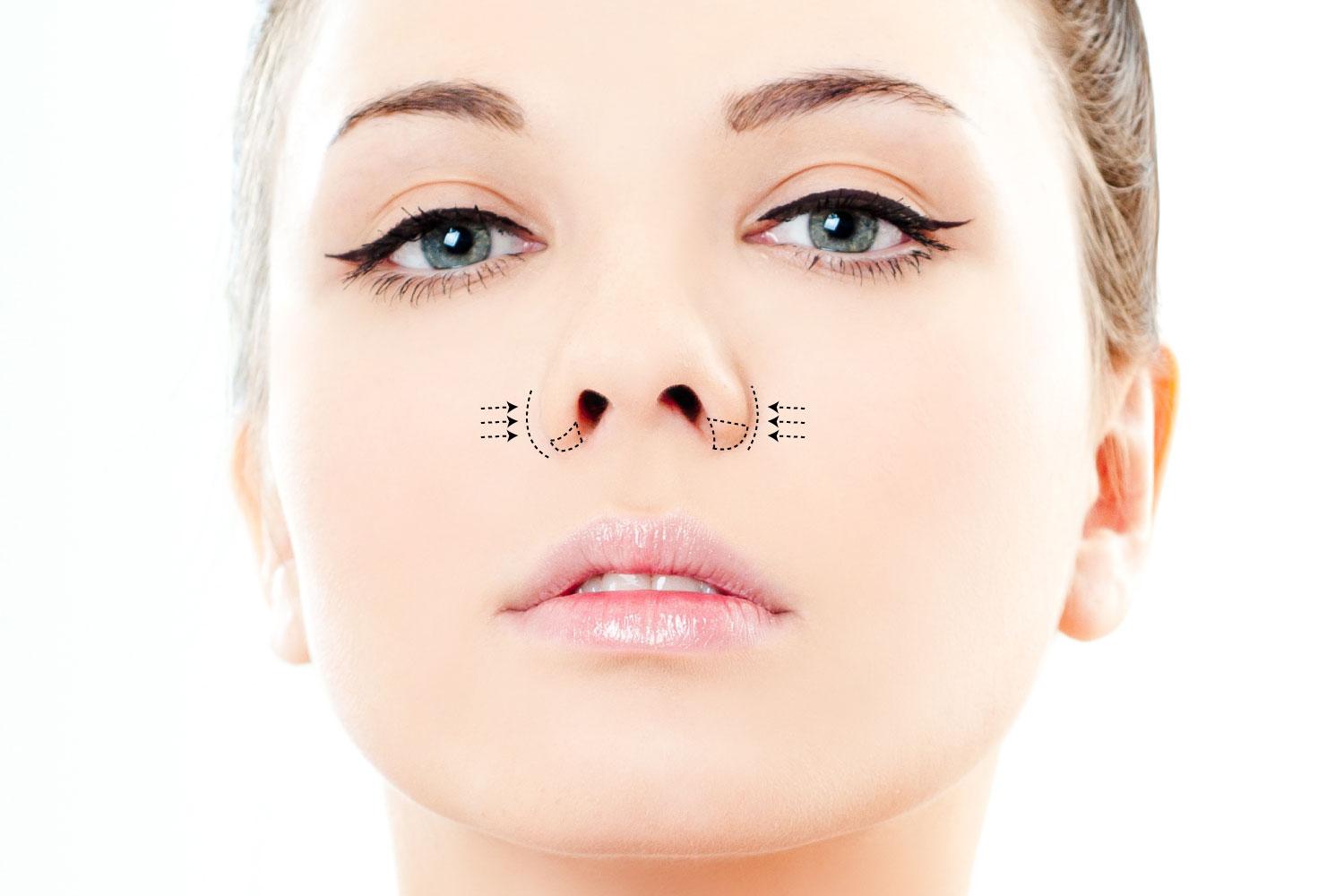
Alarplasty vs. Rhinoplasty: Understanding the Key Differences
When considering nasal enhancement, many patients find themselves at a crossroads between a comprehensive structural change and a targeted refinement. In the evolving aesthetic market of the Saudi capital, the distinction between these two procedures is critical for managing expectations and achieving a harmonious result. Alarplasty in Riyadh has seen a surge in popularity as a standalone procedure because it addresses the most common concern for many residents—wide or flared nostrils—without the extensive downtime associated with a full reconstruction. While both fall under the umbrella of nasal surgery, they serve vastly different anatomical purposes. Understanding the nuances of "Alar Base Reduction" versus "Rhinoseptoplasty" ensures that you choose the path that best aligns with your goals for "High-Definition" facial balance.
1. Scope of Treatment: Targeted vs. Total
The primary difference between alarplasty and rhinoplasty lies in the anatomical "neighborhood" being addressed.
-
Alarplasty (The Targeted Approach): This procedure is strictly confined to the "ala," which are the fleshy wings of the nostrils. It does not involve the bone, the bridge, or the internal septum. It is a soft-tissue surgery designed to narrow the nasal base, reduce nostril flare, or correct nostril asymmetry.
-
Rhinoplasty (The Total Approach): A full rhinoplasty is a comprehensive surgery that can alter every aspect of the nose. This includes straightening a crooked bridge, removing a "hump," refining a bulbous tip, or lengthening/shortening the nose. It often involves "osteotomy" (breaking and resetting the nasal bones) and cartilage grafting.
2. Surgical Complexity and Anesthesia
Because the scope of work differs, the clinical experience for the patient is also distinct in terms of intensity and time.
-
The Alarplasty Experience: Since it only involves the skin and soft tissue at the base of the nose, alarplasty is frequently performed under local anesthesia with light sedation. The patient remains "awake" and comfortable, and the procedure is typically completed in 45 to 60 minutes.
-
The Rhinoplasty Experience: Due to the manipulation of bone and cartilage, rhinoplasty almost always requires general anesthesia. The procedure is more complex, often lasting between 2 to 4 hours, as the surgeon must carefully rebuild the nasal framework to ensure both aesthetic beauty and functional breathing.
3. Recovery Timeline and Downtime
For the modern Riyadh professional, the "downtime" factor is often a deciding variable in choosing between these two paths.
-
Alarplasty Recovery: This is often referred to as a "weekend procedure." Because there is no bone trauma, swelling is localized to the base of the nose. Sutures are typically removed within 5 to 7 days, and most patients return to work shortly thereafter. There are no "black eyes" or heavy bruising associated with standalone alarplasty.
-
Rhinoplasty Recovery: This requires a more significant commitment. Patients usually wear a nasal splint or cast for at least one week. Bruising around the eyes is common, and while the "social downtime" is about 10 to 14 days, the internal tissues can take up to a full year to completely settle and reveal the final refined shape.
4. Visibility of Incisions and Scarring
The location of the surgical marks is another key point of differentiation for those concerned about post-operative privacy.
-
Alarplasty Incisions: These are placed externally but are strategically "hidden" in the alar-facial groove—the natural shadow where the nostril meets the cheek. When healed, these marks are virtually invisible to the naked eye.
-
Rhinoplasty Incisions: In an "Open Rhinoplasty," a small incision is made across the columella (the tissue between the nostrils). In a "Closed Rhinoplasty," all incisions are made inside the nostrils. While both heal remarkably well, the surgical approach is chosen based on the level of structural visibility the surgeon needs.
5. Ideal Candidate Profiles
Choosing the right procedure depends on your specific anatomical concerns.
-
The Alarplasty Candidate: You are likely an ideal candidate if you are happy with the height and straightness of your nasal bridge but feel your nostrils "spread" too wide when you smile or that your nasal base is disproportionately broad for your face.
-
The Rhinoplasty Candidate: You are a better candidate for rhinoplasty if you have functional breathing issues, a prominent nasal hump, a drooping tip, or a nose that appears crooked from the front view.
Comparison Summary: 2026 Clinical Outlook
| Feature | Alarplasty (Nasal Base) | Full Rhinoplasty (Total Nose) |
| Primary Goal | Narrowing and de-flaring. | Structural reshaping. |
| Tissue Involved | Skin and soft tissue only. | Bone, cartilage, and skin. |
| Anesthesia | Local or Twilight. | General Anesthesia. |
| Procedure Time | ~1 Hour. | 2–4 Hours. |
| Social Downtime | 5–7 Days. | 10–14 Days. |
| Final Results | Visible within 1 month. | Up to 12 months for final tip. |
Conclusion: Precision or Transformation?
The choice between alarplasty and rhinoplasty is ultimately a choice between precision and transformation. In the sophisticated 2026 Riyadh market, the trend toward "Quiet Luxury" has made alarplasty a favored choice for those who want a significant boost in facial harmony without a "drastic" change in their appearance. However, if your concerns are structural or functional, a full rhinoplasty remains the gold standard for comprehensive nasal surgery. By consulting with a specialist who utilizes 3D imaging, you can visualize how each procedure would impact your specific profile. Whether you choose the targeted refinement of alarplasty or the architectural change of rhinoplasty, the goal remains the same: a balanced, confident, and harmonious version of yourself that resonates from every angle.
Would you like to move forward with exploring the specifics of the alarplasty recovery process, or are you interested in how these procedures can be combined for a total facial rejuvenation?

 English
 Arabic
 French
 Portuguese
 Deutsch
 Turkish
 Dutch
Dutch
 Italiano
 Russian
 Romaian
 Portuguese (Brazil)
 Greek
Greek