


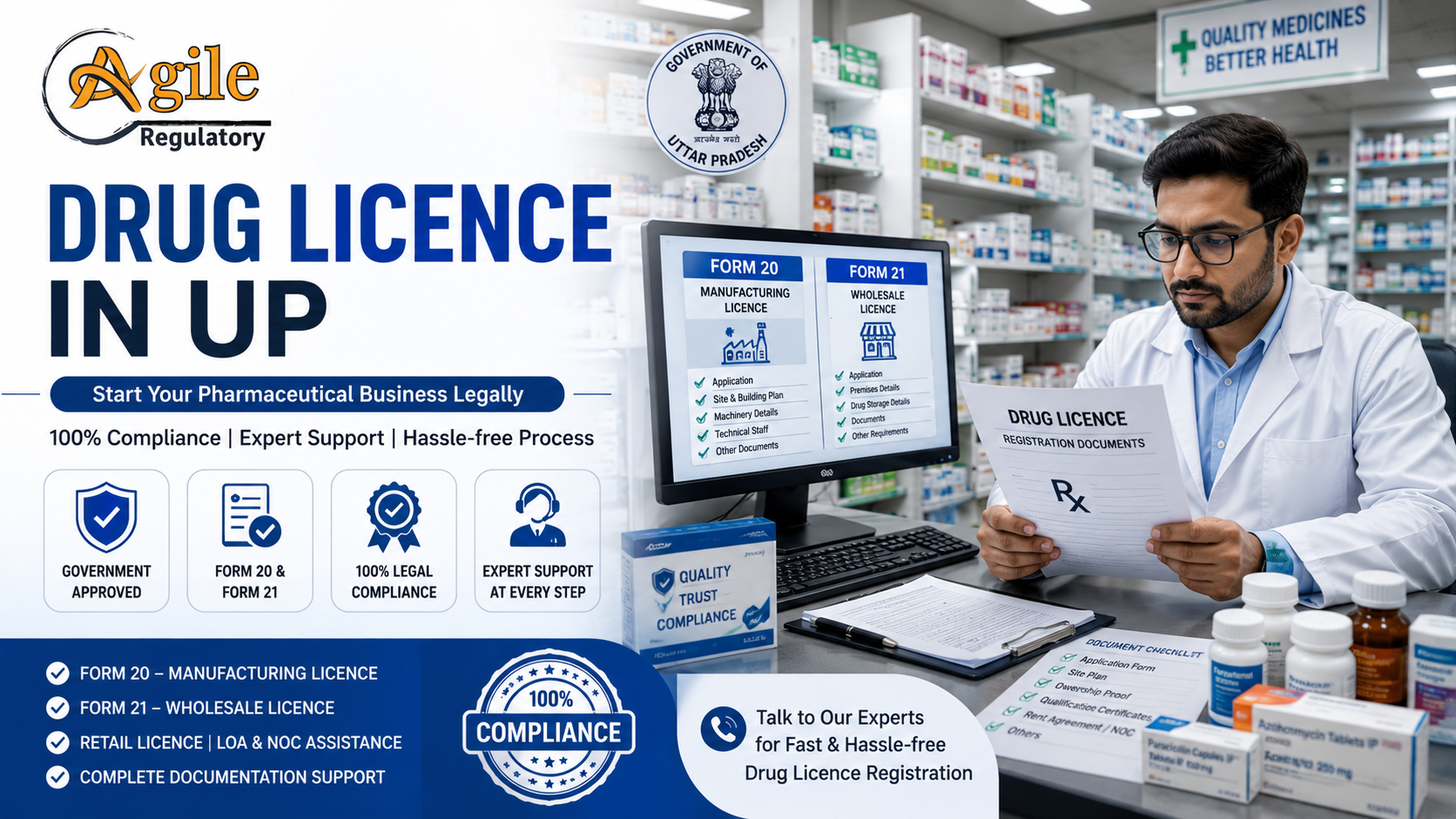
A drug licence is a mandatory legal approval required for businesses involved in the manufacturing, sale, distribution, storage, or wholesale of medicines and pharmaceutical products in India. In Uttar Pradesh, businesses dealing with medicines must obtain approval from the Drug Control Department before starting operations.
Whether you want to open a medical store, pharmacy, wholesale medicine business, or pharmaceutical distribution company, obtaining a valid drug licence is essential. Many pharmacy businesses also need proper understanding of Form 20 drug license and Form 21 drug license requirements before applying.
This guide explains the complete process for applying for a drug licence in Uttar Pradesh, required documents, eligibility criteria, licence categories, and compliance requirements.
What is a Drug Licence?
A drug licence is an official authorization issued by the Drug Control Department allowing businesses to legally deal with medicines and pharmaceutical products.
The licence ensures that:
- Medicines are stored properly
- Drugs are sold legally
- Quality standards are maintained
- Public health and safety are protected
Pharmacies, wholesalers, distributors, and pharmaceutical businesses must obtain the appropriate licence before starting operations.
Types of Drug Licences in India
Different types of licences are issued depending on the business activity.
Retail Drug Licence
Required for medical stores and pharmacies selling medicines directly to consumers.
Wholesale Drug Licence
Required for businesses supplying medicines to retailers, hospitals, and pharmacies.
Manufacturing Drug Licence
Required for pharmaceutical manufacturing companies.
Restricted Drug Licence
Issued for businesses dealing with limited categories of medicines.
What is Form 20 Drug License?
The Form 20 drug license is issued for the retail sale of drugs other than those specified under Schedule C, C1, and X of the Drugs and Cosmetics Act.
This licence is generally required for:
- Retail medical stores
- Pharmacies
- Chemist shops
The licence permits businesses to sell common pharmaceutical products legally.
What is Form 21 Drug License?
The Form 21 drug license is issued for the retail sale of drugs specified under Schedule C and C1, excluding Schedule X drugs.
This category usually covers:
- Certain antibiotics
- Vaccines
- Biological products
- Specialized medicines
Pharmacies dealing with these medicines require both Form 20 and Form 21 approvals.
Form No 20 21 Pharmacy
Many pharmacy businesses apply for combined Form no 20 21 pharmacy licences because they sell multiple categories of medicines.
A combined licence allows pharmacies to legally stock and sell a wider range of pharmaceutical products under applicable regulations.
This is common for:
- Medical stores
- Retail pharmacies
- Chemist shops
- Hospital pharmacies
Form 21 Pharmacy Requirements
A Form 21 pharmacy licence is generally required when pharmacies deal with Schedule C and C1 medicines.
Businesses must ensure:
- Proper storage facilities
- Qualified pharmacist supervision
- Temperature control compliance
- Legal medicine handling procedures
Compliance is important for maintaining public health and drug safety standards.
Eligibility for Drug Licence in UP
To apply for a drug licence in Uttar Pradesh, applicants generally need:
- Valid business premises
- Qualified pharmacist or competent person
- Refrigerator and storage facilities
- Proper documentation
- Business registration
The premises must comply with minimum area requirements prescribed by the Drug Department.
Minimum Area Requirement
Generally:
- Retail pharmacy requires minimum 10 square meters
- Combined retail and wholesale business may require 15 square meters
Clean and proper storage conditions are mandatory.
Documents Required for Drug Licence in UP
Common documents include:
- Aadhaar Card
- PAN Card
- Pharmacist registration certificate
- Educational qualification documents
- Rent agreement or property proof
- Site plan and layout
- Refrigerator bill
- Business constitution documents
- Affidavit and declaration forms
- Passport-size photographs
Additional documents may be required depending on licence type.
Step-by-Step Process to Apply for Drug Licence in UP
Step 1: Prepare Documents
Collect all business, pharmacist, and premises-related documents.
Step 2: Arrange Pharmacy Premises
Ensure the premises meet area and storage requirements.
Step 3: Online Application Filing
Submit the application through the Uttar Pradesh Drug Control Department portal.
Step 4: Fee Payment
Pay applicable government fees online.
Step 5: Inspection by Drug Inspector
Authorities inspect the premises for compliance verification.
Step 6: Approval and Licence Issuance
After successful inspection and verification, the drug licence is issued.
Importance of Pharmacist Registration
Retail pharmacies must appoint a registered pharmacist approved by the Pharmacy Council.
The pharmacist is responsible for:
- Medicine dispensing
- Prescription handling
- Drug storage supervision
- Compliance management
A qualified pharmacist is mandatory for retail medical stores.
Benefits of Drug Licence Registration
Legal Authorization
Allows businesses to operate legally in the pharmaceutical sector.
Consumer Trust
Licensed pharmacies gain higher customer confidence.
Business Expansion
Enables pharmacies to work with distributors and hospitals.
Compliance Protection
Reduces risk of penalties and legal action.
Access to Pharmaceutical Supply Chains
Licensed businesses can legally purchase medicines from authorized suppliers.
Common Reasons for Drug Licence Rejection
Applications may face rejection because of:
- Incomplete documentation
- Insufficient shop area
- Invalid pharmacist documents
- Improper storage facilities
- Incorrect application details
Proper documentation and compliance help avoid delays.
Drug Licence Renewal in UP
Drug licences require periodic renewal depending on department regulations.
Businesses should:
- Renew before expiry
- Maintain updated records
- Follow storage and compliance rules
- Keep pharmacist registration active
Failure to renew may result in penalties or cancellation.
Importance of Proper Medicine Storage
Pharmacies must maintain proper storage conditions, including:
- Refrigeration for temperature-sensitive medicines
- Clean shelves and storage racks
- Expiry management systems
- Safe medicine handling practices
Improper storage can affect medicine quality and patient safety.
Why Businesses Hire Drug Licence Consultants
Professional consultants help with:
- Documentation preparation
- Online application filing
- Inspection support
- Compliance management
- Faster approval process
Consultants reduce errors and simplify complex licensing procedures.
Penalties for Operating Without Drug Licence
Businesses operating without a valid licence may face:
- Heavy penalties
- Business closure
- Product seizure
- Legal action
- Criminal prosecution
Drug compliance is extremely important in the healthcare sector.
Future of Pharmacy Business in India
India’s pharmaceutical industry is growing rapidly because of:
- Rising healthcare demand
- Expansion of medical infrastructure
- Online medicine delivery
- Growth in pharmaceutical manufacturing
This creates major opportunities for pharmacy businesses and medical stores.
Conclusion
Obtaining a drug licence is essential for pharmacies, medical stores, wholesalers, and pharmaceutical businesses operating in Uttar Pradesh. Understanding the requirements for Form 20 drug license, Form 21 drug license, and combined Form no 20 21 pharmacy approvals helps businesses maintain proper legal compliance.
Businesses dealing with specialized medicines may also require proper Form 21 pharmacy authorization for Schedule C and C1 drugs. With correct documentation, qualified pharmacist support, and proper premises setup, businesses can complete the registration process smoothly and operate legally in the pharmaceutical sector.Image Prompt

 English
 Arabic
 French
 Spanish
 Portuguese
 Deutsch
 Turkish
 Dutch
Dutch
 Russian
 Romaian
 Portuguese (Brazil)
 Greek
Greek