


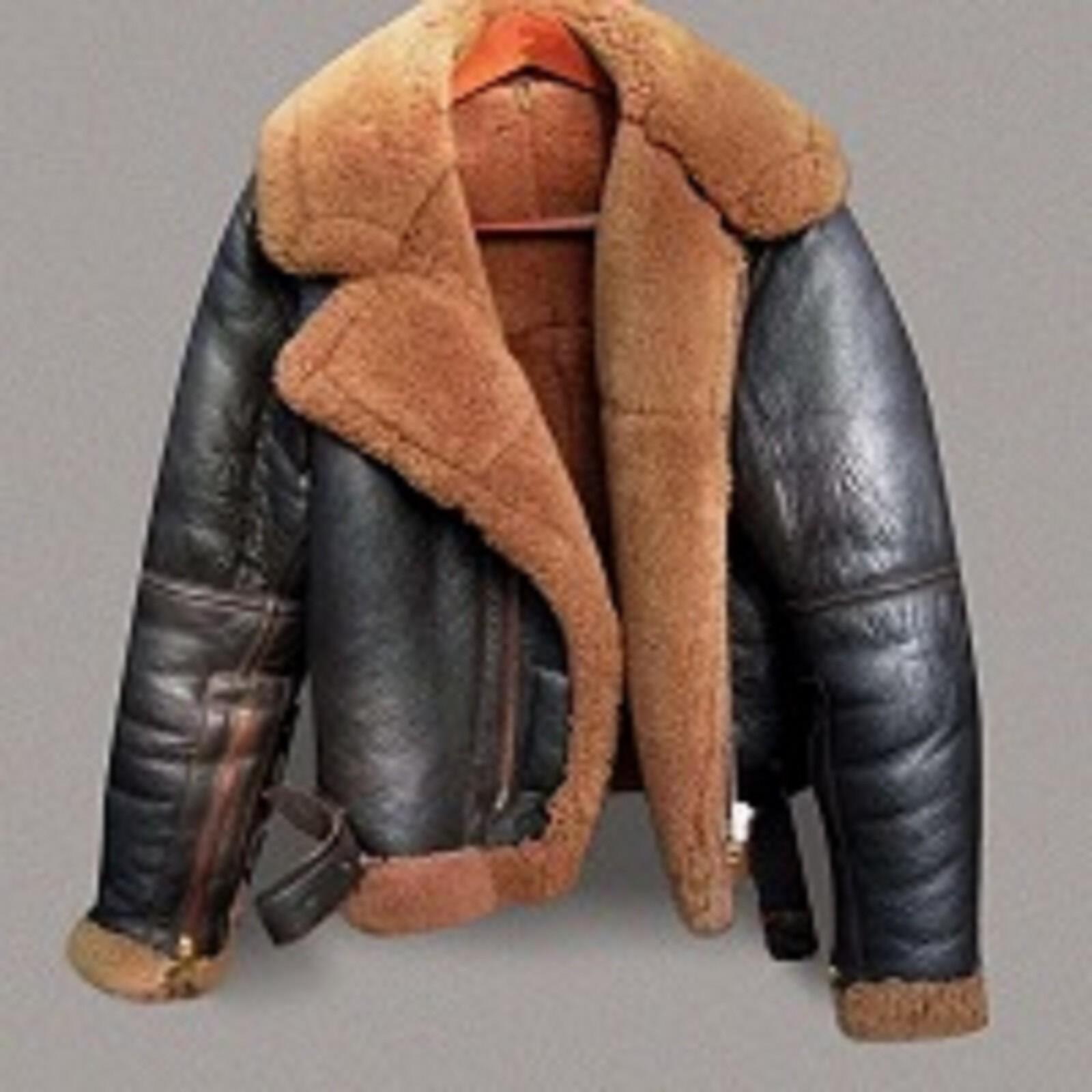
Introduction: More Than Just a Vintage Flight Jacket
The B-3 Bomber is not a modern fashion invention—it is a direct product of military necessity. Originally developed for bomber crews flying at high altitudes in unpressurized aircraft, it was designed for one purpose above all: survival in extreme cold.
Unlike fashion jackets that evolve with trends, the B-3 Bomber has remained largely unchanged in structure because its original design already solved a very specific problem effectively.
Today, it exists at the intersection of utility, heritage, and rugged fashion appeal.
The Engineering Logic Behind the B-3 Bomber
The defining characteristic of the B-3 Bomber is not its appearance but its material engineering. It was constructed during a time when synthetic insulation did not exist, so designers relied on natural materials with strong thermal properties.
The core structure includes:
-
Heavy sheepskin exterior
-
Thick shearling wool interior
-
Oversized fit for layering
-
Reinforced seams for durability under pressure
This combination creates a garment that functions as a thermal shield rather than a lightweight jacket.
Why Sheepskin Was the Only Logical Choice
The use of sheepskin was not aesthetic—it was practical. At high altitudes during early aviation, temperatures could drop to extreme levels where frostbite became a serious risk.
Sheepskin solved multiple problems at once:
-
The wool interior traps body heat efficiently
-
The leather exterior blocks wind penetration
-
The natural density provides insulation without synthetic materials
This dual-layer system is still one of the most effective natural insulation methods available.
How the B-3 Bomber Differs From Modern Winter Jackets
Modern jackets often prioritize weight reduction, flexibility, and fashion versatility. The B-3 Bomber does the opposite.
Here’s how it stands apart:
1. Weight and Structure
It is significantly heavier than modern outerwear because insulation is built into the material itself, not added as thin layers.
2. Thermal Prioritization
Instead of balancing warmth and breathability, it prioritizes maximum heat retention, even if that reduces airflow.
3. Functional Silhouette
The loose, structured fit was originally designed to allow movement while wearing multiple underlayers in aircraft cabins.
This makes it less about fashion optimization and more about environmental performance.
Why the B-3 Bomber Still Has Cultural Value
Despite being designed nearly a century ago, the B-3 Bomber continues to appear in fashion collections and winter wardrobes. This is not due to nostalgia alone.
Its continued relevance comes from three factors:
1. Authentic Utility
It still performs exceptionally well in cold climates without relying on modern synthetic technology.
2. Visual Identity
The shearling collar and bulky structure create a distinctive silhouette that is instantly recognizable.
3. Heritage Association
It carries historical significance tied to aviation and military history, which gives it cultural depth beyond clothing.
Real-World Performance Expectations
It is important to understand what the B-3 Bomber is actually designed for. It is not a general-purpose jacket.
It performs best in:
-
Extremely cold and dry environments
-
Outdoor winter conditions with strong wind exposure
-
Low-temperature regions where insulation is critical
However, it is not ideal for:
-
Rain-heavy climates (sheepskin absorbs moisture)
-
Mild weather (overheating becomes an issue)
-
High-mobility athletic use (due to weight)
Understanding these limitations is key to proper usage.
What Defines a High-Quality B-3 Bomber
Not all jackets labeled “B-3 Bomber” meet traditional construction standards. Quality differences are significant.
A well-made version typically includes:
-
Genuine sheepskin with dense wool lining
-
Thick, structured leather exterior
-
Reinforced stitching at stress points
-
Heavy-duty metal zippers
-
Consistent interior wool thickness
Lower-quality versions often replicate appearance but lack insulation performance and structural durability.
Styling Approach: Treat It as a Statement Layer
The B-3 Bomber does not function like a subtle fashion piece. It dominates any outfit it is part of.
Because of its bulk and texture, styling works best when kept simple:
-
Neutral base layers (black, brown, beige, grey)
-
Slim-fit trousers or denim to balance proportions
-
Minimal layering underneath
-
Boots or rugged footwear to match weight and texture
Overcomplicating the outfit often reduces the visual impact of the jacket.
Final Perspective
The B-3 Bomber remains one of the clearest examples of design driven by necessity rather than aesthetics. Its structure, materials, and silhouette were all developed for survival conditions, and that functional foundation is exactly why it has endured.
In a modern fashion landscape dominated by lightweight and fast-changing trends, the B-3 Bomber stands out because it does not try to adapt—it remains true to its original purpose. That consistency is what keeps it relevant across both practical use and heritage-inspired fashion.

 Arabic
 French
 Spanish
 Portuguese
 Deutsch
 Turkish
 Dutch
Dutch
 Italiano
 Russian
 Romaian
 Portuguese (Brazil)
 Greek
Greek