


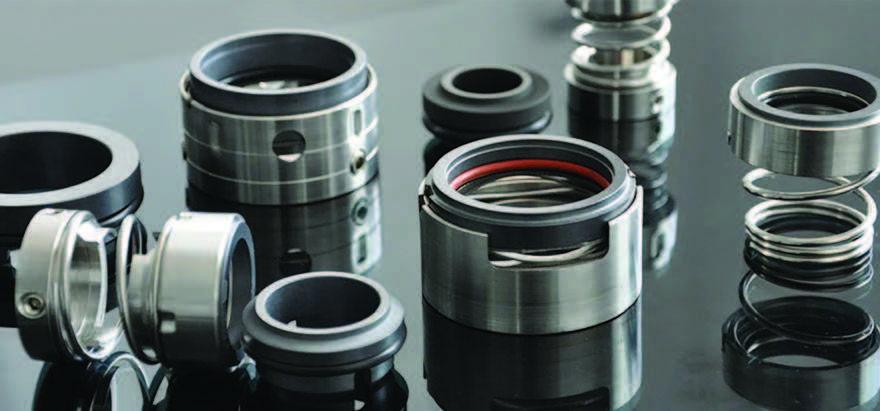
In heavy-duty B2B manufacturing, a mechanical seal bearing is the primary guardian of a pump's integrity. While standard bearings support rotation, these specialized components must maintain a vacuum-tight environment to prevent hazardous fluid leaks. When a seal fails, it is rarely a random event; it is usually a technical symptom of underlying system stress that, if ignored, leads to total industrial equipment seizure and costly production halts.
The Mechanics of Dry Running and Thermal Distortion
The most frequent cause of failure in a mechanical seal bearing is "dry running," where the lubricating film between the seal faces vaporizes. Without this liquid barrier, friction spikes instantly, leading to thermal distortion of the precision-ground surfaces. For industrial operators, this creates a "popping" sound and visible heat tinting on the metal components. If the pump is not primed correctly or the flush plan fails, the resulting heat shock can crack ceramic seal faces, allowing abrasive process fluids to enter the bearing raceways and destroy the assembly.
Identifying Misalignment and Vibration Fatigue
Another critical failure point involves shaft runout or motor misalignment. Even microscopic deviations from the center axis place uneven axial loads on the mechanical seal bearing. This imbalance causes "pitting" on the outer race and accelerates elastomer degradation. In a B2B factory setting, high-frequency vibration is the first warning sign. If the bearing housing is not perfectly perpendicular to the shaft, the seal faces will wobble, creating a widened wear track that inevitably leaks, contaminating both the lubricant and the surrounding manufacturing environment.
Optimizing Material Selection for Industrial Longevity
Reliability in high-pressure environments depends heavily on material compatibility between the seal and the pumped medium. Using standard carbon faces in abrasive slurry applications leads to rapid "grooving," where the seal face is physically sanded down. For B2B procurement, specifying silicon carbide or tungsten carbide faces with high-grade FKM elastomers is essential for chemical resistance. Ensuring the bearing's internal clearance (C3 or C4) matches the operating temperature prevents "mechanical seizure" caused by thermal expansion during 24/7 industrial cycles.
Conclusion
Proactive troubleshooting of your mechanical seal bearing systems protects your infrastructure from catastrophic fluid loss. By matching material science with precise installation, you ensure long-term operational efficiency and safety for your entire facility.
Enhance your industrial reliability with NMR Bearing’s precision-engineered automotive components and advanced micro-display optoelectronics. Visit nmrbearing.com to analyze our manufacturing capabilities and optimize your B2B supply chain today.

 English
 French
 Spanish
 Portuguese
 Deutsch
 Turkish
 Dutch
Dutch
 Italiano
 Russian
 Romaian
 Portuguese (Brazil)
 Greek
Greek