


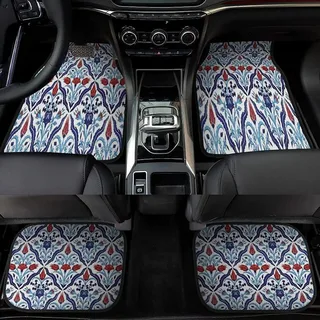
Introduction: A Unusual Fusion of Two Worlds
The idea of Persian Rug Car Mats sounds almost contradictory at first. Persian rugs are traditionally associated with handcrafted home décor, cultural heritage, and intricate textile art. Car mats, on the other hand, are purely functional automotive accessories designed for protection against dirt, wear, and weather.
Yet somewhere between these two categories lies a growing niche: car mats designed with Persian rug aesthetics or directly inspired by traditional weaving patterns.
This combination is not just about decoration—it reflects a shift in how people personalize vehicles, turning utilitarian interiors into expressive spaces.
Understanding What Persian Rug Car Mats Actually Are
Persian rug car mats are not literal antique rugs placed inside vehicles. Instead, they are typically:
-
Machine-made or hand-stitched mats inspired by Persian patterns
-
Durable automotive-grade carpets printed or woven with traditional designs
-
Custom interior accessories blending cultural motifs with modern materials
The key distinction is that they are designed for automotive use first, with aesthetics inspired by Persian craftsmanship.
This means they must balance two opposing requirements:
-
Artistic detailing
-
Functional durability
Why Persian Designs Work in Automotive Interiors
At first glance, Persian patterns might seem unrelated to cars. However, they actually fit surprisingly well into interior design psychology.
1. Visual Complexity Adds Depth
Modern car interiors are often minimalistic—black, grey, or beige with simple textures. Persian patterns introduce controlled complexity, making the interior feel more layered and visually rich.
2. Cultural Warmth in a Mechanical Space
Cars are machine-dominated environments. Textile-inspired designs soften that mechanical feel and introduce a sense of comfort.
3. Personal Identity Expression
Unlike standard rubber or plain carpet mats, Persian rug car mats signal individuality. They reflect taste rather than just utility.
Materials and Construction Differences
Despite their decorative appearance, these mats still need to perform like automotive accessories.
Most quality versions use:
-
Heavy-duty carpet fibers or synthetic blends
-
Anti-slip rubber backing
-
Water-resistant coating or treatment
-
Reinforced edge stitching to prevent fraying
Some premium versions attempt to replicate woven textile textures more closely, but still rely on modern materials for durability.
This hybrid construction is what allows them to survive real driving conditions while maintaining visual appeal.
Functionality vs Aesthetics: The Core Balance
The biggest challenge in Persian rug car mats is balancing appearance with practicality.
Functional Requirements:
-
Resistance to dust, mud, and moisture
-
Easy cleaning and maintenance
-
Anti-slip stability during driving
-
Durability under constant foot pressure
Aesthetic Requirements:
-
Detailed pattern reproduction
-
Color consistency across sets
-
Visual alignment with vehicle interiors
-
Long-term resistance to fading
When either side is compromised, the product loses value—either it becomes impractical or visually underwhelming.
Why They Have Gained Popularity
The rise in popularity of Persian rug car mats is tied to broader changes in consumer behavior.
1. Car Interiors as Personal Spaces
Vehicles are no longer viewed purely as transport tools. They are extensions of personal identity, especially in urban environments.
2. Growth of Customization Culture
From seat covers to ambient lighting, car owners increasingly invest in personalization. Floor mats are part of that ecosystem.
3. Social Media Influence
Visually distinctive interiors perform well on platforms like Instagram and TikTok, encouraging more decorative upgrades.
Misconceptions About Persian Rug Car Mats
Because of their appearance, several misunderstandings exist:
Misconception 1: They are fragile like home carpets
In reality, they are built with automotive-grade materials designed for heavy use.
Misconception 2: They are purely decorative
While design is a key feature, they still serve protective functions like any other car mat.
Misconception 3: They are all handmade
Many are machine-produced with printed designs, while only a small segment uses handcrafted techniques.
Choosing the Right Set for a Vehicle
Not all Persian rug car mats are equal in quality. Buyers should evaluate based on practical factors, not just design.
Key considerations include:
-
Fit accuracy for specific car models
-
Thickness and cushioning level
-
Non-slip backing strength
-
Ease of cleaning (vacuum or wash compatibility)
-
Color durability under sunlight exposure
A visually attractive set that does not stay stable or wears quickly loses its value very fast.
Interior Styling Impact
When used correctly, these mats influence the overall cabin atmosphere more than expected.
They tend to:
-
Break monotony in standard interiors
-
Add warmth to leather-heavy cabins
-
Complement vintage or classic car themes
-
Contrast effectively with modern minimal dashboards
However, they may feel visually overwhelming in already heavily designed interiors, so balance is important.
Final Perspective
Persian Rug Car Matsrepresent a niche but growing intersection between cultural design and automotive practicality. They transform a purely functional surface into a stylistic statement without completely abandoning durability requirements.
Their appeal is not based on necessity but on expression—turning an overlooked part of the car interior into a visible reflection of taste and personality. When well-made, they succeed in both roles: protecting the vehicle floor while adding a distinct visual identity.

 English
 Arabic
 French
 Spanish
 Portuguese
 Turkish
 Dutch
Dutch
 Italiano
 Russian
 Romaian
 Portuguese (Brazil)
 Greek
Greek