


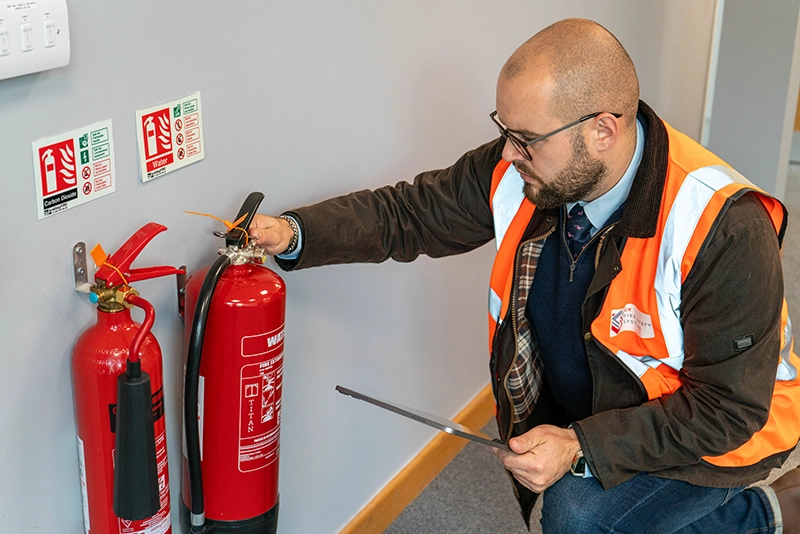
Fire Extinguisher Certificate London Compliance Guide
Getting a fire extinguisher certificate in London isn’t paperwork for its own sake—it’s proof your premises are prepared to tackle a fire in its earliest stage. For offices, shops, restaurants, warehouses, and residential blocks, certification demonstrates that extinguishers are correctly selected, installed, serviced, and ready for use.
What Is a Fire Extinguisher Certificate?
A Fire Extinguisher Certificate London confirms that your extinguishers have been installed and maintained in line with UK standards. It’s typically issued after a professional service or installation visit and records:
- Types and numbers of extinguishers on site
- Locations and signage
- Service checks completed
- Any repairs or replacements made
- Next service due date
It forms part of your fire safety documentation and may be requested during inspections, insurance reviews, or audits.
Why Certification Matters in London
In a dense, high-occupancy city like London, rapid response to small fires can prevent major incidents. Certification ensures:
- Legal compliance with UK fire safety law
- Readiness of equipment during emergencies
- Reduced risk to occupants and assets
- Insurance alignment, helping avoid claim disputes
- Audit confidence for landlords, tenants, and regulators
Key Regulations and Standards
Fire extinguisher certification is tied to nationally recognised requirements, including:
- Regulatory Reform (Fire Safety) Order 2005 – places responsibility on the “Responsible Person” to ensure adequate fire-fighting equipment and maintenance
- BS 5306-3 – outlines routine servicing and record-keeping
- BS 5306-8 – guides correct extinguisher types and placement
Compliance with these standards underpins the validity of your certificate.
Types of Fire Extinguishers You May Need
Choosing the right extinguisher types is essential for certification:
- Water (Red label) – Class A fires (wood, paper, textiles)
- Foam (Cream label) – Class A and B (flammable liquids)
- CO₂ (Black label) – Electrical fires and server rooms
- Dry Powder (Blue label) – Multi-purpose (A, B, C), often for industrial use
- Wet Chemical (Yellow label) – Commercial kitchens (cooking oils/fats)
A professional assessor will match extinguisher types to your specific risks.
How to Get a Fire Extinguisher Certificate?
Fire Risk Assessment
A competent assessor reviews your premises to identify hazards, occupancy levels, and escape routes. This determines the number, type, and placement of extinguishers.
Supply and Installation
Certified engineers install the appropriate extinguishers, brackets, and signage in line with layout requirements.
Commissioning
Each unit is checked for pressure, weight, seals, and accessibility. Commissioning labels and records are completed.
Certification Issued
You receive a service/commissioning certificate confirming compliance, along with a maintenance schedule.
Servicing and Maintenance Requirements
Certification isn’t a one-off task. Ongoing maintenance is mandatory:
- Monthly visual checks (in-house): ensure units are accessible, undamaged, and gauges are in the green
- Annual service (by a competent technician): full inspection and service in line with BS 5306-3
- Extended service intervals: typically every 5 years for water, foam, and powder; CO₂ units require periodic pressure testing
All actions should be recorded in a fire logbook to maintain a clear audit trail.
What the Certificate Includes
A typical fire extinguisher certificate will detail:
- Property name and address in London
- Service date and technician details
- Inventory of extinguishers (type, size, serial numbers)
- Work completed (service, recharge, replacement)
- Compliance statement and next due date
Keep this document accessible—inspectors and insurers may ask to see it.
Common Compliance Mistakes to Avoid
- Incorrect extinguisher types for the risks present
- Poor placement (blocked, hidden, or too far from hazards)
- Missed annual servicing leading to expired certificates
- Outdated or damaged units not replaced in time
- Lack of staff awareness on when and how to use extinguishers
Avoiding these pitfalls keeps your certificate valid and your site safer.
Costs of Certification in London
Costs vary based on premises size and equipment needs:
- Small offices/shops: relatively low annual servicing costs
- Restaurants/kitchens: may require additional wet chemical units
- Large sites/warehouses: higher costs due to more units and complex layouts
While prices differ, certification is a cost-effective investment compared to potential fire damage or legal penalties.
Choosing a Reliable Service Provider
When selecting a provider in London, look for:
- Qualified, experienced technicians
- Knowledge of BS 5306-3 and BS 5306-8
- Transparent pricing and clear reports
- Full-service offering (assessment, supply, install, maintenance)
- Positive client feedback and reliable response times
A reputable company will keep you compliant and simplify ongoing maintenance.
Benefits of Staying Certified
- Legal peace of mind under the Regulatory Reform (Fire Safety) Order 2005
- Safer environment for staff, residents, and visitors
- Operational continuity with reduced downtime risk
- Insurance confidence and smoother claims processes
- Professional credibility for your business
A fire extinguisher certificate in London is essential for proving that your fire-fighting equipment is fit for purpose and compliant with UK standards. From correct selection and placement to annual servicing and documentation, each step plays a role in protecting lives and property. Stay proactive, keep your records up to date, and partner with a trusted provider to ensure your certification remains valid year after year.
FAQs
1. Is a fire extinguisher certificate legally required in London?
Yes. Under the Regulatory Reform (Fire Safety) Order 2005, you must provide and maintain suitable fire-fighting equipment, and certification is the standard way to demonstrate compliance.
2. How often do extinguishers need servicing?
Annually by a competent technician, with additional extended servicing at defined intervals depending on the extinguisher type.
3. Who can issue a fire extinguisher certificate?
A qualified fire safety technician or certified company following BS 5306-3.
4. What happens if my certificate expires?
Your premises may be non-compliant, increasing legal risk and potentially affecting insurance coverage.
5. How many extinguishers do I need?
It depends on your fire risk assessment, floor area, and hazards present, guided by BS 5306-8.
6. Can I maintain extinguishers myself?
You can perform basic monthly checks, but formal servicing and certification must be completed by a competent professional.

 English
 Arabic
 Spanish
 Portuguese
 Deutsch
 Turkish
 Dutch
Dutch
 Italiano
 Russian
 Romaian
 Portuguese (Brazil)
 Greek
Greek