


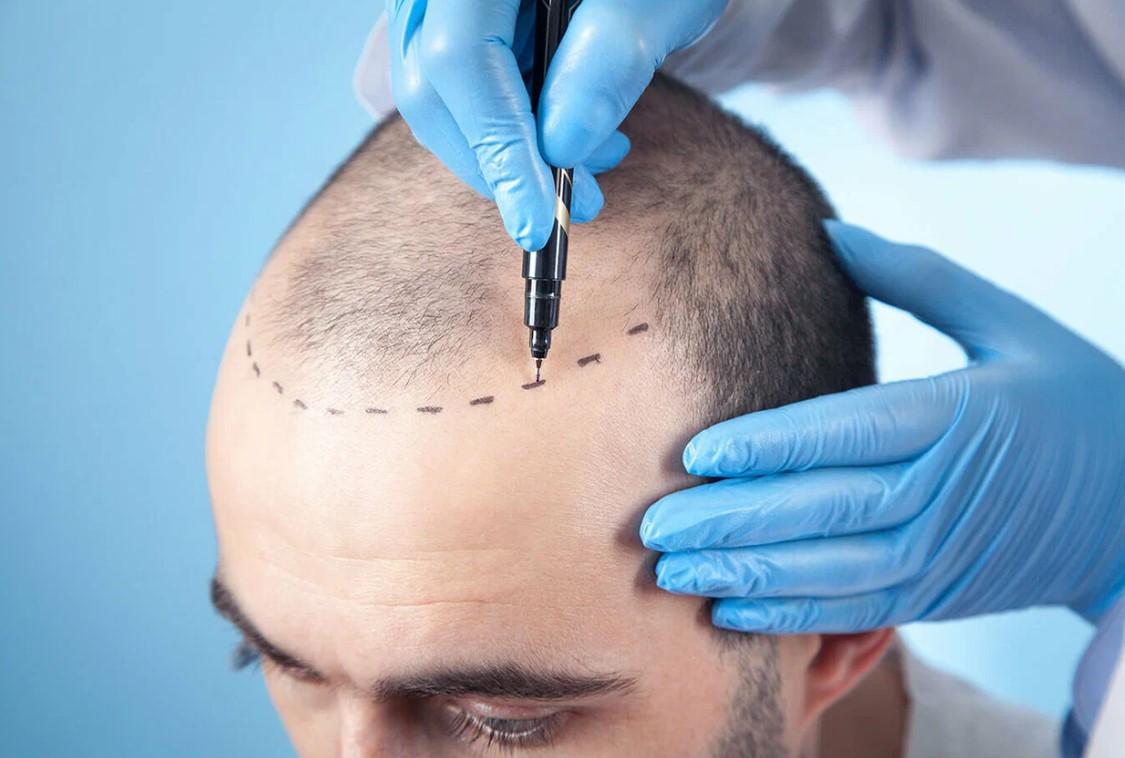
Hair Density Expectations After a Hair Transplant in Dammam
One of the most common concerns for patients considering a hair transplant in Dammam is: “How dense will my hair look afterward?” While modern techniques like FUE and FUT can deliver very natural results, it is important to understand that a hair transplant does not restore your original childhood density. Instead, it creates a natural-looking illusion of fullness using strategically placed grafts.
This article explains what level of density you can realistically expect and how results develop over time. Hair transplant in Dammam is becoming an increasingly popular solution for people seeking long-term hair restoration with natural-looking results.
Understanding Hair Density in Simple Terms
Hair density refers to the number of follicular units (grafts) per square centimeter of scalp. In a natural, non-balding scalp, density is typically around:
- 80–100 follicular units per cm² (natural hair)
After a transplant, surgeons cannot replicate this fully due to limited donor supply and blood flow requirements. Instead, they aim for:
- 30–50 follicular units per cm² (transplanted hair)
This is enough to create a visually full and natural appearance, especially when the hair is styled properly.
What Density Looks Like After a Hair Transplant
Even though transplanted hair is less dense than natural hair, it can still look very convincing.
Key expectations:
- Hair appears full in normal lighting and everyday conditions
- The hairline looks natural, not artificial or straight
- Coverage is strong in the frontal and mid-scalp areas
- Slight “see-through” may be visible under bright light or wet hair (normal)
In most successful cases, patients feel satisfied because the goal is cosmetic realism, not mathematical replication of natural density.
Density Timeline After Hair Transplant
Hair density does not appear immediately after surgery. It improves gradually over time.
1. First 2–3 Months
- Transplanted hair sheds (normal phase)
- Scalp looks thin or unchanged
- No visible density yet
2. 4–6 Months
- New thin hairs begin to grow
- Coverage starts appearing but is still light
- Density is around 30–40% of final result
3. 6–9 Months
- Noticeable thickening
- Hair becomes darker and stronger
- Density reaches about 70–80% of final result
4. 9–12 Months
- Major improvement in fullness
- Hair blends naturally with existing strands
- Around 85–95% of final density is achieved
5. 12–18 Months
- Final maturation phase
- Hair becomes thicker and more uniform
- Full cosmetic density is achieved
Factors That Affect Hair Density Results in Dammam
Not every patient gets the same density outcome. Several factors influence results:
1. Donor Hair Quality
Stronger, thicker donor hair creates better visual coverage even with fewer grafts.
2. Number of Grafts Used
More grafts generally improve coverage, but there is a safe limit to protect scalp blood supply.
3. Hair Characteristics
- Thick, curly hair = better coverage
- Fine, straight hair = lighter appearance
4. Surgeon Skill
Natural density depends heavily on:
- Proper angle placement
- Even graft distribution
- Hairline design strategy
5. Technique Used (FUE vs FUT)
Both techniques can achieve similar density when done properly, but planning differs based on graft availability.
What “Good Density” Actually Looks Like
A successful transplant in Dammam is not about maximum thickness everywhere. Instead, it focuses on:
- A natural hairline transition
- Strong density in the front and mid-scalp
- Balanced coverage across thinning areas
- A result that looks good in real-life conditions (not just close inspection)
Most patients achieve around 40–60% of natural density visually, which is usually enough to look completely normal in social settings.
Can You Increase Density After a Transplant?
Yes, in some cases.
If a patient wants more density, options include:
- A second hair transplant session
- Targeted refinement in thinning zones
- Medical treatments (to support native hair)
However, this depends on remaining donor hair availability.
Final Thoughts
Hair density after a transplant in Dammam is best understood as a strategic visual improvement rather than full restoration of original thickness. While transplanted hair does not match natural density exactly, modern techniques like FUE and FUT are highly effective in creating a natural, fuller appearance that restores confidence.

 Arabic
 French
 Spanish
 Portuguese
 Deutsch
 Turkish
 Dutch
Dutch
 Italiano
 Russian
 Romaian
 Portuguese (Brazil)
 Greek
Greek