


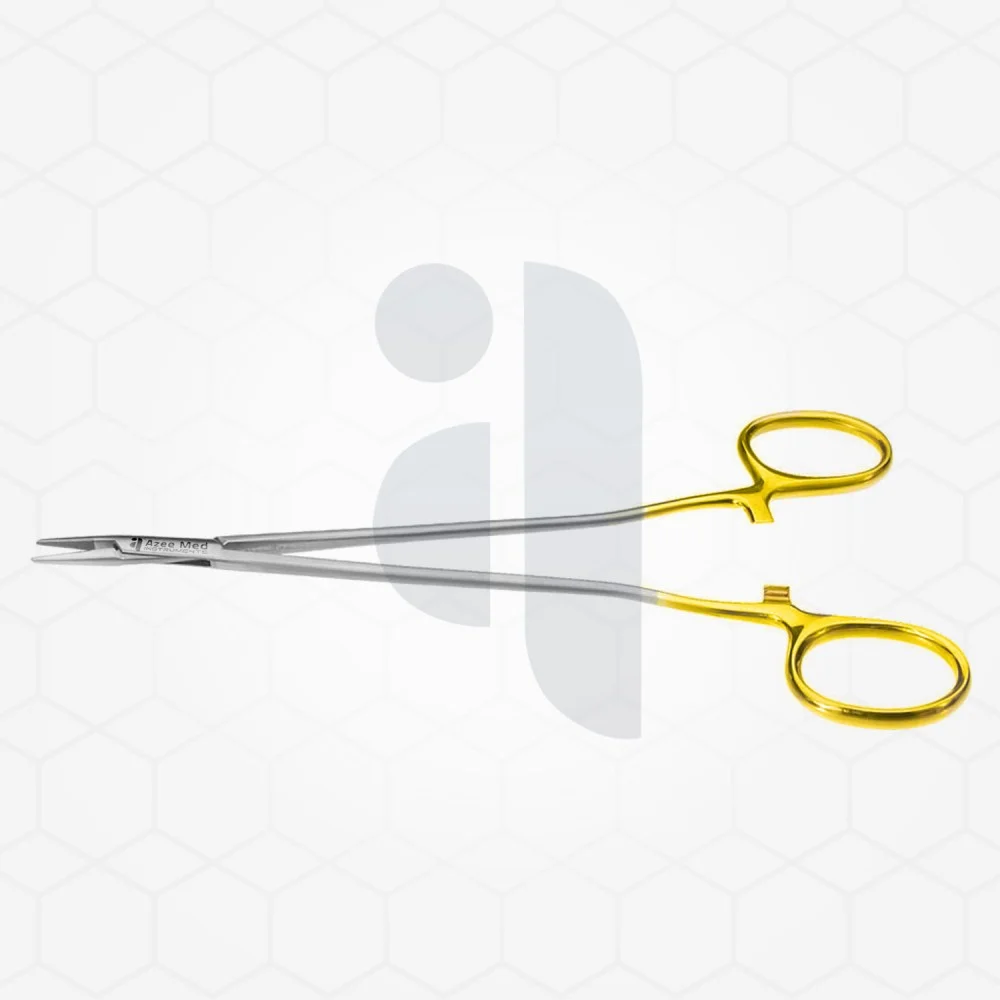
Modern surgery relies on swift decisions, steady hands, and tools that respond without any margin for error. Among the instruments that uphold this precision, the Sarot needle holder holds a key position. Although it often receives less attention than other, more visible devices in the operating theatre, its role is decisive in closing tissues, controlling sutures, and ensuring the safety of the procedure.
This instrument does more than just hold a needle. It helps the surgeon maintain stability, apply the right amount of force, and work with accuracy in delicate operative fields. When a needle holder is poorly designed, fatigue increases, the needle can lose its alignment, and suturing becomes less predictable. In contrast, a high-quality model enhances technical performance and supports better clinical outcomes.
In this article, we will examine why the Sarot needle holder remains an essential piece of equipment in current surgical practice. We will also review its main features, its ergonomic value, and its direct impact on surgical efficiency and results.

What is the Sarot Needle Holder and Why is it Still Essential?
The Sarot needle holder is a surgical instrument designed to grip and manoeuvre suture needles with firmness and precision. It is commonly used across multiple specialities, from general surgery to cardiovascular, gynaecological, plastic, and trauma procedures. The reason is simple: a precise suture demands exact control over the needle's path through the tissue.
Unlike a conventional clamp, the needle holder is built to withstand repeated pressure without losing its grip. Its jaws, locking mechanism, and overall balance allow for more controlled movements. This is vital when working with fine tissues, small vessels, or anatomical areas where a few millimetres can mean the difference between a secure repair and an avoidable complication.
In many clinical settings, the quality of an instrument is no longer judged solely on its longevity. It is also measured by its contribution to the technical consistency of the surgical team. In this context, the Sarot needle holder stands out for combining mechanical precision, structural strength, and user comfort.
Defining Features of the Sarot Needle Holder
Firm Grip and Precise Control
The primary function of the Sarot needle holder is to provide a secure grip on the needle without deforming it. This allows the surgeon to maintain the correct angle of entry and exit, which is essential for protecting the tissue and ensuring a uniform suture. A reliable grip reduces the risk of slippage and improves the continuity of the surgical action.
The internal texture of its jaws and the quality of the assembly greatly influence this performance. When these surfaces are well-designed, the needle remains stable even during repetitive manoeuvres or in tissues with varying resistance. This level of control helps to reduce interruptions and promotes a smoother technique.
Durability for Intensive Clinical Use
High-level surgical instruments must withstand frequent sterilisation, repeated use, and exposure to demanding conditions without degrading. The Sarot needle holder is typically made from medical-grade stainless steel or other alloys suitable for surgical use. This allows it to retain its structural integrity and performance even after constant autoclave cycles.
Durability means more than just the instrument lasting a long time. It also means it maintains its alignment, its closing force, and the quality of contact between its moving parts. An instrument that loses precision with use compromises safety. Therefore, the functional lifespan of the needle holder is as important as its physical strength.
Ergonomic Design Focused on the Surgeon
Ergonomics is one of the most valued factors in modern surgery. Long procedures demand instruments that fit well in the hand and reduce muscle strain. A well-designed Sarot needle holder improves grip comfort and facilitates repetitive movements with less effort.
This is especially important in highly complex surgeries or minimally invasive techniques, where manual precision must be maintained for long periods. A balanced instrument reduces finger and wrist fatigue, which can translate into better technical consistency from the first suture to the last.
The Role of Precision in Surgical Outcomes
Precision in surgery is not a minor detail. It influences operating time, the quality of the closure, healing, and the risk of post-operative complications. A needle holder that responds predictably allows for more uniform sutures, with controlled tension and less tissue trauma.
When the needle enters and exits at the correct angle, the tissue suffers less mechanical damage. This promotes local perfusion, improves the approximation of wound edges, and can contribute to a more orderly recovery. In procedures where every stitch counts, the precision of the instrument becomes a real clinical advantage.
Furthermore, the accuracy of the needle holder helps to standardise technique among different members of the team. This is useful in hospitals and surgical centres that seek operational consistency, better training for junior doctors, and greater quality control in every procedure.
A Small Instrument with a Big Impact on Theatre Workflow
In the operating theatre, efficiency depends on many small factors working together. The Sarot needle holder is one of them. If the instrument responds well, the surgeon needs fewer adjustments, less repositioning, and fewer interruptions to correct the needle grip. This improves the pace of work and reduces friction during the operation.
It also facilitates coordination with the scrub nurse. When the instrument's design and balance are reliable, handovers are quicker and the surgical sequence flows better. In complex procedures, this continuity can save valuable time and help the team maintain a high level of concentration.
Therefore, although its size is small compared to other equipment in the surgical environment, its operational impact is significant. Often, the quality of the outcome depends on the sum of these instrumental decisions.
Integration with Other Highly Specialised Instruments
A good surgical environment does not depend on a single tool, but on the harmony between several. The Sarot needle holder works best when it is part of a well-chosen instrument set, where each piece performs a specific function with high reliability. This integration allows the surgeon to move from dissection to closure without losing precision or control.
For example, certain specialised procedures may use instruments like a guyon sound, which meets diagnostic or exploratory needs in specific urological contexts. Although its purpose is different from that of the needle holder, both reflect the same clinical demand: exact, durable instruments designed for very specific tasks.
Similarly, other operative scenarios employ tools like bird beak forceps, prized for their gripping ability in difficult or limited-access areas. The presence of these instruments in the surgical field demonstrates that modern surgery requires specialised technical solutions, and the Sarot needle holder fits clearly within this standard of high performance.
How to Identify a High-Quality Sarot Needle Holder
Reliable Materials
The first point to assess is the quality of the material. A good needle holder must resist corrosion, repeated sterilisation, and mechanical wear. Surgical-grade stainless steel remains a benchmark choice for its balance of strength, hygiene, and lifespan.
Secure Lock and Stable Alignment
The locking system must operate smoothly but also firmly. If the lock fails or the jaws do not align properly, the needle can move unpredictably. This affects precision and increases the risk of error during suturing.
Ergonomics and Balance
The instrument should feel stable in the hand. It should not be excessively heavy or create uncomfortable pressure points. A well-balanced design helps to maintain fine control and reduces fatigue during prolonged procedures.
Finish and Maintenance
The finish also matters. Well-polished surfaces, clean joints, and an absence of imperfections are signs of good manufacturing. Furthermore, a design that facilitates cleaning and maintenance supports infection control and extends the instrument's performance.
The Value of the Sarot Needle Holder in Safer Surgery
Surgical safety does not depend solely on protocols, advanced technology, or clinical experience. It also rests on the reliability of basic instruments. The Sarot needle holder represents this idea very well. It is an instrument that seems simple but performs a critical function in an essential stage of almost any procedure: suturing.
When an instrument offers precise control, mechanical strength, and comfort, the surgeon can focus on the technique and the patient, not on correcting equipment failures. This advantage improves individual performance and strengthens the work of the entire team.
Conclusion
The Sarot needle holder remains an indispensable piece of equipment in modern surgery for one clear reason: it makes precision a repeatable, safe, and efficient action. Its ability to grip the needle firmly, its durability against intensive use, and its ergonomic design make it essential in environments where every movement counts.
Beyond its simple form, its impact on surgical outcomes is profound. It helps to achieve more exact sutures, reduces operative fatigue, and supports a more stable workflow in the operating theatre. For hospitals, clinics, and professionals who value the quality of their instruments, investing in a high-level Sarot needle holder is not a luxury. It is a practical decision that promotes better procedures and more reliable surgical care.

 English
 Arabic
 French
 Portuguese
 Deutsch
 Turkish
 Dutch
Dutch
 Italiano
 Russian
 Romaian
 Portuguese (Brazil)
 Greek
Greek