


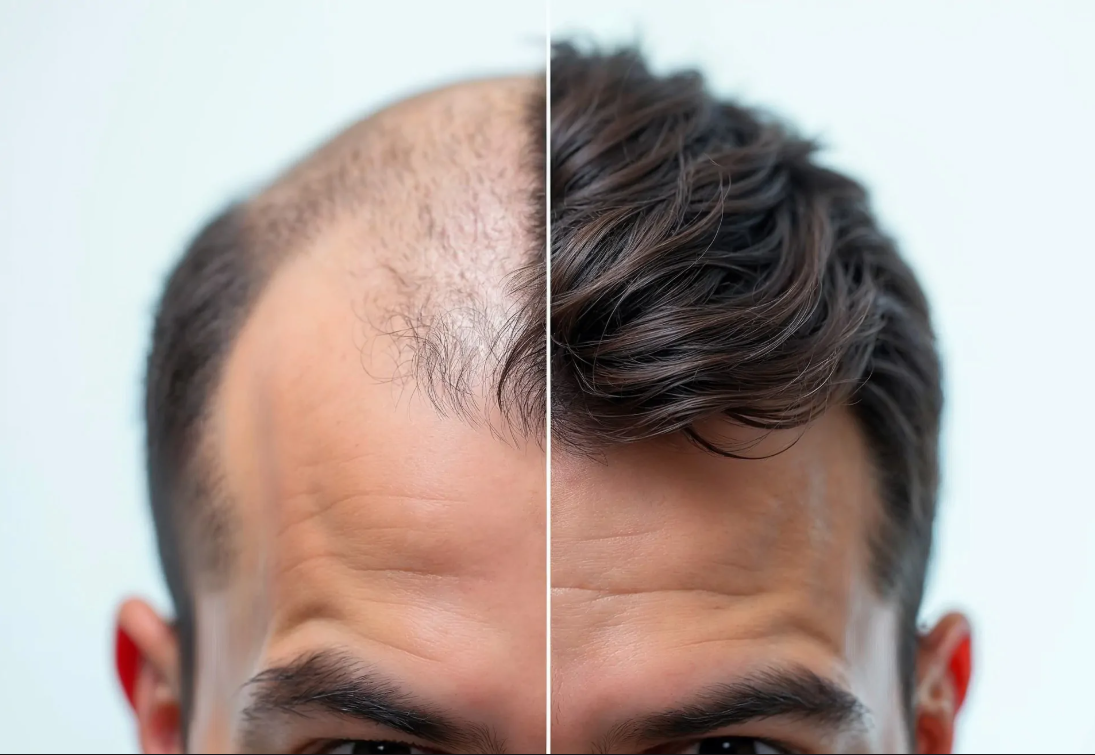
Hair loss affects millions worldwide and has driven the development of various restoration methods, ranging from pharmacological treatments to surgical interventions. Among these, hair transplants and exosome therapy are two prominent approaches, but they differ fundamentally in mechanism, invasiveness, and outcomes. Understanding these differences helps individuals make informed choices about which treatment best suits their hair restoration goals. Many people are exploring the benefits of exosomes in Riyadh for natural hair restoration and scalp rejuvenation.
Hair Transplants: The Surgical Approach
Hair transplantation is a well-established surgical procedure designed to relocate hair follicles from a donor area—typically the back or sides of the scalp—to thinning or balding regions. The two most common techniques are follicular unit transplantation (FUT) and follicular unit extraction (FUE). FUT involves removing a strip of scalp from the donor site and dissecting it into individual follicular units for transplantation, while FUE removes individual follicles directly from the donor area. Both techniques aim to provide natural-looking hair by repositioning healthy follicles.
The advantages of hair transplants include immediate cosmetic improvement and permanent results for the transplanted follicles. Once successfully transplanted, these follicles generally retain their resistance to androgenetic alopecia and continue growing for life. However, transplants do not prevent further hair loss in untreated areas, meaning ongoing thinning may require additional procedures. Hair transplants are also invasive, requiring local anesthesia, recovery time, and post-operative care. Risks include scarring, infection, folliculitis, and uneven growth if the procedure is not performed skillfully. Additionally, donor hair availability can limit results, particularly in cases of extensive baldness.
Exosome Therapy: The Regenerative Approach
Exosome therapy, in contrast, is a non-surgical, minimally invasive treatment that focuses on hair follicle regeneration rather than relocation. Exosomes are extracellular vesicles secreted by stem cells that contain growth factors, cytokines, and microRNAs. These bioactive molecules stimulate hair follicle cells, particularly dermal papilla cells, which play a central role in regulating hair growth and follicle cycling. Exosomes can prolong the anagen (growth) phase, enhance vascularization around follicles, reduce inflammation, and modulate gene expression to promote hair regeneration.
Exosome therapy does not require live stem cells, making it safer and simpler than stem cell transplantation. It is typically delivered via microinjections into areas of thinning or miniaturized hair. The procedure is minimally invasive, associated with little to no downtime, and generally well-tolerated. Multiple sessions may be recommended to achieve optimal results, and some patients combine exosomes with PRP (platelet-rich plasma) or low-level laser therapy for enhanced outcomes.
Key Differences: Mechanism of Action
The primary distinction between hair transplants and exosome therapy lies in their mechanism of action. Hair transplants provide a mechanical solution: healthy hair follicles are relocated to areas of hair loss, offering immediate cosmetic coverage. Exosome therapy, by contrast, is regenerative. It works at a cellular level to stimulate existing follicles, improve follicular health, and potentially activate dormant follicles. This means that exosomes do not “move” hair but aim to improve the function and quality of the hair already present.
Invasiveness and Recovery
Hair transplants are surgical procedures and require significant preparation, anesthesia, and post-operative care. Recovery may take several days to weeks, and patients may experience swelling, redness, or discomfort. Exosome therapy, being non-surgical, involves microinjections that are minimally invasive. Most patients resume normal activities immediately, with only minor redness or tenderness at injection sites that typically resolves within a day or two.
Suitability and Limitations
Hair transplants are most suitable for patients with sufficient donor hair and stable hair loss. They are particularly effective for creating immediate, permanent coverage in balding areas. However, they do not prevent future hair loss and are less effective in patients with diffuse thinning or inadequate donor hair. Exosome therapy is better suited for early to moderate hair thinning, miniaturized follicles, or patients seeking non-surgical regenerative options. While exosomes can improve follicle health and hair density, results are gradual, and effectiveness may vary depending on age, genetics, and scalp condition.
Long-Term Considerations
Hair transplants provide a permanent solution for transplanted follicles but do not stop natural hair loss elsewhere. Patients may require additional transplants in the future to maintain a natural look. Exosome therapy, while regenerative, is not permanent in the same sense; maintenance sessions may be necessary to sustain improvements, especially in progressive hair loss conditions. Its main advantage lies in improving the health of existing follicles and potentially rejuvenating dormant ones.
Conclusion
Hair transplants and exosome therapy represent two distinct approaches to hair restoration: mechanical versus regenerative. Hair transplants provide immediate, permanent coverage by relocating follicles but are invasive, require recovery time, and depend on donor hair availability. Exosome therapy is minimally invasive, focuses on improving follicle health, and has the potential to reactivate dormant follicles, but results are gradual and may require ongoing maintenance. Choosing between these options depends on the patient’s hair loss stage, goals, tolerance for surgery, and interest in regenerative treatments. In many cases, combining regenerative therapies like exosomes with surgical or pharmacological treatments can provide complementary benefits, optimizing both hair quality and coverage over time.

 English
 Arabic
 French
 Spanish
 Portuguese
 Deutsch
 Turkish
 Dutch
Dutch
 Italiano
 Russian
 Romaian
 Portuguese (Brazil)