


Business analyst roles in healthcare are growing fast due to data, technology, and demand for efficiency. Understand key drivers shaping careers in this field.
You’re sitting in a hospital waiting area, watching how quickly everything moves. Appointments are scheduled digitally, reports arrive instantly, and doctors rely on dashboards instead of paper files. It feels efficient but also complex.
Behind all this, someone is making sure these systems actually work together.
Healthcare today depends heavily on data, technology, and smooth operations. But without the right professionals to manage and interpret these systems, even advanced tools can fall short.
That’s where the role of a business analyst in healthcare becomes important, helping organizations connect data, processes, and patient care while improving efficiency and outcomes across the system.
The Expansion of Healthcare Systems and Services
Healthcare systems are expanding in scale and scope, covering more services, patients, and technologies than before. This expansion creates operational challenges that require structured analysis and planning.
Organizations need professionals who can understand workflows and improve efficiency across departments.
Key reasons this expansion drives demand include the following:
-
Increasing number of healthcare facilities and services
-
Growing patient data and administrative processes
-
Need for streamlined communication across departments
-
Rising demand for operational efficiency
As healthcare systems grow, the need for professionals who can manage complexity and optimize processes becomes more critical.
Digital Systems Are Transforming Healthcare Operations
The shift from manual processes to digital systems is one of the strongest drivers behind the growing demand for business analysts. Healthcare organizations are implementing electronic health records, telemedicine platforms, and automated tools.
This transformation requires professionals who can ensure these systems function effectively.
Business analysts contribute by:
-
Evaluating system requirements and performance
-
Supporting implementation of digital platforms
-
Identifying gaps in system workflows
-
Ensuring alignment between technology and operations
The continuous adoption of digital systems creates ongoing opportunities for business analysts to add value.
Data Is Becoming Central to Healthcare Decisions
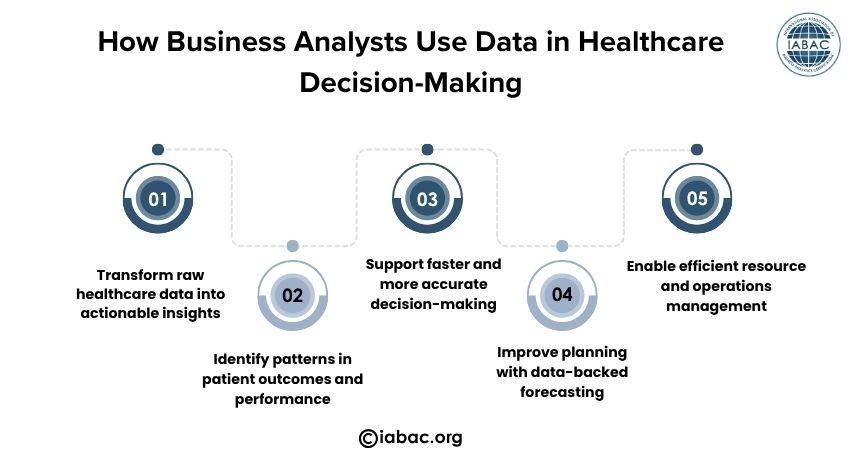
Healthcare organizations are increasingly relying on data to guide decisions related to patient care, operations, and long-term planning. However, raw data alone is not useful without proper analysis.
This is where business analysts play an important role.
They help organizations:
-
Convert data into actionable insights
-
Identify trends in patient outcomes
-
Support decision-making with structured analysis
-
Improve planning and forecasting
As data becomes a core part of healthcare strategies, professionals who can interpret and apply it effectively are in high demand.
Complex Workflows Require Structured Analysis
Healthcare environments involve multiple interconnected workflows, including clinical operations, administration, billing, and compliance. Managing these workflows without proper analysis can lead to inefficiencies.
Business analysts help simplify and improve these processes.
Their role includes:
-
Mapping workflows across departments
-
Identifying bottlenecks and inefficiencies
-
Recommending process improvements
-
Enhancing coordination between teams
With increasing complexity, organizations rely on business analysts to bring clarity and structure to operations.
Compliance and Data Protection Are Critical Priorities
Healthcare organizations operate under strict regulations related to patient data, privacy, and safety. Ensuring compliance while maintaining efficiency is a major challenge.
Business analysts help organizations meet these requirements effectively.
They contribute by:
-
Aligning processes with regulatory standards
-
Supporting compliance documentation and reporting
-
Identifying potential risks in workflows
-
Recommending solutions to improve data security
As regulations continue to evolve, the importance of this role continues to grow.
Technology Adoption Is Creating New Responsibilities
The integration of advanced technologies such as artificial intelligence and automation is reshaping healthcare operations. These technologies require careful planning, implementation, and monitoring.
Business analysts play a key role in ensuring successful adoption.
Their responsibilities include:
-
Assessing the impact of new technologies
-
Supporting implementation strategies
-
Monitoring system performance
-
Ensuring alignment with business objectives
As healthcare organizations continue to adopt new technologies, the scope of this role keeps expanding.
Patient Experience Is Driving Operational Changes
Improving patient experience has become a major focus in healthcare. Organizations are working to provide faster, more efficient, and personalized care.
Business analysts support these efforts by analyzing processes and identifying areas for improvement.
They help by:
-
Evaluating patient journey data
-
Identifying gaps in service delivery
-
Recommending improvements in workflows
-
Supporting patient-focused initiatives
Enhancing patient experience requires a combination of data insights and process optimization, increasing the demand for this role.
Cost Management Requires Data-Backed Strategies
Healthcare organizations are under constant pressure to manage costs while maintaining high standards of care. Inefficient processes can lead to increased expenses and reduced productivity.
Business analysts help organizations address these challenges.
Their contributions include:
-
Identifying cost inefficiencies
-
Optimizing resource allocation
-
Streamlining workflows
-
Supporting data-driven budgeting decisions
The focus on cost optimization makes business analysts an essential part of healthcare operations.
Opportunities Are Expanding Across Healthcare Domains
The demand for business analysts is not limited to hospitals. It extends across various sectors within the healthcare industry, creating diverse career opportunities.
These opportunities include:
-
Healthcare providers and hospital networks
-
Health insurance organizations
-
Pharmaceutical and biotechnology companies
-
Health technology firms
-
Government healthcare agencies
This wide range of options allows professionals to build flexible and growth-oriented careers.
Skill requirements are increasing the demand.
The growing demand for business analysts in healthcare is also driven by the need for specialized skills. Organizations are looking for professionals who can combine analytical thinking with domain knowledge.
Important skills include:
-
Understanding of healthcare systems and workflows
-
Data analysis and interpretation
-
Knowledge of business analysis tools
-
Communication and stakeholder management
-
Problem-solving and critical thinking
Professionals who develop these skills are better positioned to meet industry requirements.
Long-Term Industry Changes Are Sustaining Growth
The demand for business analysts in healthcare is supported by long-term changes in the industry. These changes are shaping how healthcare services are delivered and managed.
Key trends influencing future demand include:
-
Increased use of predictive analytics
-
Growth of personalized healthcare solutions
-
Continued expansion of digital health technologies
-
Greater focus on preventive care
These trends indicate that the demand for this role will continue to grow in the coming years.
The rapid growth of business analysts in healthcare roles is driven by multiple factors, including digital transformation, data-driven decision-making, and increasing system complexity. Healthcare organizations need professionals who can connect operations, technology, and data to improve efficiency and outcomes.
For individuals looking to build strong careers, this role offers significant opportunities across various sectors. Building the right skills through an IABAC certification can strengthen your practical understanding and help you align with industry expectations. As healthcare continues to evolve, the demand for skilled business analysts will remain strong, creating a clear path for long-term career growth.

 English
 Arabic
 French
 Spanish
 Portuguese
 Deutsch
 Turkish
 Dutch
Dutch
 Italiano
 Russian
 Romaian
 Greek
Greek