


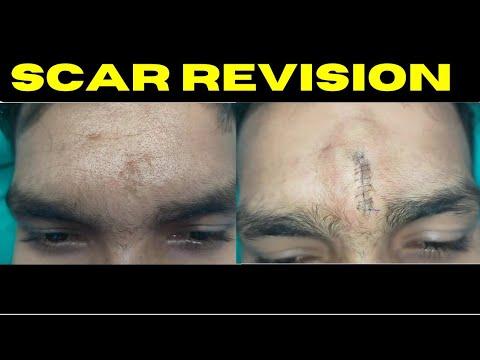
What to Expect During a Surgical Scar Revision Procedure
Undergoing a clinical transformation to improve the appearance of skin tissue involves a highly organized series of steps, particularly when opting for Surgical Scar Revision in Riyadh. Many individuals feel a sense of apprehension before a procedure, but understanding the chronological flow—from the initial marking of the skin to the final application of protective dressings—can provide significant peace of mind. Unlike general surgery, scar revision is often a meticulous "surface-level" engineering task that focuses on tension release and geometric realignment. Because the goal is to replace a noticeable, distorted scar with a fine, inconspicuous line, every phase of the procedure is designed with millimeter-level precision. In the specialized medical environment of the Saudi capital, these procedures are tailored to account for skin thickness, previous healing patterns, and the specific aesthetic goals of the individual.
The Pre-Operative Marking Phase
The procedure begins long before the first incision is made. The surgeon starts by carefully "mapping" the scar and the surrounding healthy skin while the patient is in various positions (sitting, lying down, and moving).
-
Identifying Tension Lines: The surgeon identifies the Relaxed Skin Tension Lines (RSTLs). Aligning the new scar with these natural folds is the secret to a result that remains thin over time.
-
Geometric Mapping: If a technique like Z-plasty or W-plasty is being used, the surgeon will draw complex geometric patterns directly on the skin. These "blueprints" ensure that the final closure will interlock perfectly, breaking up the straight line of the old scar.
-
Symmetry Checks: Especially for facial revisions, measurements are taken to ensure that the revision does not pull on the features, such as the eyelids or the corners of the mouth, maintaining natural facial symmetry.
Anesthesia and Site Preparation
Once the mapping is complete, the area is thoroughly cleaned with medical-grade antiseptics to create a sterile field.
-
Local Anesthesia: Most surgical scar revisions are performed under local anesthesia with sedation. A numbing agent (typically lidocaine with epinephrine) is injected around the scar. The epinephrine serves a dual purpose: it numbs the area and constricts local blood vessels to minimize bleeding, allowing the surgeon a clear, blood-free view of the tissue layers.
-
Patient Comfort: While the patient is awake or lightly sedated, they will feel no pain, only a slight sensation of pressure or movement as the surgeon works on the skin’s surface.
The Excision and Undermining Process
The core of the procedure involves the physical removal of the old, fibrotic scar tissue. Using high-precision instruments, the surgeon "excises" the scar, essentially creating a fresh, clean wound with healthy edges.
Following the excision, the surgeon performs "undermining." This involves gently separating the skin from the underlying fat or muscle for several millimeters on either side of the gap. By freeing the skin from its deeper attachments, the surgeon ensures that when the edges are pulled together, there is zero "drag" or tension. This step is the most critical for preventing the new scar from widening or becoming raised during the months of healing that follow.
Layered Closure and Precision Suturing
The "closing" of the site is the most time-consuming part of Surgical Scar Revision in Riyadh. To achieve a seamless look, a "layered closure" technique is utilized.
-
Deep Dermal Stitches: The surgeon first places several rows of dissolvable stitches deep within the dermis. these stitches do the "heavy lifting" by holding the wound edges together from the inside. This removes all pressure from the surface of the skin.
-
Epidermal Suturing: Once the deep layers are secure, the top layer of skin (the epidermis) is closed with incredibly fine, hair-like sutures. These are often placed in a "subcuticular" fashion—running just beneath the surface—so that no "railroad track" marks are left on the outside of the skin.
-
Eversion: The surgeon will intentionally make the new incision line look slightly "puckered" or raised. This is a technical requirement; as the scar heals and naturally contracts, this ridge will flatten out. A wound that starts flat often ends up slightly indented.
Immediate Post-Operative Care
Immediately after the last suture is placed, the site is treated to jumpstart the healing process.
-
Ointment Application: A thick layer of antibiotic or petrolatum-based ointment is applied to keep the site "occluded" (moist). A dry wound is a slow-healing wound.
-
Surgical Taping: Specialized Steri-Strips or surgical glue may be used to provide an extra layer of support, acting like an external skeleton to keep the skin from moving while the initial "biological glue" of the body sets.
-
Pressure Bandaging: In some cases, a light pressure dressing is applied to prevent swelling (edema) or the collection of fluid under the skin flaps.
What to Expect in the Recovery Suite
After the procedure, which typically lasts between 45 and 90 minutes depending on complexity, the patient is monitored briefly. There is usually very little "pain," though a sensation of tightness or a dull ache is common as the local anesthetic wears off.
-
Activity Restrictions: Patients are usually advised to avoid any facial expressions or body movements that "pull" on the treated area for the first 48 to 72 hours.
-
Suture Removal: If non-dissolvable surface sutures were used, they are typically removed very early—often within 5 to 7 days. This early removal prevents the skin from growing over the stitches, which is what causes permanent stitch marks.
-
Long-Term Redness: It is vital to expect the revision site to look quite red or pink for the first several weeks. This "hyperemia" is a sign of healthy blood flow helping the tissue rebuild itself. Over the following months, this color will fade into a subtle, pale line that blends with the surrounding skin. By following these clinical steps, the procedure successfully replaces an irregular scar with a refined, medically optimized repair.

 Arabic
 French
 Spanish
 Portuguese
 Deutsch
 Turkish
 Dutch
Dutch
 Italiano
 Russian
 Romaian
 Portuguese (Brazil)
 Greek
Greek