


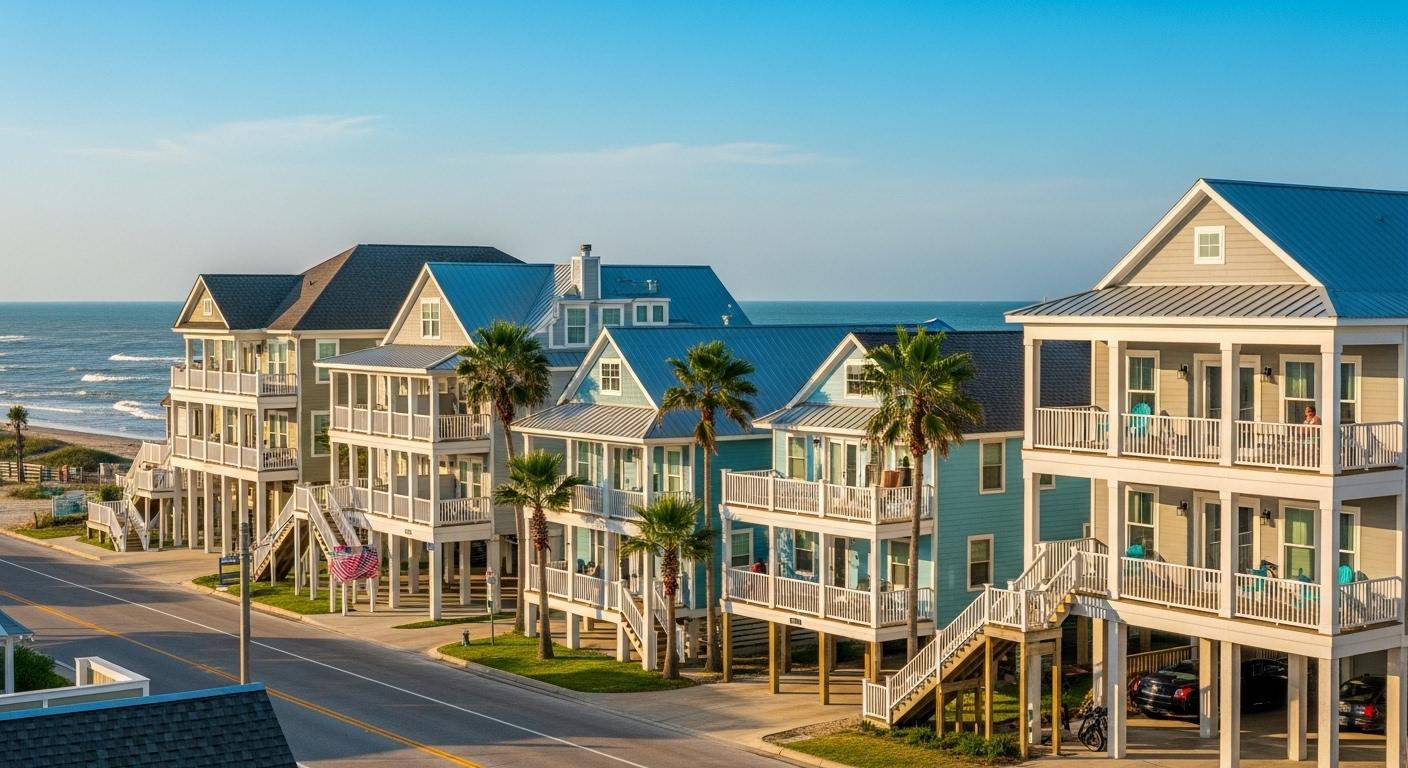
The Texas Gulf Coast has quietly become one of the most compelling short-term rental investment markets in the southern United States, and Galveston Island sits at its epicenter. With over 7 million annual visitors, a cruise port processing 1.2 million passengers yearly, and proximity to the Houston metropolitan area's 7 million residents, the island generates consistent demand that few comparable coastal markets can match. Yet navigating the galveston vacation rentals market for coastal investment opportunities requires more than enthusiasm — it demands rigorous understanding of occupancy dynamics, regulatory compliance, and financial fundamentals that separate profitable investments from expensive lessons.
The short-term rental industry has matured considerably since its Airbnb-driven explosion in the early 2010s. What was once a casual side hustle for homeowners has evolved into a professionalized asset class attracting institutional capital, sophisticated revenue management technology, and increasing regulatory scrutiny. Galveston's market reflects all of these trends simultaneously, creating both opportunity and complexity for current and prospective investors.
According to AirDNA's 2024 market intelligence report for Galveston, the island hosts approximately 3,800 active short-term rental listings — a number that has grown 22% since 2021. These galveston vacation rentals generated an estimated $285 million in gross booking revenue during 2023, representing a significant share of the island's $1.2 billion tourism economy. But behind these headline numbers lie nuanced patterns in occupancy, evolving regulations, and investment considerations that demand careful analysis.
Occupancy Rate Analysis: Understanding the Numbers That Matter
Annual Occupancy Trends
Occupancy rate — the percentage of available nights that a property is booked — is the fundamental performance metric for galveston vacation rentals. AirDNA data for 2024 reveals the following island-wide averages:
-
Annual average occupancy: 56–61%
-
Peak summer occupancy (June–August): 78–85%
-
Spring shoulder occupancy (March–May): 58–68%
-
Fall shoulder occupancy (September–November): 48–58%
-
Winter off-season occupancy (December–February): 35–45%
These figures represent island-wide averages across all property types and locations. Individual property performance varies dramatically based on several factors:
Location premium: Beachfront and Seawall-adjacent properties consistently achieve occupancy rates 10–15 percentage points above inland properties. West End beachfront homes with private beach access represent the highest-performing location category, frequently exceeding 70% annual occupancy.
Property quality and amenities: According to Transparent Intelligence's 2024 vacation rental performance analysis, professionally managed properties with premium amenities (pools, hot tubs, updated kitchens, dedicated workspaces) achieve 15–20% higher occupancy than comparable properties without these features.
Guest capacity optimization: Properties sleeping 8–12 guests — ideal for family reunions, friend groups, and multi-generational travel — show the strongest revenue performance in Galveston's market, commanding both higher nightly rates and strong occupancy due to limited supply of large, high-quality properties.
Review scores: Properties maintaining average review scores above 4.8 (out of 5.0) on major platforms achieve measurably higher occupancy than lower-rated alternatives. Research from Vrbo's 2024 Host Performance Report indicates that each 0.1-point increase in average review score correlates with approximately 3% higher occupancy.
Revenue Metrics Beyond Occupancy
Sophisticated investors evaluate galveston vacation rentals using multiple performance metrics, not occupancy alone:
Average Daily Rate (ADR): The average nightly rate actually collected, accounting for seasonal pricing variations. Galveston's island-wide ADR in 2024 averaged approximately $220, with premium beachfront properties achieving $350–$550 during peak season.
Revenue Per Available Night (RevPAN): Calculated by multiplying ADR by occupancy rate, this metric captures both pricing power and booking frequency. Galveston's average RevPAN of approximately $130 compares favorably to competing Gulf Coast markets including South Padre Island ($115) and Gulf Shores, Alabama ($125).
Gross Revenue Per Property: AirDNA reports that the median Galveston short-term rental generated approximately $42,000 in annual gross revenue in 2023, with top-quartile properties exceeding $85,000 and elite performers surpassing $150,000.
Rental Regulations: The Compliance Landscape
Current Regulatory Framework
Understanding and complying with galveston vacation rentals regulations is non-negotiable for legal operation and long-term investment viability. The City of Galveston's regulatory framework includes several key components:
Short-Term Rental Permit
All properties rented for periods of fewer than 30 consecutive days require a valid Short-Term Rental (STR) permit from the City of Galveston. The permitting process requires:
-
Completed application with property details and owner information
-
Proof of property ownership or authorized management agreement
-
Confirmation of adequate liability insurance coverage
-
Compliance with building and fire safety codes
-
Payment of applicable permit fees
-
Designation of a local responsible party available 24/7 for emergency response
The City of Galveston's Planning Department maintains the permit registry and conducts periodic compliance reviews. Operating without a valid permit carries penalties including fines and potential property-level booking platform restrictions.
Hotel Occupancy Tax (HOT)
Texas law requires short-term rental operators to collect and remit Hotel Occupancy Tax. In Galveston, this includes:
-
State HOT: 6% of rental revenue, remitted to the Texas Comptroller
-
County HOT: 7% of rental revenue, remitted to Galveston County
-
Total combined rate: 13% collected from guests and remitted to appropriate authorities
According to the Texas Comptroller of Public Accounts, Galveston County collected over $30 million in hotel occupancy tax revenue in fiscal year 2023 — a figure that underscores both the scale of the market and the importance of tax compliance.
Operators must register with both the Texas Comptroller and Galveston County, file regular tax returns (typically quarterly), and maintain accurate records of all rental transactions. Non-compliance can result in back-tax assessments, penalties, and interest charges.
Zoning Regulations
Galveston's zoning ordinances govern where short-term rentals may operate. While STRs are broadly permitted in many residential and commercial zones, specific restrictions apply in certain neighborhoods and zoning categories. Prospective investors should verify STR eligibility for any property before purchase through consultation with the City of Galveston's Planning Department.
Noise, Occupancy, and Nuisance Ordinances
The city enforces specific regulations designed to protect neighborhood quality:
-
Maximum occupancy limits based on property size and bedroom count
-
Noise restrictions, particularly during nighttime hours (typically 10 PM–7 AM)
-
Parking requirements specifying adequate off-street parking for guests
-
Trash management protocols
-
Prohibition of outdoor events exceeding specified guest counts without special permits
Operators like The Cardinal Retreats Galveston demonstrate how professional management ensures full regulatory compliance while delivering exceptional guest experiences — a combination that protects investment value and community relationships simultaneously.
Regulatory Trends and Future Outlook
Galveston's regulatory environment continues evolving, reflecting national trends in short-term rental governance. Several developments merit investor attention:
Increased enforcement: The city has strengthened its enforcement mechanisms in recent years, deploying technology-assisted monitoring to identify unpermitted operations and respond to complaints more efficiently. This trend benefits compliant operators by reducing unfair competition from unlicensed properties.
Community impact discussions: Ongoing public discourse about short-term rentals' impact on housing affordability, neighborhood character, and infrastructure creates potential for future regulatory adjustments. Investors should monitor City Council proceedings and community planning discussions.
Insurance requirements: Texas Senate Bill 1168, effective September 2023, established a statewide framework for short-term rental insurance requirements. Investors should maintain comprehensive coverage including liability, property damage, and loss-of-income protection specifically structured for galveston vacation rentals operations.
Platform compliance partnerships: Major booking platforms including Airbnb and Vrbo have established data-sharing agreements with municipalities, facilitating tax collection and permit verification. These partnerships are likely to expand, making platform-mediated compliance increasingly standard.
Investment Insights: Making Informed Decisions
Market Entry Considerations
Investing in galveston vacation rentals requires careful evaluation of multiple financial and operational factors:
Acquisition Costs
The Galveston Association of Realtors reports a median home sale price of approximately $295,000 in late 2024, though properties suitable for premium short-term rental operation typically range from $350,000 to $750,000 depending on location, size, and condition. Beachfront properties with strong rental potential often exceed $600,000, while well-positioned historic properties in the East End or Strand-adjacent areas offer entry points in the $300,000–$500,000 range.
Financing Considerations
Lenders classify short-term rental properties differently from primary residences, typically requiring:
-
20–25% minimum down payment
-
Higher interest rates (typically 0.5–1.5% above primary residence rates)
-
Demonstrated rental income projections for underwriting
-
Reserve fund documentation (usually 6–12 months of mortgage payments and operating expenses)
The National Association of Realtors' 2024 Investment Property Report notes that vacation rental mortgage originations have increased 18% nationally since 2021, indicating growing lender familiarity and product availability for this asset class.
Operating Expense Analysis
Realistic expense budgeting is critical for galveston vacation rentals investment success. Key operating costs include:
-
Property management fees: 20–30% of gross revenue for full-service professional management, or 3–8% for technology-assisted self-management platforms
-
Cleaning and turnover costs: $150–$400 per turnover depending on property size, representing one of the largest variable expenses
-
Insurance: $4,000–$10,000 annually for comprehensive coverage including windstorm, flood, liability, and loss-of-income protection
-
Property maintenance: 1–3% of property value annually, with coastal properties trending toward the higher end due to salt air corrosion, humidity, and storm-related wear
-
Utilities: $300–$600 monthly average, with significant seasonal variation driven by air conditioning demand
-
Platform fees: 3–15% of booking revenue depending on platform and fee structure
-
HOT remittance: 13% of rental revenue (collected from guests but managed by operator)
-
Supplies and consumables: $100–$300 monthly for linens, toiletries, cleaning supplies, and guest amenities
-
Capital reserves: Prudent investors allocate 5–10% of gross revenue for furniture replacement, appliance upgrades, and periodic renovation
Return on Investment Projections
Realistic ROI analysis for galveston vacation rentals should consider both cash flow and appreciation:
Cash flow scenario (median-performing property):
-
Gross annual revenue: $42,000–$55,000
-
Operating expenses (excluding mortgage): $18,000–$28,000
-
Net operating income: $24,000–$27,000
-
After mortgage service (assuming 75% LTV at 7.5%): $4,000–$10,000 annual cash flow
Cash flow scenario (top-quartile property):
-
Gross annual revenue: $85,000–$120,000
-
Operating expenses (excluding mortgage): $35,000–$55,000
-
Net operating income: $50,000–$65,000
-
After mortgage service: $20,000–$35,000 annual cash flow
Appreciation: Galveston property values have appreciated approximately 32% since 2020, according to Galveston Association of Realtors data. While past appreciation doesn't guarantee future returns, the island's constrained land supply, growing tourism infrastructure, and proximity to Houston's expanding economy support continued long-term appreciation.
Investors looking to enhance their property offerings and guest experience can explore curated products through The Cardinal Retreats Collection, which provides locally sourced lifestyle products designed to elevate the vacation rental guest experience and differentiate listings in a competitive market.
Risk Factors and Mitigation Strategies
Prudent investors in galveston vacation rentals must acknowledge and plan for several risk categories:
Hurricane and storm risk — the most significant physical threat. Mitigation strategies include adequate insurance coverage, storm-resilient construction standards, emergency preparedness plans, and property selection favoring elevated structures behind the Seawall.
Regulatory risk — potential for future restrictions on short-term rental operations. Mitigation includes active participation in industry associations, compliance with all current regulations, and maintaining positive community relationships.
Market saturation risk — the 22% growth in listings since 2021 raises questions about supply-demand balance. Mitigation focuses on property differentiation through quality, amenities, and professional management rather than competing solely on price.
Interest rate and financing risk — rising borrowing costs impact cash flow projections. Mitigation includes conservative leverage ratios, fixed-rate financing when possible, and adequate cash reserves.
Operational risk — guest damage, maintenance emergencies, and management failures. Mitigation through professional management, comprehensive insurance, thorough guest screening, and preventive maintenance programs.
Competitive Positioning Strategies
Differentiation in a Growing Market
As the galveston vacation rentals market matures, differentiation becomes increasingly important. Properties that blend into a sea of similar listings face pricing pressure and occupancy challenges. Strategies for standing out include:
Design excellence — investing in interior design that creates memorable, photographable spaces performs double duty: commanding higher rates and generating organic social media exposure
Amenity leadership — identifying and providing the amenities most valued by target guest segments, whether pools, outdoor kitchens, pet-friendly features, or dedicated workspaces
Experience integration — bundling property access with curated local experiences, dining recommendations, and activity partnerships creates value beyond square footage
Review management — systematically delivering five-star experiences and actively managing online reputation across all platforms
Niche targeting — specializing in specific traveler segments (fishing enthusiasts, history buffs, wellness seekers, large family groups) rather than attempting to serve all markets generically
Conclusion: Informed Investment in Island Opportunity
The galveston vacation rentals market presents genuine opportunity for investors who approach it with rigor, realism, and respect — respect for the data that should drive decisions, the regulations that govern operations, and the community that hosts both residents and visitors.
Occupancy rates confirm sustained demand driven by Galveston's geographic advantages and tourism infrastructure. The regulatory framework, while requiring diligent compliance, ultimately protects legitimate operators by maintaining market quality and community trust. And the investment fundamentals — when analyzed honestly, including all costs and risks — support attractive returns for well-positioned, professionally managed properties.
The investors who will thrive in galveston vacation rentals over the coming decade are those who view their properties not as passive income machines but as hospitality businesses requiring active management, continuous improvement, and genuine commitment to guest satisfaction. The island rewards that commitment generously — with cash flow, appreciation, and the satisfaction of sharing one of Texas's most remarkable places with the world.

 English
 French
 Spanish
 Portuguese
 Deutsch
 Turkish
 Dutch
Dutch
 Italiano
 Russian
 Romaian
 Portuguese (Brazil)
 Greek
Greek