


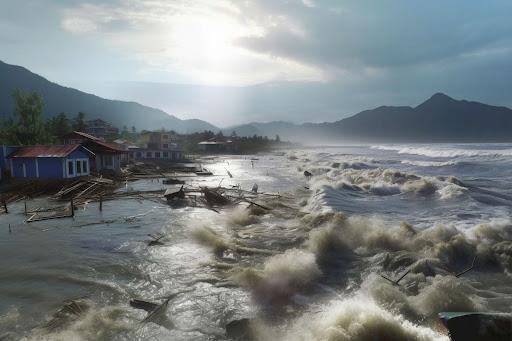
The search never starts early enough
Nobody shops for insurance on a good day. It’s always after a storm warning, a lender email, or a neighbor’s drywall sitting on the curb. You start clicking around, tabs open everywhere, coffee getting cold. Somewhere in there you type flood insurance quotes florida and hope one number magically makes sense. It won’t. Quotes look simple, but they’re built on assumptions you don’t see yet. Elevation guesses. Old maps. Rebuild costs that don’t match your contractor’s reality. People think they’re comparing prices. They’re really comparing interpretations. Big difference, and yeah, it matters later when water shows up where it shouldn’t.
Why two quotes can be hundreds apart
Here’s the short answer: rating models changed faster than most homeowners realized. FEMA’s Risk Rating 2.0 shifted the math from zones to property-specific risk. So one carrier leans heavier on distance to water, another on replacement cost, another on claim history in the zip code. Same house, same day, wildly different premium. Not because one is ripping you off. Because they weigh risk differently. Agents don’t always explain that part. They just email a PDF and move on. Truth is, the cheaper quote might be missing coverage for things you assumed were automatic. Like foundation coverage. Or loss of use. And you won’t notice until you actually read past page three, which, let’s be honest, most people don’t.
Coverage limits are where mistakes hide
Most policies default to $250k building and $100k contents. Sounds fine until you price materials in 2026. Cabinets alone can chew through that. Then flooring. Then labor — labor’s the killer. Rebuild cost isn’t market value either. Your neighbor sold for 300k, but rebuild might be 420k because land value isn’t insured, structure is. This is where people accidentally underinsure while thinking they’re saving money. They trimmed limits to lower the premium and never recalculated after renovations. A new kitchen quietly invalidates your comfort level. Insurance doesn’t adjust automatically just because your home got nicer.
Private vs NFIP isn’t a simple better/worse
You’ll hear someone swear private is always cheaper. Not always. Private carriers price aggressively in low-risk coastal areas, but inland properties sometimes land cheaper under federal backing. And private policies often include extras — pool cages, detached structures, higher contents limits — but they can also non-renew after heavy claim seasons. NFIP rarely does that. Stability vs flexibility. That’s really the trade. A lot of Florida flood insurance companies sell both options through the same agent, which confuses homeowners because it feels like competing advice coming from one office. It isn’t. They’re matching risk appetite to your property profile.
Deductibles change the story more than premiums
People fixate on monthly costs. But deductible is the line between inconvenience and financial pain. A $10k deductible sounds manageable until a 3-inch water event destroys flooring in five rooms. Smaller claims happen way more often than catastrophic ones. Choosing a high deductible to shave $300 a year? Sometimes smart. Sometimes a false economy. Depends on your savings buffer, not your optimism. Insurance works best when it fits your real life cash flow, not the best-case scenario in your head during sunny weather.
Maps don’t tell the full truth anymore
Flood zones still matter for lenders, but they don’t fully determine premiums anymore. You can be outside a Special Flood Hazard Area and still get a higher quote than a coastal home on pilings. Sounds backwards. It’s not. Modern models track rainfall patterns, drainage capacity, elevation variance street-by-street. A mile inland doesn’t equal safety if water has nowhere to go. That’s why neighbors compare rates and get frustrated — “same neighborhood!” — except the model sees slope direction and water accumulation paths. Stuff humans don’t notice walking the dog.
The agent matters more than the carrier
Not all agents specialize in flood. Many just offer it because a mortgage requires it. The difference shows when you ask questions. A specialist walks through rebuild math, deductible strategy, contents valuation. A generalist emails you a number. Both technically sold a policy. Only one reduced surprise. The better Florida flood insurance companies usually partner with agents who actually explain the policy before the storm, not after. That conversation feels slow upfront but saves arguments later when expectations collide with policy language.
What you should ask before buying
Skip “what’s the cheapest?” Start with “what’s excluded?” Ask about finished floors below base flood elevation. Ask how the replacement cost is calculated. Ask whether temporary housing is included or optional. The answers reveal more than the price. A good quote conversation feels slightly uncomfortable because you realize how many assumptions you had. That discomfort is useful. Means you’re learning before paying the deductible instead of after.
Conclusion: the number isn’t the decision
By the time you finish comparing policies, you’ll realize the premium is just the headline, not the story. Coverage structure, deductible reality, and claim handling reputation matter more than a few hundred dollars. Most homeowners only understand this after a claim, unfortunately. If you slow down and actually question the quote especially when dealing with Florida flood insurance companies you’re buying predictability, not just compliance with your lender. Flood insurance isn’t about optimism. It’s about removing guesswork from a situation that already has plenty of chaos. And honestly, that peace of mind is the only part of the policy you’ll appreciate every single storm season.

 English
 Arabic
 French
 Spanish
 Portuguese
 Deutsch
 Turkish
 Dutch
Dutch
 Italiano
 Russian
 Romaian
 Greek
Greek