


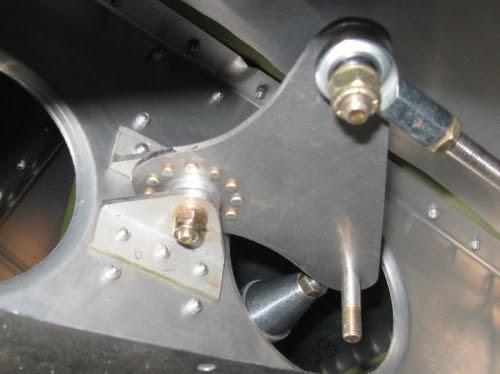
Within aviation engineering, the push pull control rod system in aircraft is a basic building block in an airplane because it provides a mechanism of transferring pilot control to control surfaces. A push-pull control system in an airplane provides a mechanism capable of moving ailerons, elevators, or rudders in an accurate way, thereby allowing an airplane to react in an accurate manner to pilot control input.
The mechanism works by translating control movements through the use of linear motion in a stiff rod. As the rod is pushed or pulled, control surfaces are consequently shifted in the desired direction through linkage. The above method is efficient in terms of lack of time or inconsistencies in control, common problems using hydraulic or electronic controls.
Durability is a crucial factor for these systems to be designed properly. The rods will always be designed from materials that can resist stress through repetition without bending or deformation. Engineers ensure that there is balance to avoid extra friction that can pose a risk to the functionality of these systems. Finally, engineers take into consideration the effects of aerodynamics to ensure balance in the movement of the control surfaces to avoid stress on the structure.
The push-pull control rod system offers one benefit: its reliability. The reason for this benefit is that the control system does not use electric or any other form of power; therefore, there are fewer failure points. This makes control feedback available to the pilot for immediate feedback without relying on any form of assistive equipment or power sources. This can contribute to pilots being better informed about their environment and making accurate decisions accordingly.
The integration of other parts, for example, bell cranks, control horns, and linkage assemblies, facilitates an efficient distribution of forces exerted by one rod to several control surfaces. This integrated mechanism ensures that each control surface works in collaboration so that stability in the aircraft is maintained. Periodic inspections are also an essential component to ensure that none of the links has come loose and that all moving parts are in good condition.
In closing, the role of mechanical linkages within the field of aviation is crucial for reliable control. The push-pull control rod system illustrated within an aircraft makes this point as it relates to controlled aerodynamic motion as directed by control inputs.

 English
 Arabic
 French
 Spanish
 Portuguese
 Deutsch
 Turkish
 Dutch
Dutch
 Russian
 Romaian
 Portuguese (Brazil)
 Greek
Greek