


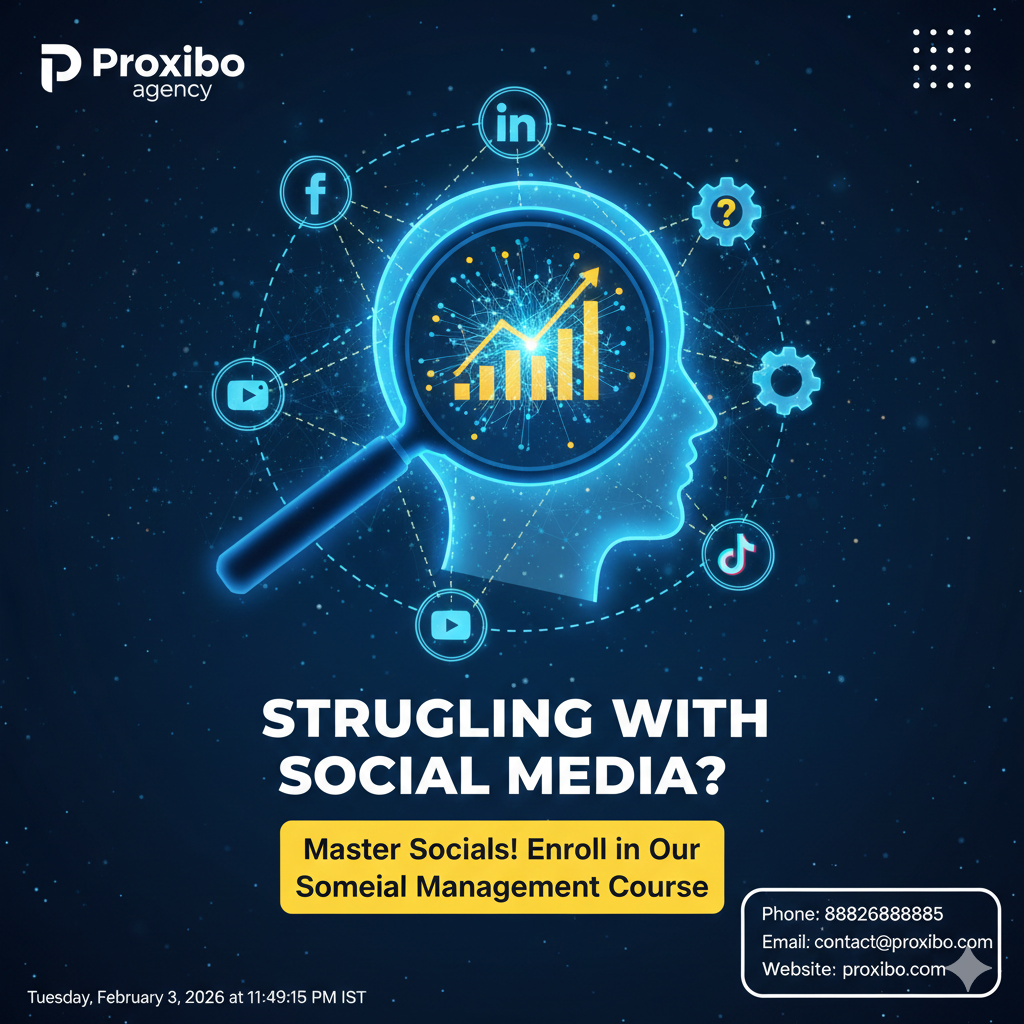
Social media has evolved from a simple networking tool into one of the most powerful digital marketing channels for businesses of all sizes. Today, brands rely heavily on platforms like Facebook, Instagram, LinkedIn, Twitter (X), and YouTube to reach their audiences, build trust, and generate sales. This growing demand has made social media management one of the most in-demand skills in the digital marketing industry. A well-structured social media management course helps individuals and businesses understand how to use these platforms strategically rather than randomly posting content.
A social media management course is designed to teach you how to plan, execute, analyze, and optimize social media strategies for brands. It goes beyond posting images or writing captions. Instead, it focuses on building a strong online presence, understanding audience behavior, creating engaging content, managing paid ad campaigns, and measuring performance using analytics tools. Whether you are a student, freelancer, entrepreneur, or working professional, learning social media management can open doors to new career opportunities and business growth.
One of the key benefits of enrolling in a social media management course is gaining a clear understanding of how different platforms work. Each social media platform has its own algorithm, audience type, and content format. What works on Instagram may not work on LinkedIn, and a strategy suitable for Facebook might fail on Twitter. A structured course teaches you how to tailor content and campaigns for each platform while maintaining a consistent brand voice. This platform-specific knowledge helps you achieve better engagement, reach, and conversions.
Content creation is another critical component of social media management. A professional course teaches you how to create high-quality, engaging content that aligns with business goals. This includes writing compelling captions, designing visuals, creating short videos and reels, planning stories, and using hashtags effectively. You also learn how to develop a content calendar that ensures consistency and saves time. Consistent, valuable content plays a major role in building brand authority and keeping audiences engaged over time.
Paid advertising is an essential part of modern social media strategies, and a good social media management course covers this in detail. Organic reach has declined across most platforms, making paid ads necessary for visibility and growth. Through practical training, you learn how to create and manage ad campaigns on platforms like Facebook Ads Manager, Instagram Ads, and LinkedIn Ads. This includes audience targeting, budget planning, ad creatives, A/B testing, and performance optimization. Understanding paid ads helps businesses generate leads, increase website traffic, and boost sales efficiently.
Analytics and reporting are what separate amateur social media managers from professionals. A quality social media management course teaches you how to track performance using platform insights and third-party tools. You learn how to analyze metrics such as reach, impressions, engagement rate, click-through rate, and conversions. More importantly, you learn how to interpret this data and turn insights into actionable improvements. Data-driven decision-making ensures that social media efforts deliver measurable results instead of guesswork.
Another important aspect of social media management is community management and brand reputation. Social media is a two-way communication channel where customers expect quick responses and meaningful interactions. A course helps you understand how to manage comments, messages, reviews, and feedback professionally. You also learn how to handle negative comments, complaints, and online crises in a way that protects and strengthens the brand’s image. Strong community management builds trust and long-term customer loyalty.
For businesses, investing in social media management training can significantly improve marketing outcomes. Instead of relying on trial and error, businesses can implement proven strategies that save time and money. For individuals, a social media management course offers multiple career paths. You can work as a social media manager, content strategist, paid ads specialist, or freelancer. Many professionals also use these skills to build personal brands, grow online businesses, or manage multiple client accounts.
The demand for skilled social media managers continues to grow as more businesses shift their focus to digital channels. Companies are actively looking for professionals who understand strategy, creativity, and analytics. Completing a social media management course gives you a competitive edge by providing practical knowledge, real-world examples, and hands-on experience. It also boosts your confidence to handle client projects or business accounts independently.
In conclusion, a social media management course is not just about learning how to post on social platforms. It is about understanding how social media fits into a larger digital marketing strategy and how it can be used to achieve real business goals any digital marketing company. From content creation and paid advertising to analytics and community management, the skills you gain are highly valuable in today’s digital-first world. Whether your goal is career growth, freelancing, or business expansion, mastering social media management is a smart and future-proof investment.

 English
 Arabic
 French
 Spanish
 Portuguese
 Turkish
 Dutch
Dutch
 Italiano
 Russian
 Romaian
 Portuguese (Brazil)
 Greek
Greek