


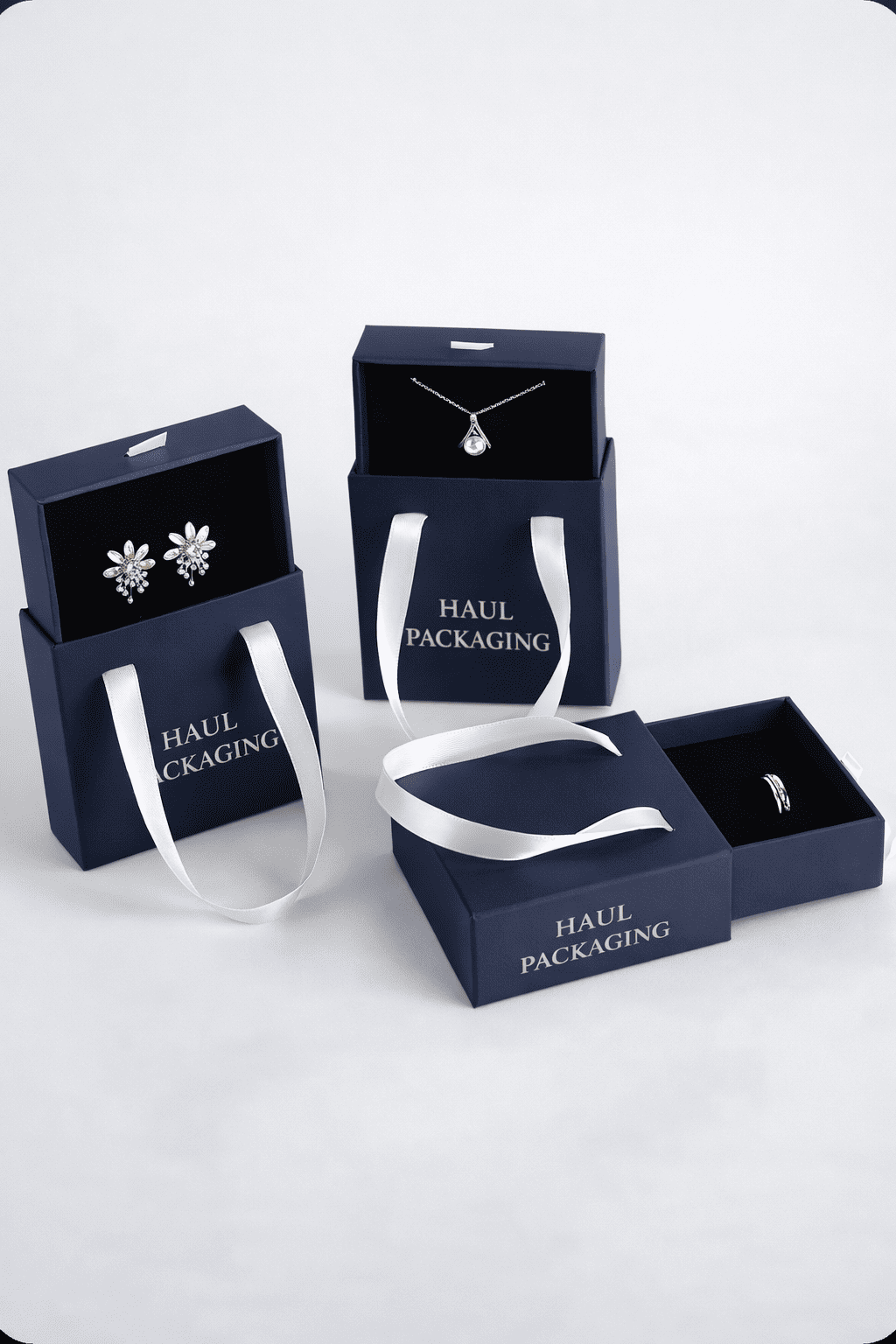
Your Box is Your Silent Ambassador
In the world of fine Custom Jewelry Boxes, the purchase is deeply intertwined with emotion, celebration, and sentiment. For a small business, the moment a customer opens your packaging is a critical brand touchpoint; it's the first physical interaction they have with your brand’s story and values. In fact, the right packaging doesn't just contain; it elevates the perceived quality and justifiability of your price point. This guide is designed to help small business owners in the USA navigate the world of custom jewelry boxes. You'll learn how to select the perfect style and materials to protect your pieces, reflect your brand's unique identity, and create an unforgettable unboxing experience that turns first-time buyers into loyal brand advocates.
Part 1: Understanding Jewelry Box Styles & Structures
Choosing the right box style is the first step in aligning your packaging with your product and brand ethos. Each structure serves a different purpose and creates a distinct customer experience.
1. Primary Packaging: The First Touch
This is the box that directly holds and showcases the jewelry. Its design is paramount for presentation and protection.
-
Classic Two-Piece Rigid Boxes: Often considered the standard for luxury, these boxes feature a separate base and lid that fit snugly together. They offer a substantial feel and are perfect for creating a ceremonial unboxing moment. Magnetic closures add a modern, satisfying tactile element.
-
Drawer-Style Boxes: Offering a sleek and contemporary reveal, these boxes feature an inner tray that slides out from a rigid outer sleeve. They are elegant and practical, often used for bracelets or sets.
-
Hinged Lid Boxes: Functioning like a beautiful book, these boxes open smoothly on a fixed hinge, often secured with a magnetic clasp. They are excellent for displaying necklaces or pieces that benefit from a dramatic, wide-opening presentation.
-
Fabric Pouches (Velvet, Satin, Organza): While not a box, pouches are a versatile and cost-effective primary packaging option. They communicate softness and luxury, are excellent for preventing scratches, and are highly reusable by the customer. They work particularly well for simpler chains, beaded bracelets, or as an inner layer inside a larger box.
2. Secondary & Tertiary Packaging: The Complete Journey
Think of these as the protective and branding layers that support the primary box.
-
Secondary Packaging (Gift Boxes & Bags): This is the outer layer the customer carries home. A branded, high-quality gift bag or a rigid outer carton unifies the purchase, enhances the gift-ready experience, and provides another canvas for your logo.
-
Tertiary Packaging (Shipping Solutions): For e-commerce businesses, this is non-negotiable. This layer ensures your carefully packaged jewelry arrives safely. Durable options include:
-
Corrugated Mailers: Sturdy, lightweight, and recyclable.
-
Padded Mailers or Envelopes: Provide cushioning for smaller items.
-
Rigid Shipping Boxes: Offer maximum protection for high-value shipments.
-
Pro-Tip: Avoid flashy external branding on shipping boxes for security, and always use adequate interior cushioning (like biodegradable crinkle paper) to prevent movement.
-
Part 2: A Guide to Materials: Balancing Luxury, Durability & Ethics
Your material choice communicates quality and brand values before the box is even opened. Here’s a breakdown of popular options.
| Material | Key Characteristics | Best For | Sustainability & Durability Notes |
| Paperboard & Cardboard | Versatile, printable, cost-effective. Can range from simple kraft to luxurious laminated finishes. | Standard retail boxes, eco-conscious brands, affordable luxury. | Choose FSC-certified or recycled paper for sustainability. Durability depends on thickness (e.g., rigid paperboard is strong). |
| Rigid Paperboard (Set-Up Boxes) | Thick, non-bending structure. Feels premium and offers superior product protection. | Mid to high-end jewelry, brands wanting a "weighty" luxury feel. | Very durable for its weight. Can be made with recycled content. Often reusable by customers. |
| Wood | Timeless, natural, conveys ultimate luxury and craftsmanship. | High-end and artisanal brands, limited editions, men's jewelry. | Look for sustainably sourced wood (e.g., bamboo). Offers excellent durability and shock absorption. |
| Fabric-Covered (e.g., Velvet, Leatherette) | Soft, tactile, and deeply associated with traditional jewelry luxury. | Creating a classic, indulgent unboxing sensation. | The fabric covering is over a rigid form (often wood or paperboard). Velvet inserts protect jewelry from scratches. |
| Alternative & Sustainable Materials | Includes bamboo fiber, molded pulp, and seed paper. Innovative and eco-forward. | Brands with a strong environmental mission. | These materials are biodegradable, recycled, or plantable (seed paper), making a powerful brand statement. |
The Critical Rise of Sustainable Materials
Sustainability is no longer a niche trend but a consumer expectation. A McKinsey report projects that by 2026, 20-30% of high-end jewelry sales will be influenced by sustainability considerations. For small businesses, adopting eco-friendly practices is a powerful way to connect with modern consumers.
-
Eco-Friendly Choices: Opt for boxes made from 100% recycled paperboard, FSC-certified cardboard, or rapidly renewable resources like bamboo.
-
Finishes & Inks: Use water-based or plant-based inks and water-based glues to reduce environmental impact.
-
Beyond the Box: Consider compostable mailers, seed paper thank-you cards, and biodegradable void fill to create a fully sustainable packaging system.
Part 3: The Strategic Branding Benefits of Custom Packaging
For a small business, custom packaging is one of the most cost-effective marketing investments you can make.
-
Creates a Memorable Unboxing Experience: The process of opening a beautifully designed, layered package builds anticipation and turns a simple transaction into a shareable event. This experience is a key driver of customer loyalty and can lead to organic social media promotion.
-
Elevates Perceived Value: High-quality, custom-fitted packaging subliminally signals that the product inside is valuable and carefully crafted. This can directly justify your pricing and position your brand in the premium segment.
-
Builds Cohesive Brand Identity: Your packaging is a 3D representation of your brand. Consistent use of logos, color schemes, and typography across boxes, tissue paper, and stickers reinforces brand recognition and professionalism.
-
Drives Repeat Business and Word-of-Mouth: A customer who has a positive, impressive unboxing experience is more likely to remember your brand, repurchase, and recommend you to friends.
Customization Techniques to Consider:
-
Foil Stamping/Embossing: Adds a luxurious touch with metallic accents or raised textures.
-
Debossing: Creates a sophisticated pressed-in design.
-
Spot UV Coating: Adds a glossy, tactile contrast to a matte box.
-
Custom Inserts: A foam or felt insert die-cut to perfectly cradle your specific piece prevents movement and damage, showcasing it perfectly.
Part 4: Practical Checklist for Small Businesses
Navigating custom packaging can be streamlined with a clear plan. Ask yourself these questions before contacting a supplier like Haul Packaging:
-
What is my primary sales channel? (E-commerce requires more durable shipping solutions than a brick-and-mortar store).
-
What is my per-unit packaging budget? Factor in costs for primary, secondary, and tertiary layers.
-
What is my brand's personality? (Minimalist, rustic, ultra-luxe, eco-friendly?) Your materials and finishes should reflect this.
-
What are the practical needs of my jewelry? (Does it tangle? Is it fragile? Does it tarnish? Anti-tarnish inserts are available).
-
What is my order volume and storage space? This will help determine feasible Minimum Order Quantities (MOQs).
Smart Strategies for Budget-Conscious Brands:
-
Start Simple: A neutral kraft box with a beautifully foil-stamped logo can be incredibly effective.
-
Bulk Order Staples: Order plain boxes or bags in larger quantities to reduce cost, and personalize them with branded stickers, ribbons, or tissue paper for seasonal touches.
-
Prioritize Multi-Functionality: Design packaging that customers will want to keep and reuse, like a sturdy keepsake box or an elegant pouch.
Conclusion: An Investment That Delivers Returns
Choosing the right custom jewelry box is a strategic business decision. It goes beyond mere containment to become an integral part of your product, your marketing, and your customer relationship. By thoughtfully selecting styles and materials that protect your pieces and authentically represent your brand, you invest in creating exceptional customer experiences. These experiences build lasting impressions, foster loyalty, and ultimately, contribute to the sustainable growth of your small business.
Frequently Asked Questions (FAQ)
Q1: Are custom boxes affordable for a very small startup or maker?
A: Yes, absolutely. Many suppliers, including Haul Packaging, offer low Minimum Order Quantities (MOQs) specifically for startups. You can begin with a simple, elegant design in a smaller batch to manage upfront costs. Using techniques like custom stamps on stock boxes or focusing on one luxurious detail (like a ribbon in your brand color) can also be cost-effective.
Q2: How do I ensure my packaging is sturdy enough for shipping?
A: Focus on both the primary and tertiary layers. For the jewelry box itself, consider rigid paperboard or sturdy cardboard. For the shipping layer, use a new, right-sized corrugated mailer or box with ample biodegradable cushioning (like crinkle paper) to prevent movement. Always conduct a "shake test" on your packed product before shipping.
Q3: What's the most important factor in choosing a packaging material?
A: Align the material with your brand identity and your customer's values. A luxury brand might choose velvet-lined rigid boxes, while an eco-artisanal brand would lean towards FSC-certified kraft paper or bamboo. The material is a direct reflection of your brand story.
Q4: How far in advance should I order custom packaging?
A: Plan for lead times of several weeks. The process includes design consultation, proofing, production, and shipping. Always order a physical sample first to check quality, color, and construction. For seasonal peaks, plan and order months in advance.
Q5: Can sustainable packaging still feel luxurious?
A: Definitely. Luxury is increasingly defined by quality and ethics, not just opulence. Materials like thick, textured recycled paperboard, soft-touch biodegradable coatings, and elegant bamboo can create a profoundly luxurious feel that resonates with today's conscious consumer.
Ready to Create Unforgettable First Impressions?
Your jewelry deserves packaging that matches its beauty and craftsmanship. At Haul Packaging, we specialize in guiding USA-based small businesses through the entire custom packaging journey from initial concept and material selection to design and delivery.
Contact our packaging experts today for a free, no-obligation consultation. Let's collaborate to create custom jewelry boxes that protect your pieces, tell your brand's story, and deliver an unboxing experience your customers will love.

 Arabic
 French
 Spanish
 Portuguese
 Deutsch
 Turkish
 Dutch
Dutch
 Italiano
 Russian
 Romaian
 Portuguese (Brazil)
 Greek
Greek