


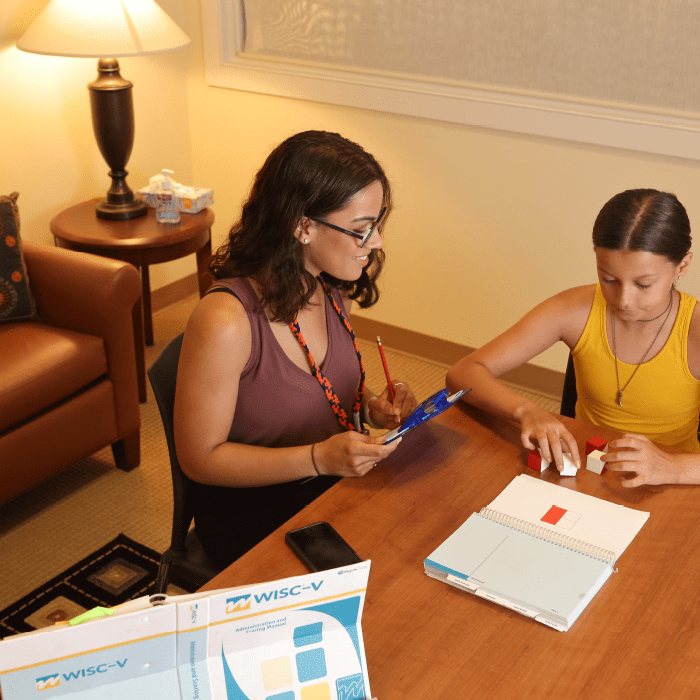
A multidisciplinary language disorder assessment is a comprehensive evaluation that brings together professionals from multiple disciplines to better understand a child’s communication and learning needs. This approach recognises that language disorders often overlap with academic, cognitive, social, and emotional development.
Rather than relying on a single assessment perspective, a multidisciplinary assessment combines expertise from speech pathologists, psychologists, and education professionals. Each specialist contributes specific insights, allowing for a more accurate and well-rounded understanding of the child’s strengths and challenges.
Speech pathologists assess expressive and receptive language skills, including vocabulary, grammar, and comprehension. Psychologists examine cognitive abilities, learning profiles, attention, and memory. Educators contribute information about classroom performance, learning demands, and the impact of language difficulties on curriculum access. Together, this collaborative process supports reliable identification of language disorders and related learning needs.
At Language Disorder Australia, multidisciplinary language disorder assessments are central to effective school support services. Assessment outcomes guide evidence-based recommendations that inform educational adjustments, therapy planning, and classroom strategies. This ensures supports are practical, targeted, and aligned with school environments.
A key benefit of a multidisciplinary approach is improved consistency across home, school, and professional settings. Families and schools receive clear, shared guidance that supports informed decision-making and long-term planning. Early and accurate assessment reduces the risk of misinterpretation and helps children access appropriate supports sooner.
By using a multidisciplinary language disorder assessment, Language Disorder Australia supports children to engage more confidently in learning, communication, and social participation. This collaborative approach strengthens outcomes by ensuring each child’s needs are understood within the full context of their development and education.

 English
 French
 Spanish
 Portuguese
 Deutsch
 Turkish
 Dutch
Dutch
 Italiano
 Russian
 Romaian
 Portuguese (Brazil)
 Greek
Greek