


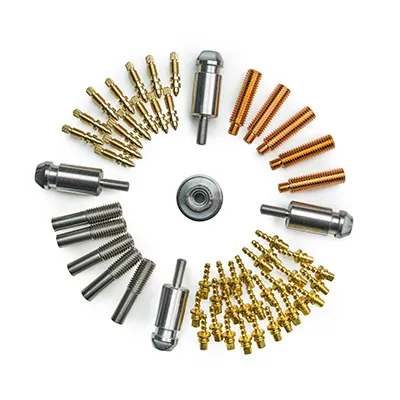
Most people don’t give a second thought to screws, nuts, or bolts. They’re just… there. In a drawer, on a shelf, maybe causing frustration when you strip one. But screw nut & bolt manufacturing? That’s a whole different story. It’s not just stamping metal and calling it done. It’s precise, it’s messy at times, and honestly, it’s way more complicated than most engineers admit. A failed bolt isn’t just annoying—it can shut down a machine, or worse.
Starting With the Metal
Everything begins with raw material. Steel, stainless steel, brass… sometimes exotic alloys. The metal choice isn’t random. Soft steel? Fine for a drawer handle. High-tension structural bolt? Forget it. These metals arrive as rods or coils, and before anything else, they’re measured, tested, and sometimes even heat-treated to the right hardness. Skipping this step is basically asking for trouble later. You want the foundation to be solid.
Shaping Fasteners: Cold Heading and Forming
Next up: cold heading. That’s when a plain metal rod suddenly looks like a screw or bolt. It’s impressive to watch—metal compressed and formed in fractions of a second. And it’s not just about shape. Cold heading aligns the grain and makes the fastener stronger. Nuts? Usually punched from steel blanks. It’s all roughing in the shapes before threading. Some people underestimate this stage, but it’s critical.
Threading Is Tricky
Threads. Oh boy. Get those wrong, and the whole fastener is useless. Threading can be cut, rolled, tapped… depends on the part. High-precision stuff often uses Swiss machining, especially for tiny screws in electronics or aerospace. It’s slow, sure, but necessary. A mistake in threading and a screw might slip or strip at the worst possible moment. Swiss machining is expensive, but it keeps the tolerances tight. You can’t cheat here.
Heat and Coatings
Once shaped and threaded, fasteners often go through heat treatment. Hardening, stress relief, call it what you want. After that, coatings—galvanized, zinc, black oxide, and even special anti-corrosion layers. This isn’t cosmetic. Outdoors, marine, automotive—fasteners live in harsh environments. Skip the coating, and you’ll regret it fast. Trust me, rusted bolts on a dock or car are not a good look.
Quality Control, For Real
QC is huge. And not the light-touch kind. Every batch is measured, sometimes down to microns. Threads, diameters, hardness, cracks—nothing’s ignored. Random samples are measured with calipers, micrometers, and even automated scanners. Critical industries like aerospace? Every piece has traceability. One wrong screw and it could be catastrophic. There’s no room for “close enough.”
Packing and Shipping
After QC, the fasteners are packed. Bagged, boxed, palletized. Some for DIY, some for industrial orders. Mistakes here aren’t fun either—wrong size, wrong batch, production stops. Some factories automate, some rely on humans. Either way, checks are constant. Even small fasteners can cause big problems if shipped incorrectly.
Custom Jobs
Not everything is standard. Custom screws, bolts, nuts—special sizes, alloys, coatings. That’s when Swiss machining and precision really shine. Engineers and manufacturers collaborate to nail the specs. It’s slower, costlier, and more finicky. But for medical devices, aerospace, electronics—you can’t compromise. Standard fasteners? Easy. Custom? That’s where experience matters.
Tech Changes Everything
CNC machines, automated inspection, CAD designs—technology reshaped the process. Machines can hit insane tolerances. Robots pack, sort, and inspect. ERP systems track everything in real time. But here’s the kicker: tech doesn’t replace judgment. A machine can’t tell you if a batch will fail under stress. Humans still call the shots. Tech is a tool, not a brain.
Wrapping Up
So yeah, screw nut & bolt manufacturing is not “simple.” From raw metal to finished fastener, every step—forming, threading, heat treatment, coating, QC—matters. Tiny mistakes have huge consequences. Next time you grab a screw, think about the engineering, the machining, the inspection. It’s a mix of science, craft, and grit. Not glamorous, but essential. And that’s the reality of making stuff that literally holds the world together.

 English
 Arabic
 French
 Spanish
 Deutsch
 Turkish
 Dutch
Dutch
 Italiano
 Russian
 Romaian
 Portuguese (Brazil)
 Greek
Greek