


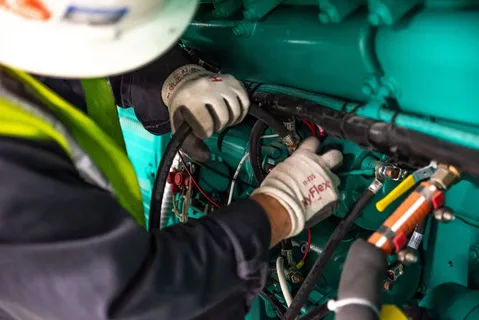
Most standby generators perform a "weekly exercise" where they turn on and run for a few minutes. While this is a great way to check if the battery and starter are working, it doesn’t actually prove the generator can power your whole house. Real-world power outages place a heavy strain on the engine. Load testing is the only way to verify that your system can handle that pressure without failing. By simulating a true power demand, you can find hidden weaknesses before a real storm arrives.
What is Generator Load Testing?
Load testing is a controlled test where a professional applies an artificial electrical load to your generator. This mimics the actual demand your home would place on the system during a total blackout.
Going Beyond the Weekly Exercise
When a generator runs its weekly self-test, it usually runs "unloaded." This is like idling your car in the driveway; it shows the engine starts, but it doesn't show how the car performs at highway speeds. During a load test, the generator is forced to run at its full capacity. This confirms that the engine, the cooling system, and the electrical alternator can all work together under stress.
Checking for Stability
A key part of the test is measuring how stable the power is. If the voltage or frequency jumps around when you turn on your air conditioner or oven, it can damage sensitive electronics in your home. A generator repair services in Menlo Park CA technician uses specialized equipment to ensure the power coming from your generator is clean, steady, and safe for all your modern devices.
The Benefit of "Burning Off" Buildup
One of the most important reasons to load test—especially for diesel generators—is to prevent a problem called "wet stacking." This happens when an engine doesn't get hot enough to burn all of its fuel.
Preventing Wet Stacking
If a generator only runs for short, easy tests, unburned fuel and carbon soot can build up in the exhaust system. Over time, this creates a thick, oily mess that can damage the engine and even become a fire hazard. A load test pushes the engine to a high operating temperature, which "cooks off" these deposits and cleans out the internal components. This process is like giving your generator a deep cleaning from the inside out.
Clearing Out the Fuel System
Load testing also ensures that the fuel system is flowing correctly. By running the generator at a high rate for an hour or more, you ensure that the fuel filters are clear and the fuel pump is strong. This is much better than finding out you have a clogged filter in the middle of a two-day power outage.
Identifying Hidden Cooling Issues
A generator creates a massive amount of heat when it is powering a whole house. If the cooling system has a small leak or a weak fan belt, you might not notice it during a five-minute test.
-
Detecting Leaks: Under the pressure of a full load, small cracks in hoses often turn into visible leaks.
-
Testing the Radiator: A load test proves the radiator can keep the engine cool even when it is working its hardest on a hot California afternoon.
-
Preventing Automatic Shutdowns: Most generators will shut themselves off if they get too hot. It is much better to have this happen during a controlled test than when you are counting on the power to stay on.
Ensuring Peace of Mind and Compliance
Finally, load testing provides the confidence that your investment is actually going to work. For many businesses and certain residential complexes, regular load testing is even required by safety codes.
By performing this test once a year, you are doing more than just maintenance; you are verifying your home’s safety net. You get a detailed report showing that the system reached its full power rating without any issues. This allows you to go into the storm season knowing that no matter how long the grid is down, your home will stay bright, cool, and comfortable. It is the ultimate "health checkup" for your backup power supply.

 Arabic
 French
 Spanish
 Portuguese
 Deutsch
 Turkish
 Dutch
Dutch
 Italiano
 Russian
 Romaian
 Portuguese (Brazil)
 Greek
Greek