


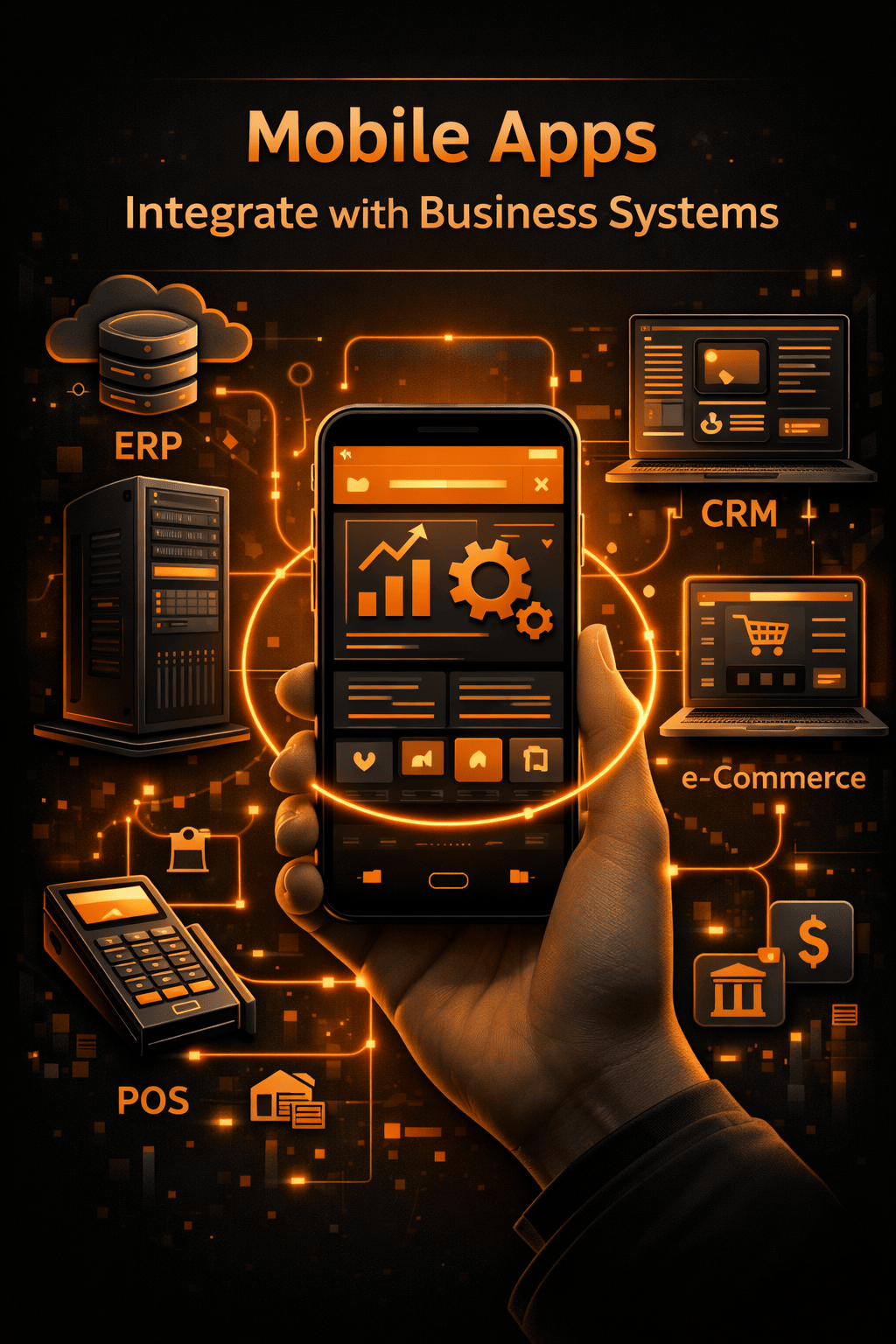
What Does Business System Integration Mean?
Business system integration refers to the process of connecting a mobile app with internal and external software systems so data can flow seamlessly between them. Instead of entering the same information multiple times across platforms, integration ensures that everything stays synchronized automatically.
Common systems mobile apps integrate with include:
-
Customer Relationship Management (CRM)
-
Enterprise Resource Planning (ERP)
-
Accounting and finance tools
-
Payment gateways
-
Inventory and supply chain systems
-
Human Resource Management Systems (HRMS)
-
Marketing automation platforms
-
Analytics and reporting tools
In modern mobile app development, integration is not an add-on—it’s a foundational design principle.
Why Integration Is Essential in Modern App Development
Businesses today rely on data to make fast, informed decisions. When systems operate in silos, inefficiencies grow, errors increase, and opportunities are missed.
Integrated mobile apps help businesses:
-
Eliminate manual data entry
-
Reduce operational errors
-
Improve workflow efficiency
-
Gain real-time insights
-
Deliver better customer experiences
-
Scale without system bottlenecks
This is why a skilled application development company focuses on integration from the earliest planning stages, not after the app is already built.
Core Technologies Behind Mobile App Integration
1. APIs (Application Programming Interfaces)
APIs are the backbone of system integration. They allow different software systems to communicate securely and efficiently.
In app development, APIs enable mobile apps to:
-
Fetch customer data from a CRM
-
Submit orders to an ERP
-
Process payments via third-party gateways
-
Sync user activity with analytics tools
RESTful APIs and GraphQL are commonly used due to their scalability and flexibility.
2. Middleware and Integration Layers
For complex business environments, middleware acts as a bridge between the mobile app and multiple backend systems. It handles:
-
Data transformation
-
Authentication
-
Error handling
-
Load balancing
Middleware ensures that changes in one system don’t break the entire ecosystem—an approach often used by enterprise-focused application development companies.
3. Cloud Services and Platforms
Cloud-based integration offers:
-
High availability
-
Automatic scaling
-
Secure data storage
-
Global accessibility
4. Authentication and Authorization Systems
Secure integration requires strong identity management. Mobile apps commonly use:
-
OAuth 2.0
-
JWT (JSON Web Tokens)
-
Single Sign-On (SSO)
These technologies ensure that only authorized users and systems can access sensitive business data—an essential consideration in professional app development.
Common Business Systems Integrated with Mobile Apps
CRM Integration
Mobile apps connect with CRMs like Salesforce or HubSpot to:
-
Sync customer profiles
-
Track leads and sales activity
-
Provide real-time customer insights to staff
This integration allows sales and support teams to work efficiently from anywhere.
ERP Integration
ERP systems manage inventory, procurement, logistics, and operations. Mobile apps integrated with ERPs enable:
-
Real-time inventory updates
-
Order processing
-
Operational reporting
For manufacturing, logistics, and retail businesses, ERP integration is a cornerstone of effective mobile app development.
Payment and Accounting Systems
Payment gateways and accounting tools allow apps to:
-
Accept secure online payments
-
Generate invoices
-
Sync financial data automatically
This reduces manual accounting work and improves financial accuracy.
Analytics and BI Tools
Integrated analytics give businesses insight into:
-
User behavior
-
Sales performance
-
Operational efficiency
A modern application development company builds dashboards and reporting tools that pull data directly from integrated systems in real time.
Real-Time vs Batch Integration
Real-Time Integration
Data updates instantly across systems. Examples include:
-
Live order tracking
-
Instant payment confirmation
-
Real-time inventory updates
This approach is common in customer-facing apps where responsiveness is critical.
Batch Integration
Data syncs at scheduled intervals. This is often used for:
-
Reporting
-
Data backups
-
Large data transfers
Choosing the right approach depends on business needs, performance requirements, and system complexity—decisions best guided by an experienced app development team.
Security Considerations in Integrated Apps
Security is one of the biggest challenges in system integration. Mobile apps often access sensitive customer, financial, and operational data.
Key security practices include:
-
End-to-end encryption
-
Role-based access control
-
Secure API gateways
-
Audit logs and monitoring
-
Compliance with industry standards
A trusted application development company builds security into every integration layer rather than treating it as an afterthought.
Scalability and Future-Proofing
As businesses grow, integrations must evolve. A well-designed system allows:
-
New tools to be added easily
-
APIs to be updated without downtime
-
Increased users and data volumes without performance loss
Scalable architecture is a defining feature of professional mobile app development and protects businesses from costly rebuilds in the future.
AI and Automation in Integrated Mobile Apps
In 2026, AI plays a growing role in app integration:
-
Automated data processing
-
Smart workflow routing
-
Predictive analytics
-
AI-powered customer support
These intelligent features rely on seamless integration between apps, databases, and AI models—making integration even more critical in modern app development.
Challenges in Mobile App Integration
Despite its benefits, integration comes with challenges:
-
Legacy system compatibility
-
Data consistency issues
-
API version changes
-
Performance bottlenecks
This is why businesses benefit from working with a professional application development company that understands both modern technologies and existing enterprise systems.
Why Choosing the Right Application Development Company Matters
Successful integration requires more than technical skill. It demands:
-
Strategic planning
-
Business process understanding
-
Security expertise
-
Long-term support
An experienced application development company aligns technical integration with business goals—ensuring the app delivers real ROI, not just functionality.
Final Thoughts
So, how do mobile apps integrate with business systems?
Through secure APIs, cloud platforms, middleware, and intelligent architecture that connects every part of a business into one seamless digital experience.
In today’s competitive landscape, integration is no longer optional—it’s the foundation of effective mobile app development and scalable app development strategies. Businesses that invest in well-integrated apps gain efficiency, insight, and agility, while those that don’t risk falling behind.
Partnering with the right application development company ensures your mobile app is not just connected—but built to grow with your business.

 English
 Arabic
 French
 Spanish
 Portuguese
 Deutsch
 Turkish
 Dutch
Dutch
 Russian
 Romaian
 Portuguese (Brazil)
 Greek
Greek