


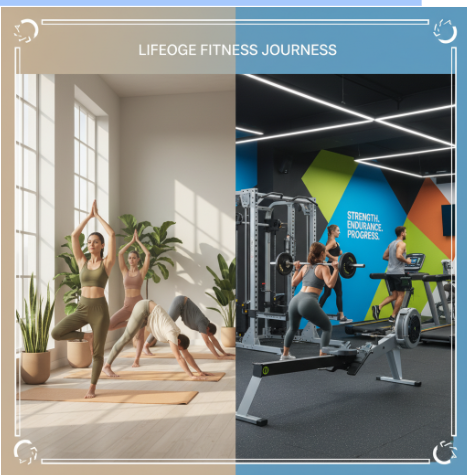
Starting a fitness routine is easy. The internet is full of "30-day challenges" and "New Year, New You" programs that promise quick results. The real challenge isn't starting; it's stopping. Most people treat fitness like a sprint, going hard for a few months before burnout, injury, or boredom sets in. But true health isn't built in a season; it is built over a lifetime.
When we look for a practice that we can stick with for decades, the debate often narrows down to two main contenders: the weight room or the mat. Both offer profound benefits, but they demand very different things from us physically and mentally. When evaluating Gym or Yoga, the question isn't just about which burns more calories today, but which one you will still be doing twenty years from now.
To find the answer, we need to look beyond the immediate aesthetics of six-pack abs and examine the factors that actually drive long-term adherence: convenience, adaptability, injury risk, and mental engagement.
The Gym: The Structure of measurable Progress
For many, the gym provides the ultimate framework for consistency. It offers a dedicated space designed solely for effort, free from the distractions of home.
The Motivation of Numbers
One of the biggest drivers of long-term habit formation is seeing progress. The gym excels here. Progressive overload—the practice of gradually increasing the weight or reps—gives you concrete, numerical proof that you are improving. Last week you squatted 100 pounds; this week you squatted 105. This gamification of fitness is incredibly addictive and motivating. It keeps you coming back because you always have a new target to hit.
The Logistics of "Going"
However, the gym has a significant barrier to entry: logistics. You have to pack a bag, commute, deal with crowds, and potentially wait for equipment. While this might seem minor, friction kills habits. On days when you are tired or busy, the 20-minute drive can be enough of an excuse to skip your workout. Over a lifetime, these skipped days accumulate. Furthermore, gym memberships can be expensive, and if your financial situation changes, your fitness habit might be the first budget cut.
The Wear and Tear Factor
From a physical sustainability standpoint, the gym has pros and cons. Resistance training is essential for maintaining bone density and muscle mass as we age. However, heavy lifting takes a toll on the joints. Without perfect form and adequate recovery, the repetitive compression of the spine and knees can lead to chronic injuries that force you to stop. Sustainability in the gym requires a smart, disciplined approach to recovery that many enthusiasts neglect until it is too late.
Yoga: The adaptability of the Practice
Yoga offers a starkly different value proposition. It is less about conquering external weights and more about mastering your internal state.
The "Anywhere, Anytime" Advantage
If the gym suffers from logistical friction, yoga thrives on accessibility. You need zero equipment. You can practice in a hotel room, a park, or your living room. You can do ten minutes or ninety. This flexibility makes yoga incredibly resilient to life's disruptions. When you become a parent, change jobs, or travel, your practice can travel with you. This low barrier to entry is a massive point in favor of lifelong adherence.
Evolving with Your Body
The most significant argument for yoga's sustainability is its adaptability to aging. A high-intensity interval training (HIIT) routine that serves you well in your 20s might be punishingly painful in your 50s. Yoga, however, is designed to modify. There are distinct styles for every season of life. You might practice vigorous Vinyasa in your youth and transition to gentle Hatha or Yin as you get older. The practice doesn't have to end just because your body changes; it simply changes form.
The Mental Component
Boredom is a habit-killer. While lifting weights can become repetitive, yoga engages the mind differently. It is a practice of mindfulness. The challenge isn't just physical; it is the mental challenge of staying present, breathing through discomfort, and refining subtle alignment. For many, this mental "reset" becomes more valuable than the physical workout, creating a deep emotional attachment to the practice that keeps them coming back for decades.
Preventing Burnout: The Mental Game
Sustainability is largely a mental game. Which practice protects you better against burnout?
The gym culture often glorifies "the grind." While discipline is good, a mindset that views rest as weakness often leads to physical and emotional exhaustion. If your only motivation is aesthetic (how you look), your motivation will waver as your priorities shift or as you naturally age.
Yoga teaches acceptance and listening to the body. It encourages you to back off when you are in pain and to rest when you are tired. This self-compassion is a secret weapon for longevity. By working with your body rather than against it, you avoid the boom-and-bust cycle that plagues so many fitness journeys.
The Verdict: Which Is Better Gym or Yoga?
So, Which Is Better Gym or Yoga for a habit that lasts a lifetime?
If you need external structure, thrive on data and measurable goals, and want to fight the frailty of aging with maximum efficiency, the gym is a powerful tool. However, you must be vigilant about joint health and keep the logistical barriers low.
If you value flexibility (both physical and logistical), want a practice that evolves seamlessly with your aging body, and seek stress relief alongside fitness, yoga is the clear winner for sustainability.
The Ultimate Sustainable Solution
The irony is that the most sustainable routine often involves both.
A lifelong fitness habit isn't a straight line; it's a winding road. There will be years when you crave the intensity of the iron and years when you need the healing of the mat.
-
The 80/20 Approach: Many lifelong athletes find a sweet spot by choosing one as their "major" and the other as their "minor." You might be a yogi who lifts weights twice a week to keep your bones strong. Or you might be a bodybuilder who does yoga every Sunday to keep your hips mobile.
-
Seasonal Cycles: You might spend the winter months building strength in the gym and the summer months doing yoga outdoors.
Sustainable fitness isn't about rigid adherence to one dogma. It is about building a relationship with movement that brings you joy. The best workout is the one you actually do. Whether that involves a barbell or a yoga block, the goal is simply to keep moving, today, tomorrow, and for all the years to come.

 English
 French
 Spanish
 Portuguese
 Deutsch
 Turkish
 Dutch
Dutch
 Italiano
 Russian
 Romaian
 Portuguese (Brazil)
 Greek
Greek