


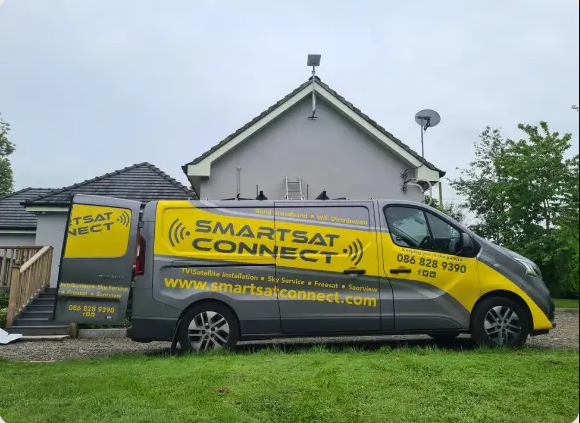
When we analyze the landscape of modern telecommunications, the data reveals a fascinating paradox: while cellular networks are expanding their reach and increasing their speeds globally, indoor signal quality in residential areas is facing unprecedented challenges. It is a technical contradiction that experts at Smartsat Connect encounter regularly, where a homeowner resides within the verified coverage map of a major carrier yet experiences significant signal degradation the moment they enter their property. To understand this, one must look beyond the service provider and examine the physics of radio frequency (RF) attenuation, the phenomenon where signal strength diminishes as it passes through various mediums.
The primary variable in this equation is the construction of the building itself, specifically the density and composition of the materials used in modern housing. Research indicates that standard building materials have drastically different effects on RF signals; for instance, while clear glass may only reduce signal strength by a negligible 2 to 4 decibels (dB), modern energy-efficient windows with metal-oxide coatings can attenuate signals by as much as 40 dB. To put that into perspective, a reduction of just 3 dB represents a halving of signal power, meaning a 40 dB loss is catastrophic for connectivity. Concrete, brick, and foil-backed insulation act similarly, essentially turning energy-efficient homes into Faraday cages that block external frequencies from penetrating the interior. This data explains why "dead zones" are often static and predictable, occurring in specific rooms where the structural mass is densest between the user and the cell tower.
The engineering solution to this problem is not to increase the power of the cell tower, which would cause interference, but to surgically insert a mobile phone signal booster into the equation to compensate for the decibel loss caused by the building's shell. A signal booster system operates on a principle of reception, amplification, and redistribution, effectively bypassing the attenuation caused by walls and windows. The process begins with a high-gain donor antenna mounted externally, typically on the roof or high wall, where the signal-to-noise ratio is most favorable. This antenna captures the specific frequency bands used by mobile carriers—ranging from 700 MHz to 2600 MHz depending on the service—and transmits them via a low-loss coaxial cable to the amplifier unit located inside the structure.
Once the signal reaches the amplifier, the device increases the signal gain, measured in decibels, to a level that is usable by mobile devices. It is crucial to note that this process is heavily regulated; the amplifier must boost the signal enough to overcome the internal loss but not so much that it creates "oscillation" or feedback loops that could disrupt the wider cellular network. The amplified signal is then sent to an indoor server antenna, which broadcasts the refreshed waves into the living space. By physically routing the signal through cables rather than forcing it through concrete or metal, the system effectively negates the blocking properties of the building materials.
The impact of this technology on device performance is measurable and significant, particularly regarding battery efficiency and data throughput. When a mobile device struggles to maintain a connection with a distant tower through thick walls, it increases its internal transmission power to the maximum limit, draining the battery rapidly. Data from device manufacturers suggests that a phone searching for a signal consumes power up to ten times faster than one on a stable connection. Furthermore, data transfer rates for 4G and 5G are directly correlated to signal quality; a weak signal results in high packet loss and latency, causing buffering and slow loads. By stabilizing the connection, a booster ensures that devices operate at optimal power levels and achieve the throughput speeds advertised by carriers.
Analyzing the problem of poor indoor coverage through the lens of physics and data clarifies that this is a structural issue rather than a service failure. The radio waves simply cannot penetrate the obstacles we have built to keep our homes warm and secure. A signal booster acts as a bridge, utilizing precise engineering to transport the signal across the barrier and deliver it where it is needed most.
Conclusion
The data is clear: modern construction materials are the primary adversary of indoor mobile coverage, causing massive signal attenuation that renders devices useless. By understanding the mechanics of signal loss and the physics of amplification, homeowners can implement a solution that scientifically counteracts these barriers. A signal booster system addresses the root cause of the problem, restoring decibel levels and ensuring devices function with the efficiency and speed for which they were engineered.
Call to Action
For a technical assessment of your property's signal challenges and to implement a data-backed solution, visit https://www.smartsatconnect.ie/ for more information.

 English
 Arabic
 French
 Spanish
 Portuguese
 Deutsch
 Turkish
 Dutch
Dutch
 Italiano
 Russian
 Romaian
 Portuguese (Brazil)