


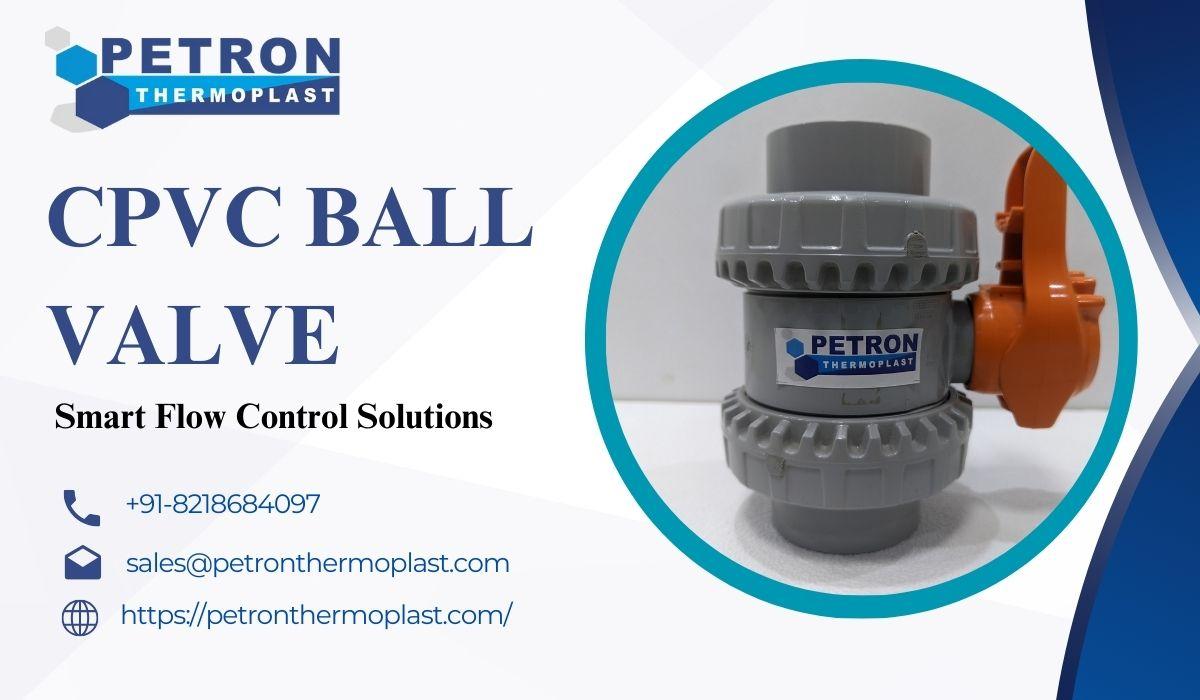
Industrial control systems rely on precise, reliable, and durable components to ensure safe and efficient operation. Among the most critical elements in these systems are control valves, which regulate the flow of fluids across process lines. In environments involving high temperatures, corrosive chemicals, and continuous operation, CPVC ball valves have emerged as one of the most dependable solutions.
This blog explores why CPVC ball valves are considered the best choice for industrial control systems, their advantages, applications, performance features, and why Petron Thermoplast is a trusted supplier for industrial-grade CPVC ball valves.
Understanding CPVC Ball Valves in Control Systems
A CPVC ball valve uses a spherical ball with a central bore to control fluid flow. By rotating the handle or actuator, the valve can start, stop, or regulate flow with minimal pressure loss. When manufactured from Chlorinated Polyvinyl Chloride (CPVC), these valves offer superior resistance to heat and chemicals compared to standard PVC valves.
In industrial control systems, CPVC ball valves are used for on/off control, isolation, and flow regulation, particularly in chemical processing, power generation, water treatment, and industrial utilities.
Why CPVC is Ideal for Industrial Control Applications?
CPVC is engineered to perform reliably under demanding industrial conditions.
Key Properties of CPVC:
- High temperature resistance (up to ~93°C)
- Excellent chemical and corrosion resistance
- High pressure handling capability
- Smooth internal surface for efficient flow
- Lightweight yet mechanically strong construction
These properties make CPVC ball valves suitable for environments where metal valves may corrode or require frequent maintenance.
Role of CPVC Ball Valves in Industrial Control Systems
Precise Flow Control
CPVC ball valves provide quick response and accurate flow control, essential for maintaining stable process conditions.
System Isolation
They are widely used to isolate sections of piping for maintenance or emergency shutdowns.
Equipment Protection
By controlling flow effectively, CPVC ball valves protect pumps, filters, and other downstream equipment from pressure surges and chemical exposure.
Key Advantages of CPVC Ball Valves
Superior Corrosion Resistance
CPVC ball valves resist aggressive acids, alkalis, and chemicals, ensuring long service life.
Leak-Proof Operation
Precision-molded valve bodies and high-quality seals prevent leakage even under high pressure.
Low Pressure Drop
The smooth bore design minimizes friction loss, improving energy efficiency.
Minimal Maintenance
CPVC does not rust or scale, reducing maintenance requirements and downtime.
Cost-Effective Solution
Compared to metal valves, CPVC ball valves offer lower installation and lifecycle costs.
Applications Across Industrial Sectors
Chemical Processing Plants
Used in acid and chemical transfer lines, dosing systems, and process control networks.
Power Plants
Installed in cooling water, chemical dosing, and auxiliary systems.
Water & Wastewater Treatment
Ideal for flow control in treatment plants and utility pipelines.
Pharmaceutical & Process Industries
Suitable for applications requiring cleanliness, corrosion resistance, and precise control.
Industrial Utilities & Infrastructure
Widely used in industrial parks, refineries, and infrastructure projects.
Design & Engineering Features
The best CPVC ball valves for industrial control systems are designed with performance and safety in mind.
- Robust CPVC valve body
- Precision-engineered ball and seats
- Full bore design for unrestricted flow
- High-quality seals for leak-free operation
- Compatibility with manual and automated actuation
Custom options are available for pressure rating, end connections, and control requirements.
Compliance with International Standards
Industrial control systems often operate under strict regulatory requirements. High-quality CPVC ball valves comply with:
- ASTM and DIN material standards
- ISO quality management systems
- Pressure and leakage testing protocols
- EPC and project-specific technical specifications
Compliance ensures safe operation and acceptance in domestic and export projects.
Why Industrial Buyers Choose CPVC Ball Valves Over Metal?
Metal valves are prone to corrosion, scaling, and chemical attack in aggressive environments. CPVC ball valves offer:
- Longer service life in corrosive conditions
- Reduced maintenance and replacement costs
- Lightweight design for easier installation
- Consistent performance over time
Why Choose Petron Thermoplast for CPVC Ball Valves?
Petron Thermoplast is a trusted manufacturer and supplier of industrial thermoplastic valves. The company offers:
- High-performance CPVC ball valves
- Products designed for industrial control systems
- Strict quality control and testing
- Support for EPC and turnkey projects
- Bulk supply for large industrial installations
With extensive experience in industrial plastic solutions, Petron Thermoplast delivers CPVC ball valves that meet the highest standards of reliability and performance.
Installation & Maintenance Best Practices
Proper installation ensures optimal valve performance. CPVC ball valves should be installed with adequate support to avoid stress on piping. Regular inspection of seals and actuation mechanisms ensures long-term reliability. Due to CPVC’s corrosion resistance, maintenance requirements remain minimal.
Conclusion
When it comes to industrial control systems, selecting the right valve is essential for operational safety, efficiency, and reliability. CPVC ball valves offer an ideal combination of corrosion resistance, temperature tolerance, leak-proof operation, and cost-effectiveness.
For industries seeking the best CPVC ball valves for industrial control systems, Petron Thermoplast provides proven, high-quality solutions backed by engineering expertise and global project support. By choosing CPVC ball valves from a reliable manufacturer, industrial operators can ensure consistent control, reduced downtime, and long-term system performance.

 English
 Arabic
 French
 Spanish
 Portuguese
 Deutsch
 Dutch
Dutch
 Italiano
 Russian
 Romaian
 Portuguese (Brazil)
 Greek
Greek