


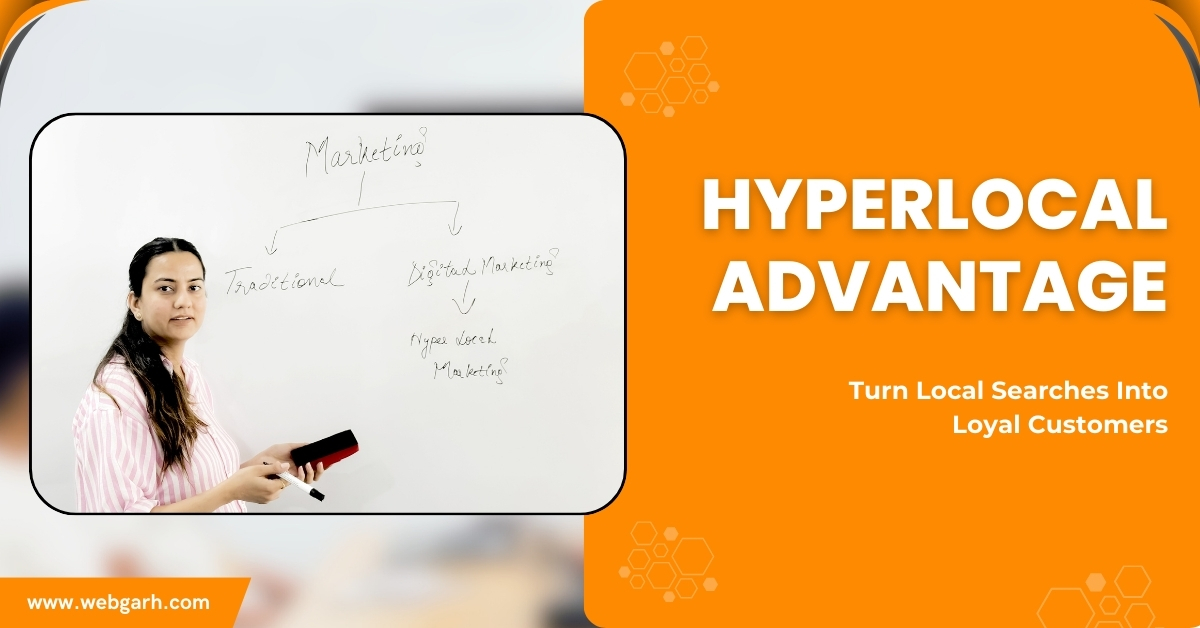
Not every business needs to target the whole country. In fact, many brands grow faster by focusing on the people right around them. That’s where hyperlocal marketing comes in.
Hyperlocal marketing is about reaching customers in a very specific area — your city, neighborhood, or even a few nearby streets. For local stores, service providers, and location-based businesses, this approach can bring quicker results than broad campaigns.
What Hyperlocal Marketing Actually Means
Hyperlocal marketing targets people based on location. It focuses on users who are physically close to your business and actively searching for products or services you offer.
This could be someone searching “coffee shop near me,” scrolling social media near your store, or looking up a local service on Google Maps. When your business shows up at that moment, the chances of conversion are much higher.
Why Hyperlocal Marketing Works So Well
People prefer convenience. If they find a relevant business nearby, they are more likely to visit, call, or buy. Local intent searches often lead to quick actions.
Hyperlocal marketing also feels more personal. Instead of generic ads, customers see messages that match their location, needs, and timing. That builds trust faster and improves engagement.
Practical Ways to Use Hyperlocal Marketing
Start with local SEO
Make sure your business details are accurate everywhere — your website, Google Business Profile, local directories, and maps. Use location-specific keywords naturally in your content and pages.
Run location-based ads
Platforms like Google and social media allow you to target ads within a specific radius. This means your budget is spent only on people who can actually visit or use your service.
Create local content
Talk about local events, nearby landmarks, community updates, or customer stories from your area. This helps search engines and users see your business as locally relevant.
Encourage reviews from nearby customers
Reviews play a huge role in local decision-making. Ask happy customers to leave honest feedback. Respond to reviews to show that your business is active and reliable.
Use mobile-first strategies
Most local searches happen on mobile devices. Make sure your website loads fast, looks good on phones, and has clear contact or direction options.
Tracking What Works
Hyperlocal marketing is measurable. Track calls, directions, local keyword rankings, foot traffic, and conversions from nearby users. Small changes in targeting or messaging can make a big difference.
Hyperlocal strategies are not about reaching more people. They’re about reaching the right people at the right time.
For a detailed breakdown with examples and implementation tips, read the full guide on how to leverage hyperlocal marketing for maximum impact here.

 English
 Arabic
 French
 Spanish
 Portuguese
 Turkish
 Dutch
Dutch
 Italiano
 Russian
 Romaian
 Portuguese (Brazil)
 Greek
Greek