


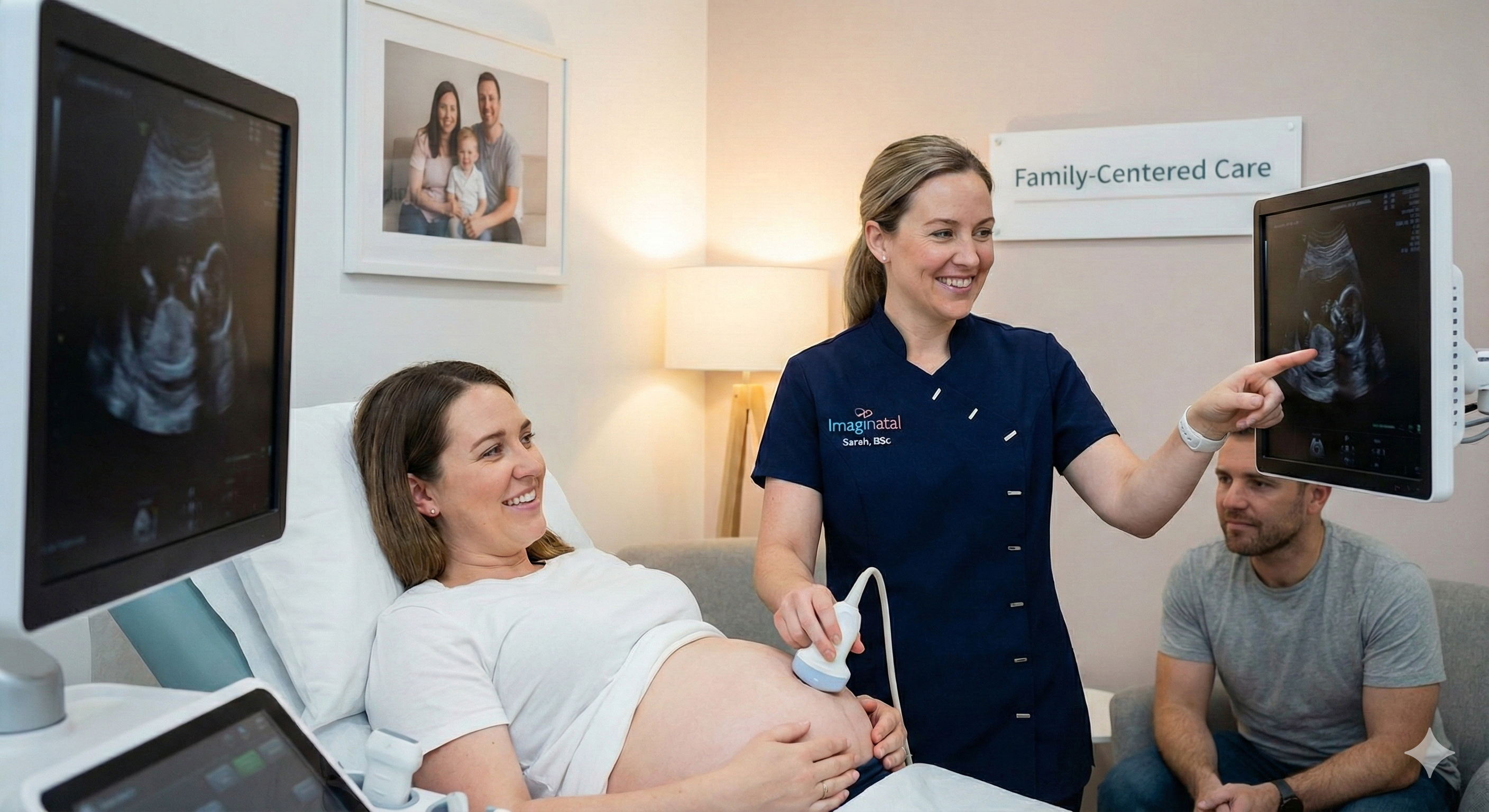
Many parents look forward to learning their baby’s gender as one of the most anticipated milestones of pregnancy. Curiosity, personal bonding, family planning, and cultural traditions often play a role in why families want an answer sooner rather than later. With improvements in ultrasound quality and specialist techniques, parents now have the option to learn gender earlier in pregnancy by choosing a dedicated appointment. However, the timing of this appointment makes a significant difference to accuracy.
Understanding when to book, why accuracy varies, and what influences the clarity of the scan helps parents make confident and informed decisions. This guide explains the best timeline along with the practical factors that can help achieve a clear and reliable result.
Why Timing Plays a Central Role in Gender Identification
Fetal gender becomes clearer as pregnancy progresses. Before a certain point, the structures that determine gender look similar and are not easily distinguishable. Even with skilled sonographers and advanced ultrasound equipment, early pregnancy can present limitations.
Accurate identification becomes more likely once the external genitalia have formed in a recognisable way. This development takes place over several weeks, so choosing the right point in pregnancy is key.
Many parents consider a private gender scan because it allows more time with the sonographer, a focused assessment, and flexibility in scheduling. However, timing is still essential to achieve the result parents hope for.
The Earliest Stage When Gender Can Be Seen
Gender identification through ultrasound is possible earlier than many parents expect, but clarity varies.
Before 12 Weeks
At this stage, the genital tubercle looks very similar in both sexes. Visibility is limited, and predictions at this time are mostly based on theory rather than clear evidence. Accuracy is low because the baby has not developed the features necessary for reliable interpretation.
Between 12 and 14 Weeks
Some specialists may attempt early identification, but success depends heavily on the baby's position, the angle of the genital tubercle, and the precision of the equipment. Many parents book during this stage when they want an early indication, but they should know that accuracy is not guaranteed.
Between 15 and 16 Weeks
This is where reliability increases. The baby has developed external features that are more distinct, making this a popular time for those seeking high accuracy without waiting for the routine anatomy scan. A private gender scan is often chosen during this stage because it allows enough fetal development while still offering an early answer.
Between 16 and 20 Weeks
This window is widely valued for its balance of clarity and confidence. The genital structures are more defined, the baby has developed significant detail, and fluid levels often support better visibility. For most pregnancies, this is one of the most consistent periods for accurate identification.
What Improves Clarity During a Gender Scan
Even at the ideal time, several factors influence how clearly the sonographer can see the baby’s gender. These include biological differences, positional challenges, and technical elements.
Key factors include:
Baby position
If the baby is facing downward, curled tightly, or crossing their legs, visibility decreases. Sometimes a short walk or gentle movement helps reposition the baby.
Placenta location
An anterior placenta can reduce visibility, especially if the baby is pressed close to it.
Fluid levels
Adequate amniotic fluid improves clarity because it creates space for light and shadow to form clear outlines on the ultrasound screen.
Maternal tissue depth
Depending on body composition, ultrasound beams may take longer to transmit and return, which can influence sharpness.
Equipment quality
Specialist clinics often use advanced imaging technology, which can highlight fine structures more clearly.
Experience of the sonographer
Trained professionals can interpret subtle details more accurately and use advanced techniques to obtain the best possible view.
Understanding these variables helps explain why even the perfect timing may require patience or a repeat session.
Why Some Parents Choose a Private Appointment
For many families, learning the gender during a routine scan is perfectly suitable. However, others prefer a dedicated session for several reasons.
These include:
-
The desire for an early result
-
A calmer and more personal environment
-
Longer appointment times for clearer viewing
-
Flexibility in scheduling
-
The option to bring loved ones
-
A detailed focus on gender without additional medical checks
Parents often value having more time to observe their baby, ask questions, and enjoy the experience without rushing. Booking a private gender scan also offers a sense of anticipation and celebration, making the moment more memorable.
How Accuracy Is Supported During a Private Appointment
Specialists conducting gender scans use several techniques to improve accuracy. These may include adjusting the mother’s position, waiting for the baby to move, gently encouraging repositioning, and viewing the genital area from multiple angles.
If visibility is limited, many providers offer a rescan at a later time to give parents the best chance of a clear answer. This reduces pressure and allows the result to be confirmed with confidence.
Working with trained sonographers also means the interpretation is based on experience and careful observation rather than speculation. This is especially important when parents want certainty before sharing the news.
How Personal Preference Influences the Best Time to Book
There is no single perfect time for every family, because each pregnancy is different and each parent’s goals may vary. Some prefer the earliest possible window, even if that means accepting a small possibility of unclear results. Others wait until reliability is at its highest for the sake of confidence.
Parents planning gender reveal celebrations, travel arrangements, or family events may choose an appointment earlier in the second trimester. Others who simply wish for clarity may wait until closer to the routine anatomy scan.
For many, the ideal point is the stage where visibility is high and the experience remains early enough to still feel exciting. Regardless of preference, the keyword private gender scan is often searched when parents compare clinics based on timing and accuracy.
A Closing Reflection
Choosing when to learn your baby’s gender is a personal decision shaped by excitement, planning, and curiosity. With modern ultrasound imaging and trained specialists, clear visibility and accuracy are now achievable earlier in pregnancy than ever before. The key is selecting a time when fetal development supports clarity while keeping personal goals in mind.
Understanding the factors that influence accuracy helps parents know what to expect and ensures the experience is positive and memorable. Whether booked early or later in the second trimester, a well-timed appointment often creates one of the most joyful moments of pregnancy.
Frequently Asked Questions
Q1. Is it possible to learn gender early in the second trimester?
Yes, many parents receive clear results once development is more defined.
Q2. Can the baby’s position influence accuracy?
Yes, certain positions can make viewing the genital area more challenging.
Q3. Are private appointments considered reliable?
Yes, trained specialists and focused scanning support accuracy.
Q4. Can results be confirmed later in pregnancy?
Yes, routine scans often provide final reassurance.
Q5. Is learning gender early common among parents?
Yes, many families enjoy knowing the gender before the mid-pregnancy scan.

 English
 Arabic
 French
 Spanish
 Portuguese
 Deutsch
 Turkish
 Italiano
 Russian
 Romaian
 Portuguese (Brazil)
 Greek
Greek