


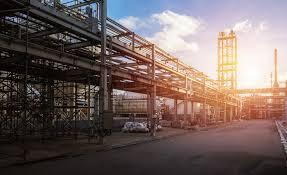
Industrial construction is undergoing a major transformation as new technologies, sustainability priorities, and advanced project management methods reshape the way large-scale facilities are designed and built. From manufacturing plants to logistics hubs and energy facilities, the sector is evolving rapidly to meet global economic demands. In 2025, industrial construction continues to grow in complexity and scale, requiring companies to adopt modern approaches to remain efficient, competitive, and future-ready. Understanding the key trends shaping this sector helps construction professionals, developers, and investors make informed decisions and stay ahead of industry change.
Increasing Adoption of Automation and Robotics
Automation and robotics are playing a growing role in industrial construction across the world. Automated machinery is now being used for material handling, welding, concrete placement, and high-precision installations. These technologies improve efficiency, reduce human error, and enhance worker safety. Robotics are particularly useful in hazardous or confined environments, where human workers face greater risk. As factories, warehouses, and industrial plants become more complex, automated systems ensure consistent quality and faster project delivery.
Integration of BIM for Better Planning and Accuracy
Building Information Modeling (BIM) has become a cornerstone of modern industrial construction. BIM allows project teams to create highly detailed 3D models that integrate architectural, structural, and MEP systems. This improves project coordination, reduces clashes, and enhances the accuracy of design and construction planning. In 2025, BIM is not just a design tool; it is used for scheduling, cost estimation, facility management, and digital twins. Industrial facilities benefit greatly from BIM because their systems are more complex than commercial buildings, requiring seamless coordination across multiple disciplines.
Sustainable and Energy-Efficient Construction Practices
Sustainability is shaping industrial construction more than ever before. Governments, investors, and global companies are prioritising carbon reduction, energy efficiency, and environmental responsibility. Industrial facilities designed today often include energy-efficient HVAC systems, renewable energy integration, smart lighting, and water recycling systems. Companies are adopting green building standards and digital tools to measure environmental performance. In 2025, sustainable construction is not just an ethical decision but a business strategy, as energy-efficient buildings reduce operational costs over their entire lifecycle.
Increased Use of Prefabrication and Modular Construction
Prefabrication and modular construction methods are rapidly gaining popularity in industrial projects. These methods involve manufacturing components such as structural frames, piping racks, and mechanical units in controlled factory environments before transporting them to the construction site. This approach reduces delays, improves safety, and ensures higher quality control. Industrial construction particularly benefits from modularity because it allows for faster assembly of complex systems. In 2025, more developers are adopting modular construction to meet demanding timelines and reduce disruptions at project sites.
Digital Transformation Through Smart Technologies
Industrial construction is becoming more digital, with technologies such as AI, digital twins, IoT sensors, cloud collaboration, and data analytics shaping project workflows. AI-driven tools predict project risks, analyse equipment performance, and enhance safety planning. Digital twins replicate real-world industrial facilities, allowing engineers to simulate operational scenarios before physical construction. IoT devices monitor site conditions, track materials, and provide real-time data to improve decision-making. The shift toward digital transformation is enabling companies to deliver projects more efficiently and with greater transparency.
Growing Focus on Worker Safety and Compliance
Safety remains a top priority in industrial construction, particularly because sites often involve heavy machinery, high-voltage systems, and large equipment. In 2025, new safety technologies are being introduced to reduce risks and improve compliance. Wearable devices track worker vitals and movement to alert teams of potential hazards. AI-powered cameras monitor safety violations in real time. Drones are used for inspections in difficult-to-reach areas, reducing the need for manual labour in risky conditions. Enhanced safety protocols and digital tools are helping firms maintain high standards and minimize workplace incidents.
Demand for Faster Project Delivery
Industrial clients, especially in sectors like logistics, energy, and manufacturing, are under pressure to expand operations quickly. This creates high demand for faster project delivery without compromising quality. Modern industrial construction techniques, BIM coordination, prefabrication, and automated equipment help streamline timelines. In 2025, more companies are adopting lean construction practices and advanced scheduling tools to eliminate waste, improve workflow efficiency, and deliver projects ahead of schedule. Rapid delivery has become a competitive advantage in the industry.
Resilience and Future-Proofing Industrial Facilities
Industrial facilities built today must withstand unpredictable conditions, from climate challenges to rapid technological change. Future-proofing has become a major trend in industrial construction. Engineers are designing buildings with flexible layouts, smart systems, and scalable infrastructure to support future technological upgrades. Industrial plants now include advanced cooling systems, fire protections, digital monitoring, and secure communication networks. Resilient design extends the facility’s lifespan, reduces maintenance costs, and improves operational reliability.
Supply Chain Innovations and Material Optimization
The global supply chain has faced disruptions in recent years, leading to increased focus on material management and procurement strategies. In 2025, industrial construction companies are using digital tools to track materials, forecast shortages, and optimise procurement. Local sourcing is becoming more common to reduce delays and increase sustainability. Technological advancements in materials—such as high-performance concrete, corrosion-resistant metals, and lightweight composites—are improving the durability and efficiency of industrial facilities.
Rising Investment in Infrastructure and Industrial Growth
Industrial construction is strongly influenced by investments in manufacturing, logistics, and energy infrastructure. Governments and private investors are expanding industrial zones, ports, warehouses, and renewable energy facilities. This increased demand supports growth in heavy industry, e-commerce logistics, and advanced manufacturing. Countries worldwide are building new industrial cities and upgrading existing plants to meet modern standards. In 2025, industrial construction has become a key driver of economic development, attracting global investments and boosting job creation.
Conclusion
The future of industrial construction in 2025 is shaped by a combination of technological innovation, sustainability goals, digital transformation, and high expectations for safety and efficiency. Automation, BIM integration, modular construction, AI, smart technologies, and improved safety measures are redefining how industrial facilities are designed and executed. As companies adopt these trends, they are better positioned to deliver high-quality projects faster, more sustainably, and with greater long-term value. Understanding and embracing these trends is essential for construction professionals who want to stay competitive in a rapidly evolving industry.

 Arabic
 French
 Spanish
 Portuguese
 Deutsch
 Turkish
 Dutch
Dutch
 Italiano
 Russian
 Romaian
 Portuguese (Brazil)
 Greek
Greek