


The Ultimate Guide: When to Replace Your Boiler | R.W. Miller
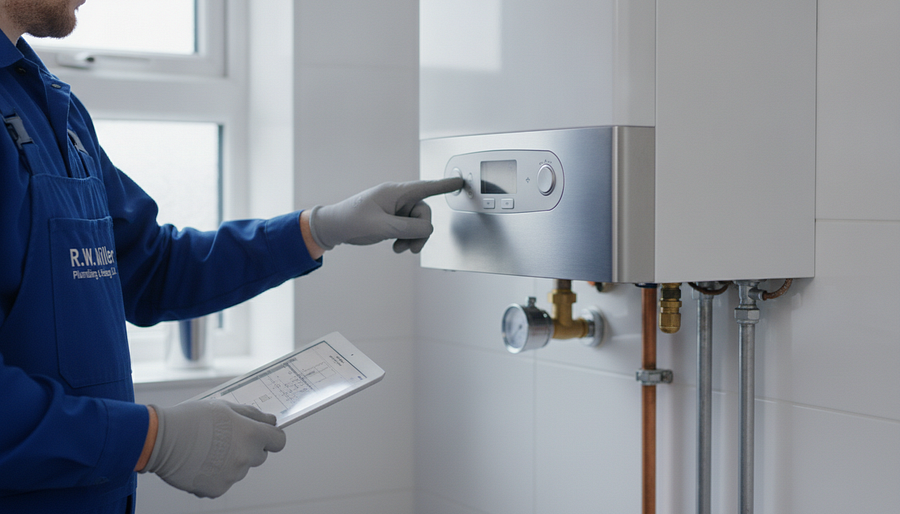
Maintaining a comfortable home environment depends heavily on the reliability of your central heating system. However, like any mechanical appliance, boilers have a finite lifespan. For homeowners in Redhill and the surrounding areas, understanding when to replace your boiler is crucial for ensuring safety, maximizing energy efficiency, and minimizing long-term costs. In this authoritative guide, we examine the technical indicators and performance metrics that signal it is time for a professional upgrade from R.W. Miller Plumbing & Heating Ltd.
Identifying the Lifespan of Modern Boilers
Most modern gas boilers are designed to last between 10 and 15 years. If your unit is approaching this age bracket, its efficiency is likely declining significantly. Older non-condensing boilers often operate at efficiency levels as low as 60%, whereas a new A-rated condensing model can achieve over 90% efficiency. Upgrading is not just about avoiding a breakdown; it is an investment in reducing your carbon footprint and monthly utility bills.
5 Red Flags Your Heating System is Failing
- Frequent Breakdowns: If you are calling an engineer multiple times a year for repairs, the cumulative cost will soon exceed the price of a new installation.
- Rising Energy Bills: An unexplained spike in gas consumption often indicates that the internal components are working harder to produce the same amount of heat.
- Inconsistent Heating: If some rooms remain cold while others are hot, or if you frequently lose hot water, your boiler is struggling to manage the load.
- Strange Noises: Banging, whistling, or gurgling (kettling) usually point to lime scale buildup or pump failure.
- Corrosion and Leaks: Visual signs of rust or water pooling around the unit are critical indicators of internal deterioration.
The Financial Benefits of Upgrading to High-Efficiency Models
By choosing a high-performance boiler replacement, you can save hundreds of pounds annually. Modern systems utilize advanced heat exchangers to recover heat that would otherwise be lost through the flue. When you work with a Gas Safe registered engineer from R.W. Miller, we ensure that your new system is perfectly sized for your property, preventing the energy waste associated with oversized units. Transitioning to a smart-thermostat-compatible system further enhances control and reduces unnecessary heating cycles.
Safety First: Carbon Monoxide and System Integrity
Beyond performance, safety is the primary reason to monitor your boiler’s condition. Older units are more prone to incomplete combustion, which can lead to carbon monoxide leaks. If the pilot light frequently goes out or displays a yellow flame instead of a crisp blue one, or if you notice soot stains around the appliance, you must seek professional assistance immediately. A new installation provides the peace of mind that your family is protected by the latest safety sensors and fail-safe mechanisms.
Conclusion: Making the Right Investment
Deciding when to replace your boiler requires a balance of evaluating repair costs versus the long-term savings of a new unit. At R.W. Miller Plumbing & Heating Ltd, we provide expert assessments to help you make an informed choice. Our team specializes in seamless installations that restore warmth and efficiency to your home.
CONTACT BUSINESS
Company: R.W. Miller Plumbing & Heating Ltd
Phone: +447375813996
Address: Earlsbrook Rd, Redhill RH1 6DP, United Kingdom
Google Business Profile: Click Here
Maps Location: View on Google Maps
Knowledge Graph: R.W. Miller Official Search

 Arabic
 French
 Spanish
 Portuguese
 Deutsch
 Turkish
 Dutch
Dutch
 Italiano
 Russian
 Romaian
 Portuguese (Brazil)
 Greek
Greek