



Ever wonder about the specialized tools surgeons use to perform life-saving procedures? Modern surgery is a blend of incredible skill and highly specialized engineering. Every instrument in an operating room has a specific role, designed to minimize thumb and tissue forceps damage and maximize precision.
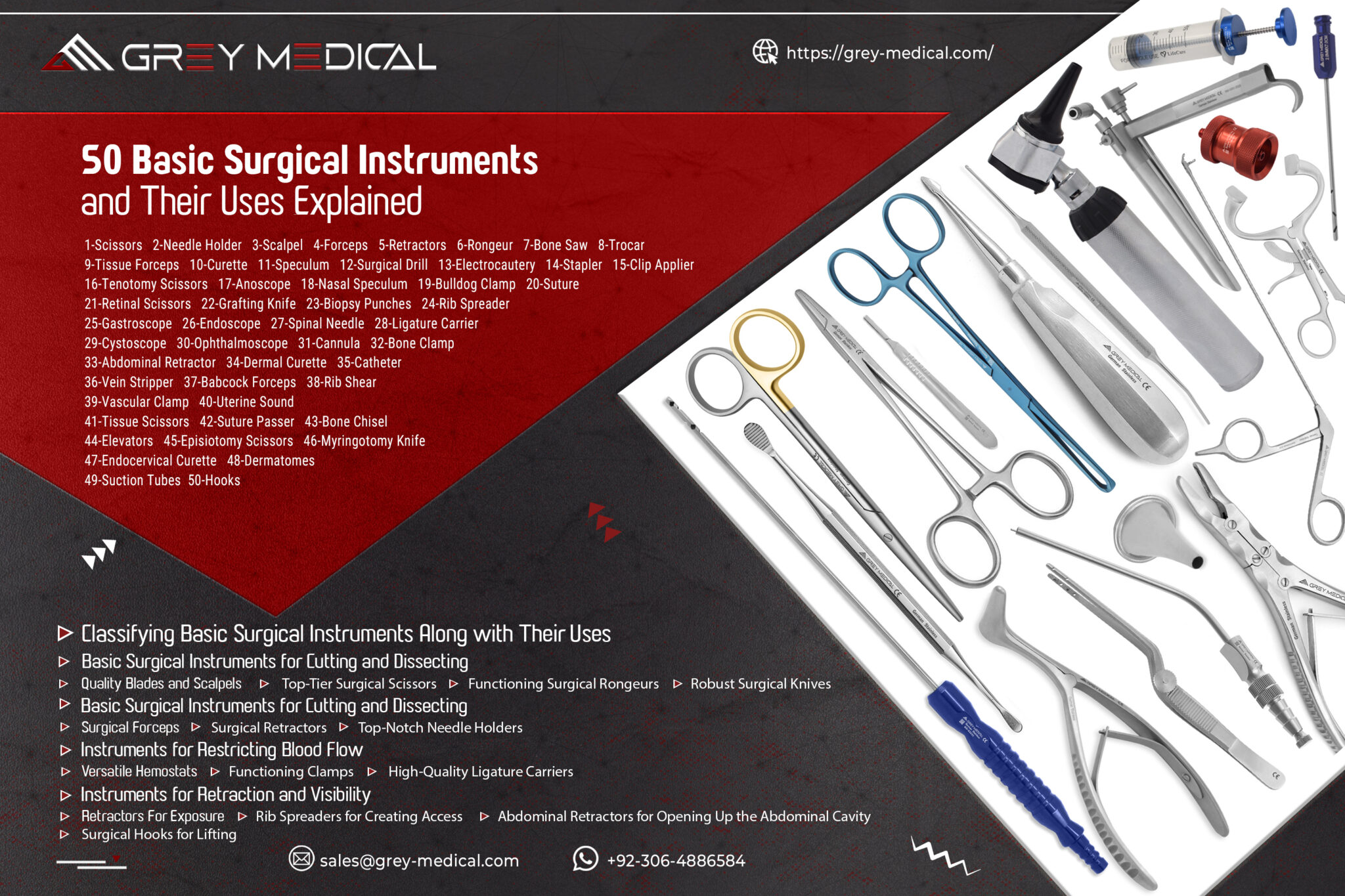
1. Cutting and Dissecting Instruments
These are the tools used to make initial incisions and carefully separate different layers of tissue.
-
Scalpels: The classic surgical knife. Today, surgeons usually use a reusable handle paired with sterile, single-use disposable blades. Scalpel blades come in various shapes and sizes, each numbered for specific tasks (like the fine #11 blade for precise punctures or the curved #10 blade for long skin incisions).
-
Surgical Scissors: These are not your average office scissors. They come in two main varieties: Mayo scissors, which are heavy and used for cutting tough tissues like fascia or sutures, and Metzenbaum scissors, which are delicate and curved for dissecting soft tissues.
2. Grasping and Holding Instruments
Surgeons need a way to securely hold tissue, bone, or surgical drapes out of the way without causing unnecessary trauma.
-
Forceps: Often looking like heavy-duty tweezers, forceps help manipulate tissues. Thumb forceps (or pick-ups) are used to gently grab skin or blood vessels. Some have small "teeth" at the tip for a firm grip on tough tissue, while others are smooth to prevent tearing delicate structures.
-
Tissue Forceps (Allis and Babcock): These instruments feature a locking mechanism near the handles. Allis forceps have tiny teeth to firmly grip tissue that is being removed, while Babcock forceps are smooth and flared, designed to safely hold delicate tubular organs like the intestines without crushing them.
3. Clamping and Occluding Instruments
Stopping blood flow is a critical part of any common surgery tools surgical procedure. Clamps are used to compress blood vessels or hollow organs.
-
Hemostatic Clamps (Hemostats): Also known as "criles" or "snaps," these are locking instruments used to clamp off bleeding blood vessels (hemostasis) before they can be tied off or cauterized.
-
Mosquito Clamps: A much smaller, finer version of the standard hemostat, used for delicate surgeries like pediatrics or plastic surgery where blood vessels are tiny.
4. Retracting Instruments
To see what they are doing, surgical teams must hold back skin, muscles, and organs to expose the surgical site.
-
Handheld Retractors: These require an assistant to physically hold them in place. Examples include the Richardson retractor (a deep blade used in abdominal surgery) and the Army-Navy retractor (a double-ended smooth blade used for shallower tissue layers).
-
Self-Retaining Retractors: These clever devices lock into place using a mechanical ratchet or screw mechanism, holding themselves open so the surgical team can keep their hands free for the actual procedure.
5. Suturing and Stapling Instruments
Once the internal work is finished, the surgeon must meticulously close the layers of tissue.
-
Needle Holders: Also called needle drivers, these look similar to hemostats but have short, thick jaws designed to tightly grip surgical needles without letting them twist while passing through tough tissue.
-
Surgical Staplers: Used frequently in modern surgery, especially in the digestive tract. They can cut and seal tissue simultaneously, which dramatically speeds up closing times compared to traditional hand-sewing.

 English
 Arabic
 French
 Spanish
 Portuguese
 Deutsch
 Turkish
 Italiano
 Russian
 Romaian
 Portuguese (Brazil)
 Greek
Greek