


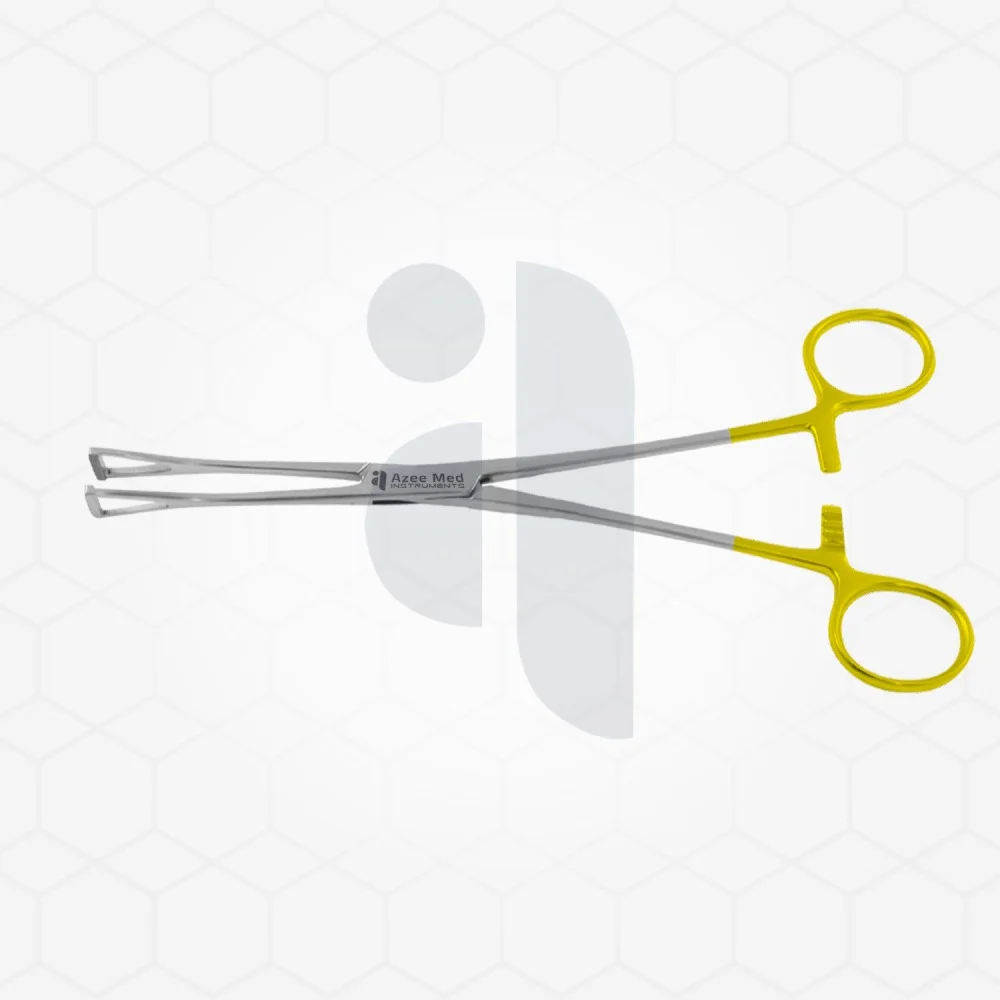
Understanding the Ergonomics and Design of Duval Forceps
The unique structural layout of duval forceps differentiates them from standard hemostatic or tissue forceps commonly found in surgical trays. These specialty forceps feature distinctive triangular, fenestrated jaws lined with fine, interlocking teeth along the transverse margins. This geometric configuration distributes gripping pressure evenly across a wider surface area rather than concentrating force on a single point, which prevents localized tissue ischemia or laceration. The fenestration within the triangular loops also permits the tissue to bulge slightly through the opening, which significantly enhances tactile feedback and grip security during manipulation. Manufactured from elite medical-grade stainless steel, these instruments retain their structural integrity under rigorous tension, providing a reliable grasp that resists slippage even when submerged in blood or slippery bodily fluids.
The Synergy of Advanced Fluid Management and Frazier Suction
Clinical Applications Across Diverse Surgical Specialties
While originally popularized for lung manipulation in thoracic surgery, the utility of duval forceps extends across a diverse spectrum of specialized medical practices. In general surgery, clinical teams rely on these specialized forceps to hold the gallbladder, stomach walls, or intestinal loops aside during delicate dissection or anastomosis. The atraumatic nature of the triangular jaws makes them exceptionally well-suited for handling dense, friable structures that are prone to tearing under the bite of more aggressive, sharp-toothed clamps. Furthermore, pelvic and gynecological surgeons use these instruments to elevate tissues within deep anatomical spaces, where secure retraction without a high risk of puncture is critical for patient safety. The structural adaptability of this instrument guarantees its status as a core component of both basic laparotomy setups and highly specialized cardiovascular trays.
Longevity and Sterilization Protocols for Surgical Instruments
Investing in high-performance instrumentation requires a commitment to rigorous maintenance, cleaning, and sterilization protocols to preserve mechanical function over years of service. Every pair of premium duval forceps must undergo thorough decontamination immediately following a surgical procedure to remove bioburden from the intricate teeth lining the triangular tips. Ultrasonic cleaning is strongly recommended to dislodge debris from the hard-to-reach fenestrations and box locks before the instrument enters the autoclave chamber. Because medical-grade stainless steel is highly resistant to corrosion and thermal degradation, these forceps can withstand repetitive high-temperature steam sterilization cycles without losing their jaw alignment or flexible tension. Implementing a standardized maintenance schedule ensures that the instrument's fine teeth continue to meet flush with every squeeze of the ratcheted handle, minimizing intraoperative malfunctions.
Choosing Quality Over Concession for Better Patient Outcomes
The final outcome of any invasive medical intervention relies heavily on the quality of the devices placed into the hands of the surgical specialist. Opting for poorly manufactured instruments can result in jaw misalignment, weak ratchets, or premature corrosion, all of which compromise patient safety and extend operating room times. When analyzing the construction of high-performance duval forceps, it is critical to verify the precise milling of the transverse teeth and the smooth articulation of the primary hinge joint. Selecting tools engineered to these exact standards protects the medical facility from frequent replacement costs and provides surgeons with the dependable tactile feedback required during critical maneuvers. Elevating your institution’s surgical standards begins with outfitting your operating blocks with instruments that embody precision, durability, and uncompromising craftsmanship.

 English
 Arabic
 French
 Spanish
 Portuguese
 Deutsch
 Turkish
 Dutch
Dutch
 Russian
 Romaian
 Portuguese (Brazil)
 Greek
Greek