


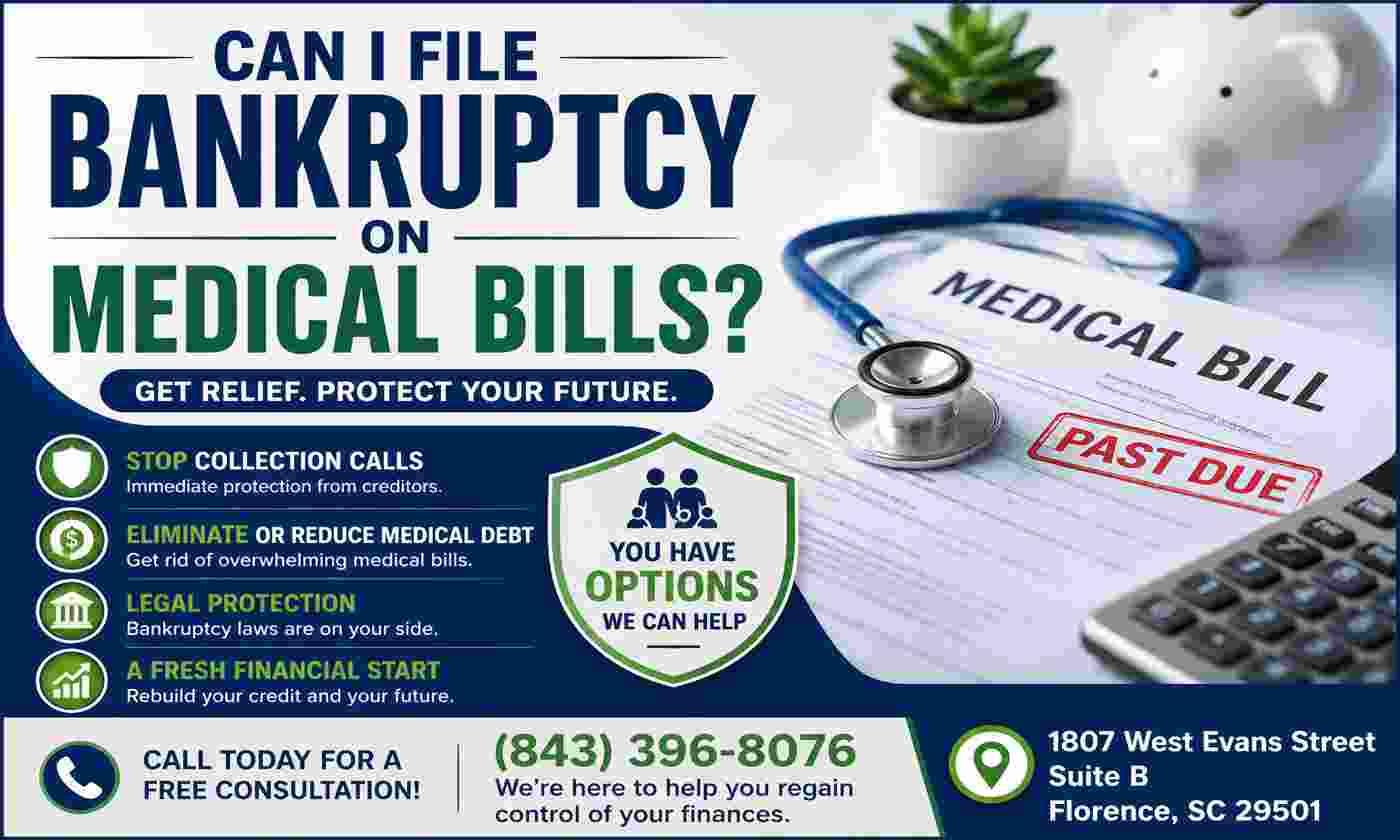
Medical expenses can become financially overwhelming for individuals and families across all income levels. A sudden illness, emergency surgery, accident, or long-term treatment plan may create healthcare costs that are impossible to manage with regular income alone. When unpaid bills continue to increase, many people begin searching for legal solutions and ask, “Can I file bankruptcy on medical bills?”
The answer is yes in many situations. Bankruptcy laws are designed to help individuals who are facing serious financial hardship, including overwhelming medical debt. Understanding how bankruptcy works and how it may provide medical debt relief can help people make informed decisions about their financial future.
Why Medical Debt Is So Common
Medical debt affects millions of people every year. Even individuals with health insurance often face high out-of-pocket costs that can quickly create financial stress.
Common causes of medical debt include:
-
Emergency room visits
-
Hospital stays
-
Surgical procedures
-
Prescription medications
-
Rehabilitation services
-
Specialist treatments
-
Long-term medical care
Unlike many other forms of debt, medical expenses are often unexpected. Many families are financially unprepared for large healthcare costs that arise suddenly.
Can I File Bankruptcy on Medical Bills?
Yes, medical bills are generally considered unsecured debt, which means they may be included in bankruptcy filings. Since medical debt is not tied to collateral such as a home or vehicle, bankruptcy may allow individuals to either discharge or reorganize these balances.
For people facing constant collection pressure and growing financial problems, bankruptcy may offer a path toward relief and recovery.
How Bankruptcy Provides Medical Debt Relief
Bankruptcy can help individuals manage medical debt in several important ways.
Stops Collection Activity
Once bankruptcy is filed, an automatic stay goes into effect. This court-ordered protection temporarily stops creditors from attempting to collect debts.
The automatic stay may prevent:
-
Collection calls
-
Lawsuits over unpaid bills
-
Wage garnishments
-
Collection letters
-
Bank account levies
This legal protection often gives individuals immediate relief from creditor pressure.
Eliminates Qualifying Medical Debt
Certain forms of bankruptcy may completely eliminate qualifying medical bills. This can significantly reduce financial stress and allow individuals to focus on rebuilding their finances.
Creates Structured Payment Plans
In some bankruptcy cases, debt may be reorganized into affordable monthly payments rather than being immediately discharged.
Understanding Chapter 7 Bankruptcy
Chapter 7 bankruptcy is one of the most common options used for medical debt relief.
How Chapter 7 Works
Chapter 7 focuses on eliminating qualifying unsecured debts. Medical bills are commonly discharged through this process. Eligibility depends on income, financial obligations, and the means test.
The process is usually completed within a few months, making it one of the faster debt relief options available.
Benefits of Chapter 7
-
Potential discharge of medical debt
-
Fast legal process
-
Immediate creditor protection
-
Opportunity for a financial fresh start
For individuals with limited income and overwhelming healthcare expenses, Chapter 7 may provide major financial relief.
Understanding Chapter 13 Bankruptcy
Chapter 13 bankruptcy is another option for managing medical debt.
How Chapter 13 Works
Instead of immediately eliminating debt, Chapter 13 creates a repayment plan lasting three to five years. Monthly payments are based on income and financial ability.
After successfully completing the repayment plan, remaining qualifying unsecured debt may be discharged.
Benefits of Chapter 13
-
Helps protect certain assets
-
Creates manageable payment plans
-
Stops collection activity
-
Helps organize financial obligations
This option may be suitable for individuals with steady income who need time to regain financial control.
Does Bankruptcy Affect Credit?
One important consideration is the impact bankruptcy may have on credit reports. Bankruptcy can remain on credit history for several years and may temporarily lower credit scores.
However, many people struggling with medical debt already experience damaged credit because of missed payments and collection accounts. In some situations, bankruptcy may provide a chance to rebuild financial stability more effectively.
Over time, responsible financial habits such as paying bills on time and reducing debt may help improve credit again.
Alternatives to Bankruptcy for Medical Bills
Before filing bankruptcy, some individuals explore alternative medical debt relief options.
Hospital Financial Assistance
Many hospitals offer financial hardship programs or charity care for qualifying patients.
Payment Plans
Healthcare providers may allow patients to make smaller monthly payments over time.
Debt Settlement
Some creditors may agree to reduced payoff amounts through negotiation.
Credit Counseling
Professional credit counselors may help individuals create budgets and repayment strategies.
Although these options may help in certain cases, they may not provide enough relief for individuals facing severe financial hardship.
When Bankruptcy May Be Worth Considering
Bankruptcy may become an option if:
-
Medical debt continues increasing
-
Creditors threaten lawsuits
-
Collection agencies constantly call
-
Wage garnishments affect income
-
Monthly expenses exceed income
-
Other debt relief methods have failed
Speaking with a bankruptcy attorney can help individuals understand whether bankruptcy is the best solution for their situation.
Preparing for the Bankruptcy Process
Before filing bankruptcy, individuals should organize financial documents such as:
-
Medical bills
-
Collection notices
-
Income records
-
Monthly expenses
-
Tax returns
-
Credit reports
Proper preparation can make the legal process smoother and help individuals understand their financial position clearly.
Rebuilding Financial Stability After Bankruptcy
Although bankruptcy can feel overwhelming initially, many people use it as a tool to rebuild their lives financially. After bankruptcy, individuals often focus on:
-
Creating realistic budgets
-
Building emergency savings
-
Avoiding unnecessary debt
-
Improving financial habits
-
Monitoring credit reports regularly
Over time, these steps may help restore financial confidence and stability.
Conclusion
If you are wondering, “Can I file bankruptcy on medical bills?” the answer is often yes. Bankruptcy can provide valuable medical debt relief by stopping collection actions, eliminating qualifying healthcare debt, and helping individuals regain control of their finances. Whether through Chapter 7 or Chapter 13 bankruptcy, understanding your legal options is the first step toward achieving financial recovery and long-term peace of mind.

 English
 Arabic
 French
 Spanish
 Portuguese
 Deutsch
 Turkish
 Dutch
Dutch
 Italiano
 Russian
 Romaian
 Portuguese (Brazil)