


The Ultimate Guide to Frontal Fibrosing Alopecia and Hairline Recession
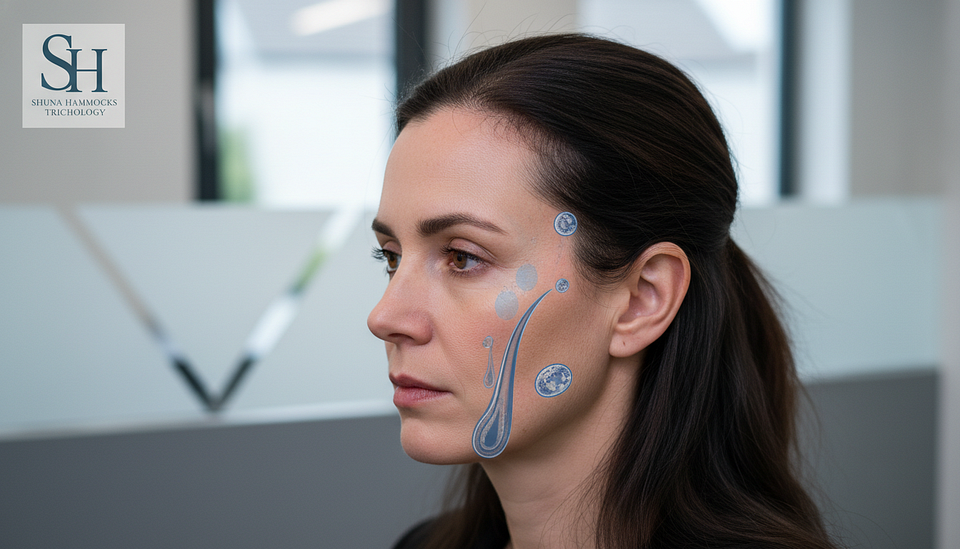
Frontal Fibrosing Alopecia (FFA) is an increasingly common form of scarring alopecia that primarily affects the frontal and temporal hairline. Characterized by a progressive band of hair loss, this condition can be distressing for those experiencing it. Understanding frontal fibrosing alopecia hairline loss is the first step toward effective management and preservation of the remaining hair follicles.
Recognizing the Clinical Symptoms of FFA
The hallmark of FFA is a symmetrical recession of the frontal and lateral hairline. Unlike standard female pattern hair loss, FFA often leaves the scalp looking unusually smooth and pale, as the hair follicles are permanently replaced by scar tissue. Common symptoms include:
- Gradual recession of the hairline, often described as a ‘receding band’.
- Thinning or total loss of eyebrows (madarosis), which often precedes scalp hair loss.
- Small red bumps (perifollicular erythema) around the hair follicles.
- Itching or pain in the affected area.
The Pathophysiology of Scarring Alopecia
FFA is considered a variant of Lichen Planopilaris. It is an autoimmune-driven inflammatory condition where the body’s immune system attacks the epithelial stem cells within the hair follicle. Once these stem cells are destroyed, the follicle cannot produce new hair, leading to permanent hairline recession. While the exact cause remains under research, hormonal changes and environmental triggers are frequently cited as contributing factors, particularly in post-menopausal women.
Why Early Trichological Intervention is Critical
Because FFA is a scarring (cicatricial) alopecia, the hair lost cannot be regrown. The goal of treatment is to stabilize the condition and prevent further recession. A professional Trichologist can perform a thorough scalp analysis, sometimes utilizing trichoscopy, to differentiate FFA from other conditions like Traction Alopecia or Alopecia Areata. Management strategies often include anti-inflammatory topical treatments, steroid injections, or systemic medications designed to dampen the immune response.
Effective Management and Hairline Preservation
Managing FFA requires a multi-faceted approach. Beyond clinical treatments, gentle hair care routines and avoiding chemical irritants are essential. Patients are encouraged to seek a specialist who understands the nuances of inflammatory scalp disorders to ensure the best possible outcome for long-term hair retention.
CONTACT BUSINESS
Business Name: Shuna Hammocks Trichology
Website: shunahammockstrichology.com
Phone: 07860 387332
Address: Willow Suite, The Anderida Practice, Forest Row, West Sussex, RH18 5HE
GMB Profile: Shuna Hammocks Trichology GMB
Maps Location: View on Google Maps
Knowledge Graph: Search Profile

 English
 Arabic
 French
 Spanish
 Deutsch
 Turkish
 Dutch
Dutch
 Italiano
 Russian
 Romaian
 Portuguese (Brazil)
 Greek
Greek