


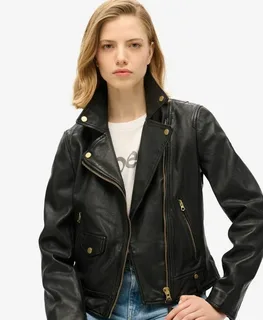
Introduction: A Garment That Outlives Trends
The Leather Biker Jacket is one of the few clothing items that consistently survives changing fashion cycles. While many garments depend on seasonal relevance, this jacket maintains its presence because it was never built around trends in the first place.
It originated from a need for protection and control during movement, especially in high-speed riding conditions. Fashion later adopted it, but its structure still reflects its original purpose more than its aesthetic evolution.
What Actually Defines a Leather Biker Jacket
A leather biker jacket is not defined by styling alone. It is defined by how it behaves under movement and exposure.
At its core, it is built from three functional priorities:
-
Wind resistance during motion
-
Abrasion protection in case of surface contact
-
Structural stability while riding or leaning forward
These requirements influence every design element, from fit to hardware placement.
Unlike standard fashion jackets, it is not designed to drape loosely—it is designed to stay controlled against the body.
Structural Elements That Separate It From Regular Leather Jackets
Not all leather jackets qualify as biker jackets. Specific construction details define the category.
1. Asymmetrical Zipper Layout
This design is not decorative. It reduces direct wind entry when the body is angled forward, such as on a motorcycle.
2. Reinforced Shoulder and Arm Zones
These areas experience the most friction and impact risk. Extra stitching or padding increases durability.
3. Tight, Controlled Fit
Excess fabric creates resistance and instability at speed. A biker jacket reduces unnecessary movement.
4. Heavy Leather Composition
The leather used is typically thicker than fashion jackets, prioritizing durability over flexibility.
These elements work together as a system rather than isolated design choices.
Why Leather Is Still Used Despite Modern Alternatives
Modern materials could replace leather in theory, but in practice, leather still dominates this category because of how it behaves over time.
Key advantages include:
-
Natural resistance to wind penetration
-
Gradual softening instead of structural failure
-
High abrasion tolerance compared to synthetic fabrics
-
Ability to develop a protective wear pattern with use
Unlike synthetic materials, leather does not simply degrade—it adapts. That adaptation is part of why biker jackets often improve in comfort over time.
The Dual Identity: Utility Gear and Style Symbol
One of the most interesting aspects of the leather biker jacket is its dual role.
As Functional Gear:
-
Designed for riding protection
-
Reduces exposure to wind and surface friction
-
Supports controlled movement posture
As Style Identity:
-
Represents independence and nonconformity
-
Often associated with music and street subcultures
-
Used as a visual signal of edge or confidence
Importantly, the jacket did not change structurally to gain cultural meaning. The same design used for protection became a visual symbol because of how it looked in real-world use.
How Fit Actually Changes Performance
Fit is not just a styling concern—it directly affects how the jacket performs.
A proper leather biker jacket should:
-
Sit close to the torso without restricting movement
-
Allow arm rotation without pulling at the shoulders
-
Avoid excess length that can interfere with motion
-
Maintain stability in riding posture
A poorly fitted jacket may still look similar, but it loses its functional advantages immediately.
Common Misconceptions About Leather Biker Jackets
Because of its popularity, several misunderstandings exist.
Misconception 1: It is only a fashion item
Originally, it is protective gear, not aesthetic clothing.
Misconception 2: All leather jackets are biker jackets
Many leather jackets are designed purely for style and lack structural reinforcement.
Misconception 3: Softer leather is always better
Extremely soft leather may feel comfortable but often sacrifices durability and wind resistance.
How to Identify a High-Quality Jacket
A strong leather biker jacket is identifiable through construction details rather than branding.
Key indicators include:
-
Dense, natural leather grain (not overly smooth or artificial-looking)
-
Strong metal zippers that operate smoothly under tension
-
Reinforced stitching at joints and stress points
-
Structured shoulders that hold shape even when not worn
-
Balanced weight that feels solid but not overly rigid
Quality becomes more obvious over time, as better jackets age with controlled wear patterns rather than breakdown.
Styling Reality: What Works in Practice
Although often styled in complex fashion combinations, the leather biker jacket works best when kept structurally dominant.
Effective pairings include:
-
Plain or minimal T-shirts
-
Slim or straight denim
-
Neutral color palettes
-
Simple boots or sneakers
The jacket already carries strong visual weight, so additional complexity often reduces its impact rather than improving it.
Final Perspective
The Leather Biker Jacket is not a trend-based fashion item—it is a functional design that became culturally significant without losing its original engineering logic.
Its continued relevance comes from a rare combination: it performs under real physical conditions while also functioning as a visual identity marker. That balance between utility and expression is why it remains unchanged in structure yet endlessly reinterpreted in style.
It persists not because it adapts to fashion, but because it never needed to.

 English
 Arabic
 French
 Spanish
 Portuguese
 Deutsch
 Turkish
 Dutch
Dutch
 Italiano
 Russian
 Romaian
 Greek
Greek