


What is a Stem Cell Facelift? A Comprehensive Guide for Patients
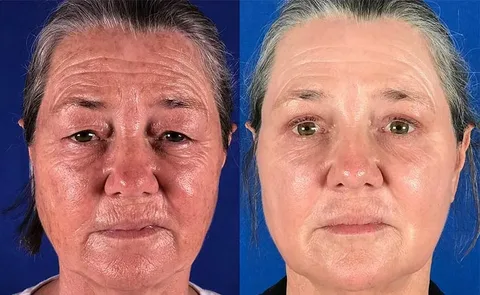
The modern era of aesthetic medicine has shifted from the "surgical pull" of the past toward the biological restoration of the present. For many residents of the Kingdom seeking a refreshed profile, the Stem Cell Facelift in Riyadh has emerged as the definitive solution for those who want to reverse the signs of aging without the tell-tale signs of traditional surgery. Often referred to as a "liquid facelift" or "regenerative fat grafting," this procedure is a sophisticated blend of liposculpture and cellular therapy. It doesn't just fill a wrinkle; it "replants" the face with living cells that have the unique ability to repair damaged tissue and restore lost volume. By using your body’s own regenerative building blocks, this procedure offers a way to reclaim a youthful contour that looks, feels, and behaves like natural tissue.
Defining the Stem Cell Facelift
A stem cell facelift is a minimally invasive procedure that uses a patient’s own fat-derived stem cells to restore facial volume and improve skin quality. While the name contains the word "facelift," it differs significantly from a rhytidectomy (traditional facelift). A traditional facelift focuses on cutting away excess skin and tightening muscles; a stem cell facelift focuses on volumetric restoration and tissue regeneration.
The procedure relies on Adipose-Derived Stem Cells (ADSCs). Scientific research has shown that fat tissue is one of the body's richest sources of mesenchymal stem cells—even more so than bone marrow. These cells are multipotent, meaning they can transform into various cell types or release signaling molecules that tell existing skin cells to act younger.
The Three Pillars of the Procedure
To understand what this guide entails for a patient, one must look at the three distinct phases that make the treatment successful:
1. The Gentle Harvest
The process begins with a specialized form of micro-liposuction. Using thin cannulas, the surgeon harvests a small amount of fat from a donor area—usually the abdomen, flanks, or inner thighs. This stage serves a dual purpose: it provides the raw material for the facelift while offering a subtle contouring benefit to the donor site.
2. Purification and Concentration
The harvested fat is not injected immediately. It must be processed to isolate the "Stromal Vascular Fraction" (SVF). This concentrate contains a high density of stem cells, growth factors, and signaling proteins. By concentrating these elements, the surgeon ensures that the injected material has a much higher "take" rate and regenerative potential than simple fat grafting.
3. Artistic Reinjection
The final step involves the strategic placement of the cell-rich fat into the facial "fat pads" that have depleted with age. Common areas for treatment include:
-
The Mid-face: Restoring the "apple" of the cheeks.
-
The Tear Troughs: Smoothing the transition between the lower eyelid and the cheek.
-
The Jawline: Refining the contour and reducing the appearance of jowls.
-
The Temples: Correcting the "hollow" look that often comes with weight loss or aging.
Stem Cell Facelift vs. Traditional Methods
Patients often ask how this regenerative approach compares to more common treatments.
-
Vs. Synthetic Fillers: Fillers are temporary gels that the body eventually absorbs. A stem cell facelift is composed of living tissue that integrates into your anatomy, offering results that can last for years rather than months.
-
Vs. Traditional Surgery: Traditional surgery is excellent for severe skin sagging, but it can sometimes leave the face looking "flat" or "tight." The stem cell approach restores the 3D fullness of youth, addressing the hollowed-out look that surgery cannot fix alone.
Ideal Candidates for the Procedure
This procedure is particularly effective for men and women in their late 30s to early 60s who are noticing:
-
A loss of facial "glow" or skin vibrancy.
-
Mild to moderate skin laxity and drooping.
-
Hollowed cheeks or sunken areas under the eyes.
-
Thinning skin that has lost its elasticity.
Because the procedure uses autologous (one's own) tissue, it is an ideal choice for patients who are hesitant about synthetic implants or foreign substances and prefer a more organic approach to aging.
What to Expect During Recovery
One of the most significant advantages for the busy Riyadh professional is the recovery timeline. Since there are no large incisions, there is no need for general anesthesia or long hospital stays.
-
Days 1-3: Expect some minor swelling and redness at the injection sites and some tenderness at the harvest site.
-
Day 5: Most patients find they can return to work and social settings, using light makeup if necessary to cover any residual bruising.
-
Weeks 4-12: This is when the "magic" happens. As the stem cells begin to communicate with the surrounding tissue, the skin texture improves, and a natural radiance emerges.
Conclusion: A Future-Proof Investment
The Stem Cell Facelift in Riyadh represents the intersection of biotechnology and aesthetic art. It offers a path to rejuvenation that respects the natural architecture of the face while utilizing the most advanced regenerative science available today. By choosing to restore your appearance with your own cells, you are not just hiding the signs of aging—you are actively participating in the restoration of your skin’s health. This guide serves as a starting point for a journey that ends with a version of yourself that looks rested, voluminous, and undeniably authentic.

 English
 Arabic
 French
 Spanish
 Portuguese
 Deutsch
 Turkish
 Dutch
Dutch
 Italiano
 Russian
 Romaian
 Greek
Greek