


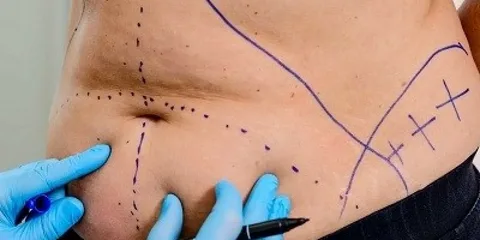
The recovery process after Fat Transfer Surgery in Riyadh is a multi-stage journey of biological integration. Unlike synthetic implants, where the result is fixed immediately, fat grafting involves "living" tissue that must establish a new blood supply to survive.
In 2026, recovery protocols focus on two primary goals: reducing inflammation at the donor site and ensuring zero pressure on the recipient site to maximize the "take" rate of the new cells.
1. The Immediate Post-Op Phase (Days 1–3)
The first few days are characterized by significant swelling and a "tight" sensation at both sites.
-
Drainage: It is normal to experience some fluid leakage from the tiny liposuction incisions for the first 48 hours.
-
The "Head-Up" Rule: For facial transfers, you must sleep with your head elevated at a 30-45 degree angle to minimize facial edema.
-
Movement: While rest is essential, light walking around your home every 2-3 hours is mandatory to promote circulation and prevent blood clots.
-
Pain Management: Discomfort is usually managed with paracetamol. Avoid ibuprofen or aspirin for the first two weeks, as they can increase bruising and interfere with graft stabilization.
2. The Initial Healing Window (Weeks 1–2)
During this stage, the initial bruising begins to fade, and you will start to see the early contours of your transformation.
-
Returning to Work: Most patients in Riyadh return to desk-based professional roles within 7 to 10 days.
-
Compression Garments: You will wear a medical-grade binder or garment over the donor area (where fat was removed) 24/7. This helps the skin retract and reduces fluid buildup.
-
The "No-Pressure" Mandate: This is the most critical rule for survival.
-
BBL: You must use a specialized pillow to avoid sitting directly on the buttocks.
-
Breasts: Avoid underwire or tight bras; wear only the soft supportive garment provided.
-
Face: Avoid side-sleeping or resting your face on your hands.
-
3. The Stabilization Phase (Month 1 – Month 3)
This is often called the "waiting period," where your body decides how much fat to keep.
-
The "Take" Rate: It is normal for the body to naturally reabsorb roughly 30% to 50% of the transferred fat during this window. Do not be alarmed if you notice a slight decrease in volume; surgeons often "overfill" slightly to account for this.
-
Resuming Exercise: By Week 4-6, most patients are cleared for light cardio. However, high-impact exercise or strenuous weightlifting should be delayed until the 8-week mark to protect the new blood vessels (neovascularization).
-
Nutrition: You should avoid dieting or calorie restriction during these three months. Your body needs to be in a "fat storage" state to nourish the new grafts.
4. Final Results (6 Months – 1 Year)
By the six-month mark, the fat that remains has established a permanent blood supply and is considered part of your natural anatomy.
-
Final Texture: The recipient area will feel soft, natural, and indistinguishable from the surrounding tissue.
-
Permanence: The surviving fat cells are permanent. However, because they are living cells, they will grow or shrink if you experience significant weight fluctuations.
-
Skin Quality: You will notice the "stem cell effect"—an improvement in skin radiance and texture at the injection site due to the regenerative growth factors in the fat.
Recovery Summary Table
| Timeline | Activity Level | Key Requirement |
| Days 1–3 | Very Light (Indoor walking) | Head elevation & hydration |
| Weeks 1–2 | Return to work (7–10 days) | Wear compression on donor site |
| Weeks 3–6 | Light walking / Stretching | No pressure on recipient site |
| Months 3–6 | All exercise / Gym | Maintain stable weight |
By following these 2026 Riyadh clinical guidelines, you ensure that your body has the best possible environment to "accept" your new contours, turning a surgical procedure into a lifetime of natural-looking results.

 English
 Arabic
 French
 Spanish
 Portuguese
 Deutsch
 Turkish
 Dutch
Dutch
 Russian
 Romaian
 Portuguese (Brazil)
 Greek
Greek