


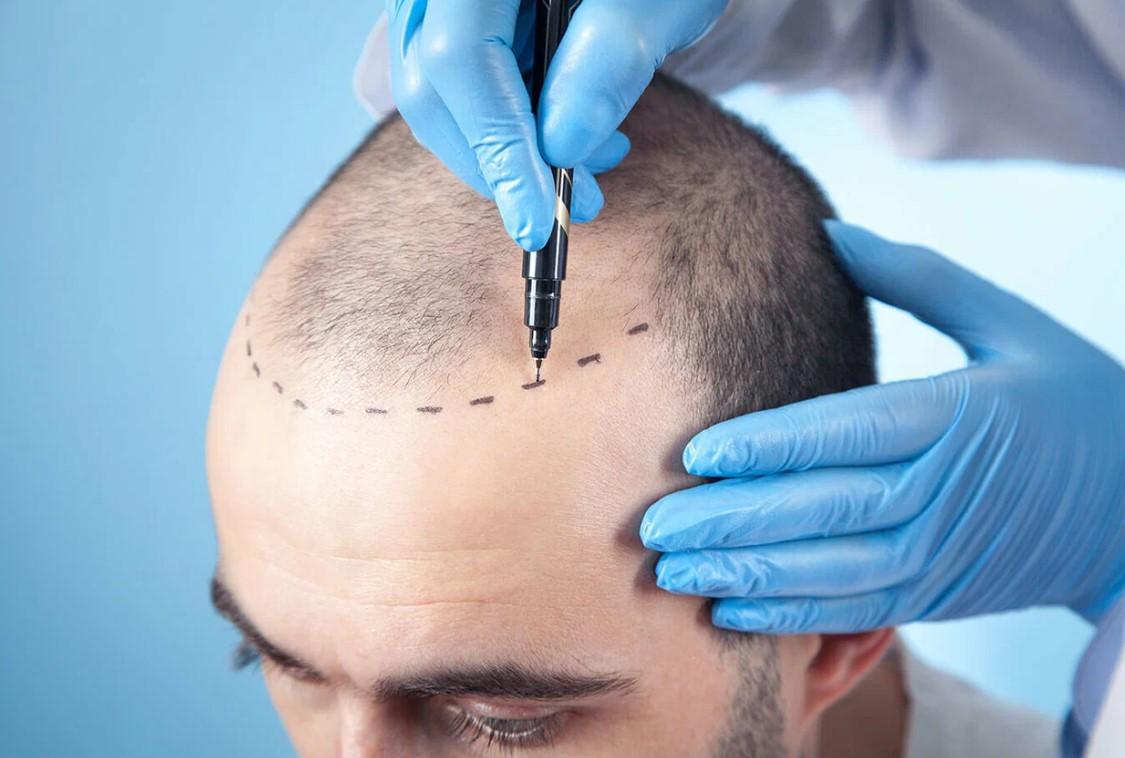
Hair Density Expectations After a Hair Transplant in Riyadh
Hair transplant procedures in Riyadh are known for delivering natural-looking results using advanced techniques like FUE and FUT. However, one of the most common questions patients have is: How dense will my hair look after the transplant?
Understanding realistic hair density expectations is essential to avoid disappointment and to properly plan your treatment journey. Hair transplant in Riyadh is becoming an increasingly popular choice for individuals seeking advanced and reliable hair restoration solutions in Riyadh.
What “Hair Density” Really Means
Hair density after a transplant refers to how many follicular units (grafts) are placed per square centimeter (cm²) of scalp. It does not mean restoring your original, untouched hair density.
In a natural scalp, density is typically around 70–100 follicular units per cm², depending on genetics and hair type. However, hair transplants do not aim to fully replicate this level.
Instead, surgeons focus on creating the illusion of fullness, which looks natural even at lower density levels.
Typical Density Achieved in Riyadh Hair Transplants
Most modern clinics in Riyadh follow internationally accepted medical standards for safe and natural results.
Common density ranges:
- Hairline area: 40–50+ grafts/cm²
- Mid-scalp: 35–50 grafts/cm²
- Crown area: 30–45 grafts/cm²
These ranges are considered optimal because they balance visual fullness with safe blood supply to the scalp.
In some cases, advanced techniques can reach slightly higher densities, but surgeons avoid overpacking grafts to protect survival rates.
Why Maximum Natural Density Is Not Fully Recreated
A key point many patients misunderstand is that transplanting 100% of original density is neither practical nor safe.
Even though natural density can reach up to 100 follicular units/cm², transplant procedures typically achieve about 40–60 units/cm², which is enough for a natural appearance.
Reasons for this limitation:
- Limited donor hair supply
- Scalp blood circulation constraints
- Need to ensure graft survival
- Long-term planning for future hair loss
If too many grafts are packed into one area, it can reduce blood flow and lead to poor growth.
The “Illusion of Density” Effect
One of the most important concepts in hair restoration is the illusion of density.
Even at around 40–50 grafts/cm², the human eye perceives the scalp as fully covered when:
- Hair is properly angled
- Hairline design is natural
- Thick donor hair is used
- Grafts are strategically placed
This means you do not need full natural density to achieve a “full hair” appearance.
What Affects Your Final Hair Density
The final density you achieve after a hair transplant in Riyadh depends on several personal and medical factors:
1. Donor Hair Quality
Stronger, thicker donor hair produces better visual coverage even with fewer grafts.
2. Hair Thickness and Texture
Curly or coarse hair gives the appearance of higher density compared to fine hair.
3. Number of Grafts Available
Most patients receive between 2,000 and 4,000 grafts in a single session depending on hair loss severity.
4. Surgeon Skill
Proper placement, angle, and distribution significantly affect how dense the result looks.
5. Area Being Treated
The hairline is usually denser than the crown for natural aesthetics.
How Density Develops Over Time
Hair density does not appear immediately after surgery. It improves gradually over months.
Typical timeline:
- Weeks 1–4: Shedding phase (normal loss of transplanted hairs)
- Months 3–4: Early regrowth begins
- Months 6–9: Noticeable improvement in density
- Months 9–12: Major visible fullness
- 12–18 months: Final mature density
By the one-year mark, most patients achieve around 90–100% of their final result, with full thickening continuing slightly beyond that period.
What Results Look Like in Real Life
Even though transplanted density is lower than natural density, results are designed to look completely natural in real-world conditions.
A well-performed transplant typically provides:
- Even coverage without patchiness
- Natural hairline transition
- Reduced scalp visibility under normal lighting
- Blending with existing hair
Many patients notice that hair looks fuller when styled, even if exact native density is not fully restored.
Can You Get a “Thick” Look?
Yes—but it depends more on strategy than raw graft numbers.
A thick appearance comes from:
- Strategic placement of grafts
- Proper layering of single and multi-hair grafts
- Good hair caliber
- Correct hair direction and angle
In fact, even moderate graft density can appear very full when done correctly.
Final Thoughts
Hair density expectations after a hair transplant in Riyadh should be realistic and medically grounded. While it is not possible to fully restore original natural density, modern techniques can achieve a highly natural and visually full appearance using strategic graft placement.
Most patients can expect:
- Around 40–60 grafts per cm² in key areas
- Gradual improvement over 12 months
- A natural-looking result rather than artificial “extreme thickness”
The success of your outcome depends more on surgical planning and technique than chasing maximum density. With the right clinic and proper expectations, hair transplants in Riyadh can deliver long-lasting, confident, and natural results.

 Arabic
 French
 Spanish
 Portuguese
 Deutsch
 Turkish
 Dutch
Dutch
 Italiano
 Russian
 Romaian
 Portuguese (Brazil)
 Greek
Greek