


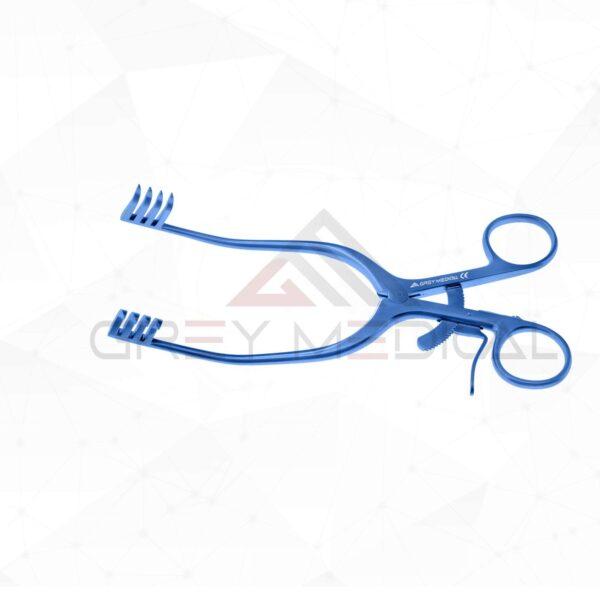
Posterior fossa surgery is one of the most challenging areas in medicine. Operating near the brainstem and cranial nerves demands meticulous technique and impeccable visibility. Even a single millimetre can mean the difference between a successful recovery and severe neurological deficits. To achieve this level of precision, neurosurgeons rely on specialised tools that provide clear access without compromising healthy tissue.
The Evolution of Neurosurgical Retractors
The history of neurosurgery is closely tied to the development of its tools. Early attempts to access deep brain structures were often hindered by the inability to safely retract tissue. At first, retractors were rigid, handheld cerebellar retractor instruments that required an assistant to maintain traction—often resulting in inconsistent pressure and an increased risk of tissue damage.
Over time, medical engineering introduced fixed retraction systems that could attach directly to the operating table or a cranial fixation device. This innovation eliminated assistant fatigue and provided stable, continuous traction. Modern cerebellar retractors are the result of decades of biomechanical research and clinical feedback. Today, they are crafted from medical-grade alloys that offer durability without unnecessary bulk, allowing surgeons to navigate narrow anatomical corridors with unprecedented confidence.
The evolution continues to be driven by the need for minimally invasive procedures. The shift from large craniotomies to keyhole approaches has demanded retractors that offer maximum exposure through minimal incisions while preserving the integrity of the cerebellar cortex.
Key Advantages in Posterior Fossa Access
Accessing the posterior fossa requires careful retraction of the cerebellum to visualise pathologies such as cerebellopontine angle tumours, vascular malformations, or cranial nerve compressions. Using a specialised cerebellar retractor provides clear, measurable benefits in these interventions.
Enhanced Surgical Site Exposure
A clear, unobstructed view is essential for successful tumour resections or aneurysm clipping. The cerebellar retractor is designed to gently displace the cerebellar hemisphere, creating an optimal working corridor. Its curved blade design conforms to the natural anatomy of the cerebellum, evenly distributing pressure over a broader surface area.
This even pressure distribution prevents focal points that could lead to contusions or ischaemia in neural tissue. By maintaining a stable surgical field, the neurosurgeon can use microsurgical instruments with complete freedom of movement, focusing entirely on the target pathology without constantly battling surrounding tissue.
Patient Safety and Clinical Outcomes
Protecting retracted tissue is a constant concern during lengthy surgeries. Excessive or prolonged retraction pressure can lead to venous infarcts or postoperative cerebellar oedema. Modern retractors address this issue with fine-tuning mechanisms that allow surgeons to apply just the right amount of force—no more, no less.
By minimising tissue trauma, patients experience fewer postoperative complications, such as ataxia or cranial nerve dysfunction. Safe retraction translates directly into faster recovery times, shorter hospital stays, and an overall improvement in the patient’s quality of life after surgery.
Features of Advanced Design
The effectiveness of a cerebellar retractor lies in its technical specifications. Modern instruments incorporate several key features that enhance the neurosurgeon’s workflow:
- Ergonomic design: Joints and locking mechanisms are intuitively designed for easy manipulation. This reduces setup and adjustment time during surgery, ensuring a smooth procedural flow.
- Adjustable tension: Dynamic retention systems allow for micro-adjustments in tension. Surgeons can fine-tune the pressure in real-time according to the specific needs of the dissection.
- Minimally invasive footprint: The blades of today’s retractors are exceptionally thin yet incredibly strong. This maximises visual and working space within a small craniotomy.
- Anti-glare materials: Retractor surfaces are treated to minimise reflections under intense surgical microscope lighting, preventing surgeon eye strain.
- Modular compatibility: Many systems allow for interchangeable blades of varying sizes and shapes during the procedure without dismantling the base fixation system.
The Essential Role of Specialised Instrumentation
Having the right tool is just as important as the skill of the person using it. In posterior fossa surgery, attempting to adapt a general-purpose retractor for a specific anatomical task significantly increases surgical risk. The anatomy of the cerebellum, with its delicate foliar surface and intricate vascular network, requires instruments specifically designed for its preservation.
Specialised instrumentation not only makes the technical aspects of surgery easier but also provides a psychological advantage. Knowing that exposure will remain stable and healthy tissue is protected allows the neurosurgeon to operate with a higher level of focus. This peace of mind is invaluable when dissecting critical structures like the posterior inferior cerebellar artery (PICA) or the facial-vestibulocochlear nerve complex.
Moreover, standardising the use of specialised retractors in neurosurgical training programmes helps residents develop safer and more consistent surgical techniques earlier in their careers.
Surgeon-Centred Design is Key
The success of modern neurosurgery relies on the partnership between human surgical skill and exceptional biomedical engineering. Achieving surgical precision requires a deep understanding of anatomy, refined technique, and tools that complement human capabilities.
The cerebellar retractor exemplifies how surgeon-centred design transforms complex procedures. By providing optimal exposure, protecting brain tissue, and offering superior ergonomic features, this tool has become an indispensable part of the operating theatre.
As we move towards increasingly minimally invasive techniques, the evolution of neurosurgical instrumentation will remain critical. We encourage you to evaluate your current instrument inventory and consider how upgrading to state-of-the-art retraction systems can optimise your posterior fossa approaches and improve patient outcomes. Stay connected with medical instrument manufacturers to learn about the latest innovations and clinical trial programmes that can take your surgical practice to the next level.

 English
 Arabic
 French
 Spanish
 Deutsch
 Turkish
 Dutch
Dutch
 Italiano
 Russian
 Romaian
 Portuguese (Brazil)
 Greek
Greek