


The Ultimate Guide to Female Pattern Hair Loss: Causes, Symptoms, and Clinical Treatments
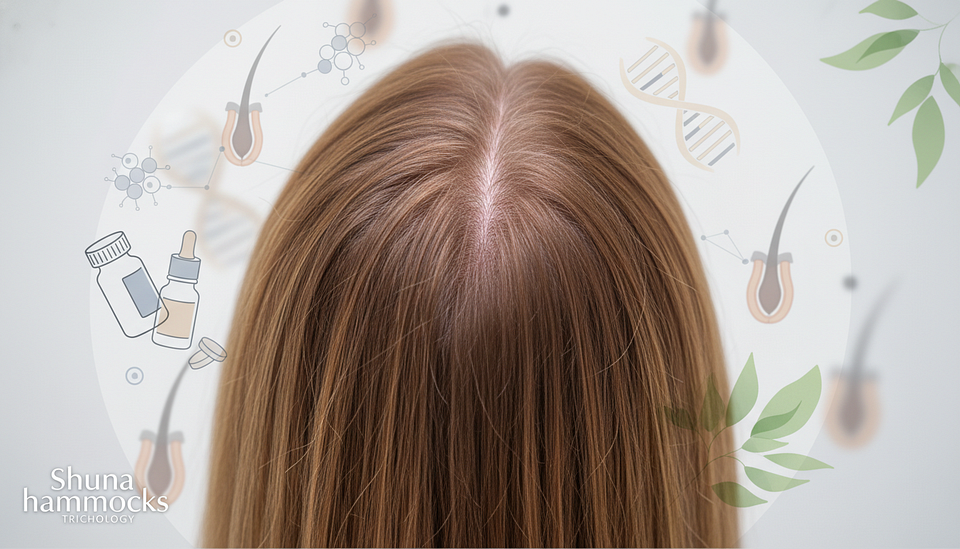
Female Pattern Hair Loss (FPHL), clinically known as androgenetic alopecia, is the most common cause of hair thinning in women worldwide. Unlike male pattern baldness, which often results in a receding hairline or total baldness, Female Pattern Loss typically manifests as a diffuse thinning across the mid-scalp and a widening of the part line. Understanding the underlying mechanisms is the first step toward effective restoration.
The Science Behind Androgenetic Alopecia in Women
The primary driver of FPHL is a genetic predisposition that makes hair follicles sensitive to androgens (male hormones), specifically Dihydrotestosterone (DHT). While women have much lower levels of these hormones than men, hormonal fluctuations — such as those occurring during puberty, pregnancy, or menopause — can trigger the miniaturization of hair follicles. During this process, the growth phase (anagen) of the hair cycle shortens, and the follicles produce increasingly thinner, shorter hairs until they eventually stop producing hair altogether.
Identifying the Symptoms of Thinning Hair
Early detection is crucial for successful intervention. Key indicators of female pattern hair loss include:
- Widening Part Line: A noticeable increase in the scalp area visible at the center or side part.
- Diffuse Thinning: A reduction in overall hair volume, particularly on the crown.
- Miniaturized Hairs: The presence of fine, short, and translucent hairs among thicker strands.
- Reduced Ponytail Volume: Noticing that hair ties need more loops than they used to.
Comprehensive Treatment and Management Strategies
Modern trichology offers several pathways to manage and reverse the effects of thinning. Professional consultations often recommend a multi-pronged approach:
1. Clinical Topicals and Minoxidil
Minoxidil remains the only FDA-approved topical treatment for FPHL. It works by prolonging the anagen phase and increasing blood flow to the follicles.
2. Hormonal Management and Nutrition
Since iron deficiency and thyroid imbalances can exacerbate genetic thinning, a clinical assessment of ferritin levels and hormonal health is essential. Specialized supplements and dietary adjustments can provide the building blocks necessary for keratin production.
3. Scalp Therapy and Low-Level Laser Therapy (LLLT)
Advanced scalp treatments focus on reducing inflammation and improving the environment for hair growth. LLLT devices use medical-grade lasers to stimulate cellular activity within the follicle.
Why Consult a Specialist?
Self-diagnosing hair loss can lead to wasted time and resources on ineffective over-the-counter products. A qualified trichologist uses diagnostic tools like trichoscopy to examine the scalp at a microscopic level, ensuring a bespoke treatment plan tailored to your specific hair density and scalp health needs.
CONTACT BUSINESS
Business Name: Shuna hammocks Trichology
Website: Visit Shuna hammocks Trichology
Phone: 07860 387332
Address: Willow Suite, The Anderida Practice, Forest Row, West Sussex, RH18 5HE
GMB Profile: View Our Business Profile
Map Location: Find us on Google Maps
Knowledge Graph: Search Our Business Information

 English
 Arabic
 Spanish
 Portuguese
 Deutsch
 Turkish
 Dutch
Dutch
 Italiano
 Russian
 Romaian
 Portuguese (Brazil)
 Greek
Greek