


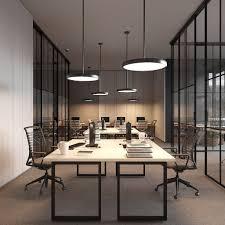
Modern work environments are evolving rapidly. As we shift between hybrid schedules and open plan office designs we often focus heavily on comfortable chairs or the perfect monitor height. Yet one of the most significant factors influencing our daily productivity and health is often overlooked: the way we light our workspace. Office lighting ergonomics is not just about having enough brightness to read documents. It is about understanding how light impacts our circadian rhythms our eye health and our overall cognitive performance.
The Science Behind Office Lighting Ergonomics
Our bodies are hardwired to respond to light. For centuries human beings operated on a solar cycle with bright blue light in the morning signaling to our brains that it is time to be alert and warmer dimmer light in the evening telling us to prepare for rest. When we spend our days under harsh flickering or incorrectly positioned artificial light we disrupt these natural cues.
Office lighting ergonomics seeks to bridge the gap between human biology and the requirements of a modern office. When lighting is designed with the user in mind it can reduce the symptoms of eye fatigue such as dryness and irritation. More importantly it can help maintain focus throughout the day by preventing the mid afternoon slump that often occurs when we are trapped under static artificial illumination.
Key Principles Of Effective Office Lighting Ergonomics
Achieving a comfortable lighting environment requires a layered approach. It is rarely enough to rely on a single overhead source. A truly ergonomic setup combines several elements:
-
Natural Light Maximization: Whenever possible workspaces should be positioned to utilize daylight. Natural light is dynamic and provides the full spectrum of colors which is essential for visual comfort. However it is crucial to manage glare. Using shades or blinds allows employees to control the intensity of sunlight depending on the time of day.
-
Task Versus Ambient Lighting: Ambient lighting provides the overall illumination for a room but it is often insufficient for detailed work. Task lighting—such as a dedicated desk lamp—allows individual employees to adjust the brightness in their immediate work area. This flexibility is vital because different tasks require different levels of illumination and every individual has a unique sensitivity to light.
-
Avoiding Glare Through Office Lighting Ergonomics: Glare is the enemy of productivity. It can stem from lights reflecting off computer screens or windows. Proper office lighting ergonomics involves positioning screens so that they are perpendicular to windows and using diffusers on overhead lights to soften their output.
-
Color Temperature Considerations: The color of light is measured in Kelvin. Cooler light—leaning toward blue—is often better for task concentration in the morning while warmer light—leaning toward orange—can be more relaxing later in the day. Smart lighting systems that adjust color temperature throughout the shift can significantly improve mood and energy levels.
How Poor Office Lighting Ergonomics Impacts Productivity
When lighting is poorly managed the consequences are tangible. You may notice employees frequently rubbing their eyes complaining of headaches or struggling to focus on complex reports. These are classic signs of eye strain. When the visual system is constantly struggling to adapt to poor contrast or flickering light it consumes mental energy that should be directed toward creative or analytical tasks.
Furthermore bad lighting can exacerbate posture issues. If an office is dim or shadowed employees often lean forward or slouch over their desks to get a better look at their screens. Over time this habit leads to neck pain and back strain. Good lighting encourages a neutral, upright posture because it ensures that the workspace is clearly visible without needing to contort one's body to see better.
Implementing Office Lighting Ergonomics Changes
Improving office lighting ergonomics does not always require a total renovation. Many effective changes can be made with minimal disruption. The first step is to conduct a lighting audit. Walk through the office at different times of the day to identify areas that are too dark or where glare is particularly problematic.
Encourage employees to provide feedback. A survey about their comfort level can reveal patterns that management might miss. Are people using desk lamps. Is someone constantly closing the blinds because of harsh sunlight. This data is invaluable for making targeted improvements.
Consider installing dimmer switches or motion sensors. Not only do these technologies save on energy costs but they also provide a level of control that can make a large office feel more personalized. Giving staff members the ability to tweak their immediate environment—even slightly—creates a sense of ownership and comfort that pays dividends in morale.
The Future Of Office Lighting Ergonomics
As we look toward the future the intersection of technology and biology in office lighting ergonomics will only grow more sophisticated. We are seeing the rise of human centric lighting systems that automatically adjust based on the time of day and the natural light available outside. These systems are designed to mimic the natural progression of the sun helping to stabilize sleep patterns and improve overall health.
While not every company can afford a high tech overhaul the core philosophy of office lighting ergonomics remains accessible to everyone. It is about recognizing that your employees are biological beings who need more than just a desk and a chair to thrive. By prioritizing visual comfort you are signaling that you care about their long term health.
In conclusion never underestimate the power of a well lit room. Whether you are managing a small startup or a large corporate floor the principles of good lighting are universal. By reducing glare incorporating adjustable task lighting and honoring the human need for natural light cycles you create a workspace that does not just support work—it sustains the people doing it. Success in business is often about creating an environment where talent can flourish and that starts with something as fundamental as the light by which we see our work.

 Arabic
 French
 Spanish
 Portuguese
 Deutsch
 Turkish
 Dutch
Dutch
 Italiano
 Russian
 Romaian
 Portuguese (Brazil)
 Greek
Greek