


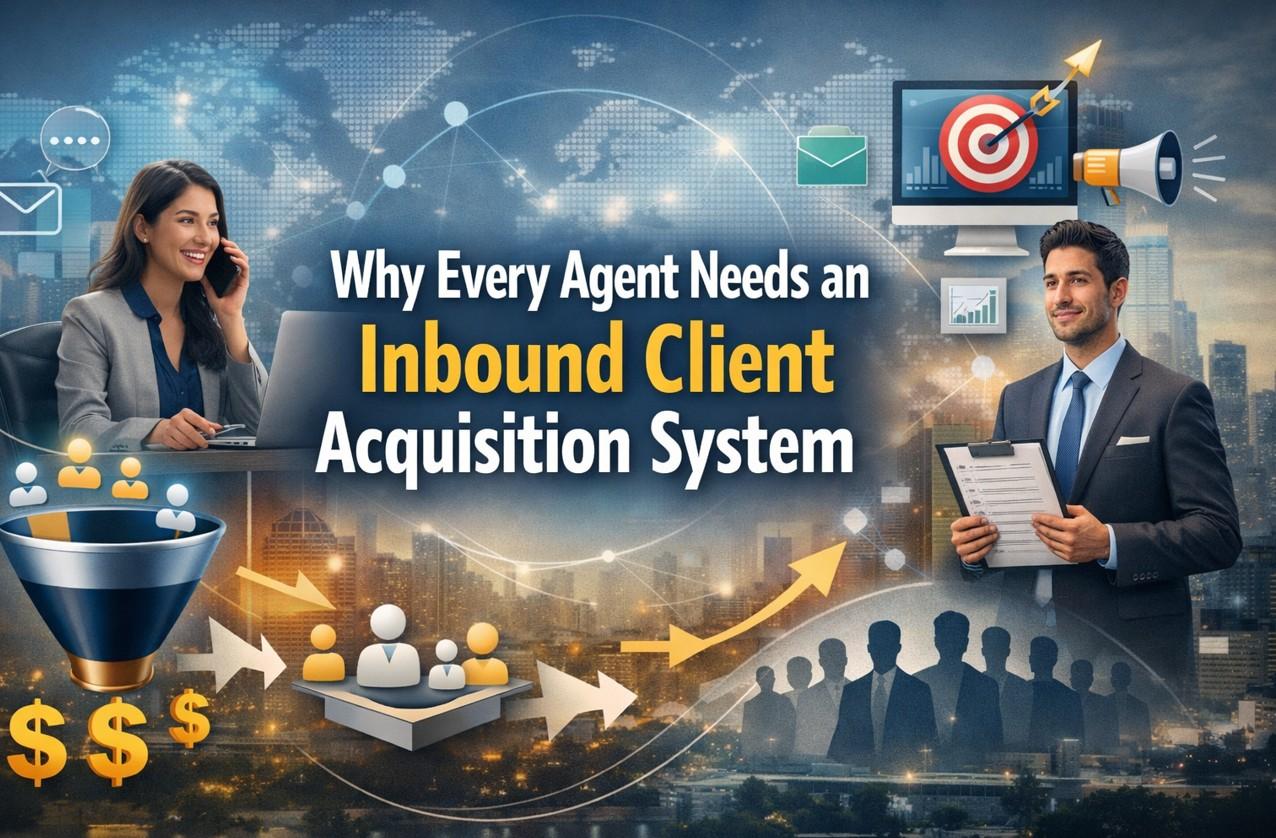
Insurance agents face more competition than ever before. At the same time, consumer behavior has shifted toward online research and self-directed buying. Because of these changes, traditional prospecting methods no longer deliver consistent results. Many professionals still rely on cold calls and purchased leads; however, those tactics often produce unpredictable income and rising costs.
An inbound client acquisition system offers a smarter path forward. Instead of chasing uninterested prospects, agents attract people who are already looking for solutions. As a result, conversations become more productive, and closing ratios often improve. More importantly, this approach creates a stable pipeline that supports long-term growth.
Understanding why this system matters can help agents stay competitive in today’s evolving insurance market.
The Prospecting Problem Most Agents Face
Many agents work hard but still struggle with inconsistent production. They buy leads every week, make hundreds of calls, and hope enough people answer. Unfortunately, this cycle often leads to frustration and burnout.
Several common issues appear repeatedly. First, purchased leads are frequently shared among multiple agents. Therefore, contact rates drop quickly. Second, cold outreach interrupts prospects who may not be interested at all. Consequently, agents spend valuable time handling objections instead of helping ready buyers.
Furthermore, lead costs continue to increase across the industry. Because of this trend, maintaining profitability becomes more difficult each year. Agents who depend solely on outbound methods often feel stuck on a production treadmill. An inbound client acquisition system directly addresses these pain points.
What Is an Inbound Client Acquisition System?
An inbound client acquisition system is a structured marketing and automation process designed to bring interested prospects to you. Rather than initiating random outreach, the system uses targeted messaging, online visibility, and automated follow-up to attract high-intent clients.
Typically, the system includes:
-
Digital advertising campaigns
-
Optimized landing pages
-
Lead capture forms
-
Automated email or SMS nurturing
-
Appointment scheduling tools
-
CRM tracking and reporting
Because prospects take the first step, the quality of conversations improves significantly. In addition, agents spend less time searching for opportunities and more time closing business.
Key Reasons Every Agent Needs This System
1. Higher Quality Conversations
Inbound prospects usually request information before speaking with an agent. Therefore, they enter the conversation with interest and awareness. This makes the sales process smoother and more efficient.
Moreover, agents avoid the resistance that often comes with cold outreach. Instead of convincing someone to listen, they focus on solving real problems.
2. Greater Time Efficiency
Time remains one of the most valuable assets for any insurance professional. Cold calling, door knocking, and manual prospecting consume hours each week. However, an inbound client acquisition system automates much of the front-end work.
Because automation handles initial engagement, agents can:
-
Spend more time in appointments
-
Improve closing ratios
-
Reduce administrative tasks
-
Maintain consistent daily activity
As a result, productivity increases without requiring longer work hours.
3. Lower Long-Term Lead Costs
Buying leads repeatedly can drain marketing budgets. While inbound systems require setup and optimization, they often reduce the average cost per acquisition over time.
Additionally, inbound marketing creates reusable assets. Campaigns, funnels, and follow-up sequences continue working long after they are built. Therefore, agents gain more control over their marketing expenses.
4. Predictable Pipeline Growth
Consistency separates top producers from struggling agents. Fortunately, an inbound client acquisition system provides measurable data at every stage.
Agents can track:
-
Cost per lead
-
Appointment rates
-
Conversion percentages
-
Return on marketing spend
Because of this visibility, business planning becomes far more accurate. Instead of guessing future income, agents can forecast with confidence.
5. Better Client Experience
Modern consumers prefer convenience and control. They want to research options before speaking with a representative. An inbound approach respects this preference.
When prospects reach out on their own terms, trust builds faster. Furthermore, automated follow-up ensures timely communication without overwhelming the client.
This improved experience often leads to stronger relationships and more referrals.
How the System Supports Different Types of Agents
New Agents
New professionals often struggle most with prospecting confidence. However, inbound leads provide warmer conversations and faster early success. Therefore, beginners can build momentum sooner.
Independent Producers
Experienced agents benefit from improved efficiency and scalability. Instead of working harder each year, they build systems that support steady expansion.
Agency Builders
Leaders who want to grow teams need a predictable lead flow. An inbound client acquisition system creates the structure required for onboarding and supporting multiple agents.
Common Mistakes Agents Should Avoid
Even strong systems require proper execution. Agents who ignore best practices may see slower results.
One frequent mistake is responding too slowly to new inquiries. Speed to contact plays a major role in conversion success. Additionally, some agents treat inbound leads like cold leads, which weakens the natural advantage.
Another issue involves inconsistent follow-up. Many prospects need multiple touchpoints before making a decision. Therefore, automation sequences should remain active and well-written.
Finally, poor targeting can attract the wrong audience. Clear messaging and defined client profiles significantly improve lead quality.
Avoiding these errors helps the inbound client acquisition system perform at its highest level.
The Future Belongs to Inbound-Focused Agents
The insurance marketplace continues to evolve. Consumers research online, compare options, and expect quick responses. Because of these changes, interruption-based selling keeps losing effectiveness.
Meanwhile, agents who adopt structured inbound strategies position themselves for long-term success. They build marketing assets, control their pipelines, and reduce dependence on third-party vendors.
Over the next several years, this shift will likely accelerate. Professionals who adapt early will hold a clear advantage.
Conclusion
Every serious insurance professional needs a reliable way to attract qualified prospects in today’s competitive environment. An inbound client acquisition system provides that advantage by bringing motivated clients directly into the pipeline. Moreover, it improves efficiency, lowers long-term lead costs, and creates predictable growth opportunities. Agents who implement this approach correctly often spend less time chasing prospects and more time closing meaningful business. For those committed to building a stable, scalable insurance career, adopting an inbound client acquisition system is no longer optional; it is essential.
Ready to grow faster with an inbound client acquisition system? Start attracting high-intent prospects, reduce costly lead purchases, and build a predictable pipeline that supports your long-term insurance success today.

 Arabic
 French
 Spanish
 Portuguese
 Deutsch
 Turkish
 Dutch
Dutch
 Italiano
 Russian
 Romaian
 Portuguese (Brazil)
 Greek
Greek